

By Douglas V. Gibbs
What happened at Brown University was not a tragedy. It was a catastrophic failure of leadership, security, and common sense. And the more we learn, the worse it looks.”
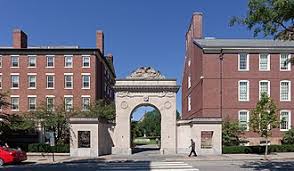
The Brown University campus, unfortunately, has been built more on “safe spaces” than true physical safety. Brown University is known nationally for its hard-left DEI‑heavy culture, its safe‑spaces, and its emotional‑protection ethos. But when it came to actual physical protection, the kind that stops bullets instead of microaggressions, the university fell dramatically short.
Brown is a gun‑free zone, a campus that prides itself on disarming everyone except the people who don’t follow rules. And yet, despite a multi‑billion‑dollar endowment, the school’s security infrastructure was shockingly inadequate.
Brown reportedly had 1,200 security cameras, but many were nonfunctional. Worse, there was a blind spot near the rear of the Barus & Holley engineering building, the very area where the shooter entered. According to federal investigators, the shooter (Claudio Manuel Neves Valente), a former Brown physics graduate student, knew the campus well and exploited those weaknesses.
And then there’s the leadership question.
Brown’s head of campus security previously worked at the University of Utah, where he reportedly left under pressure after failing to provide adequate credentials and facing performance concerns. At Brown, the campus police union was preparing a complaint accusing him of creating a hostile work environment.
Providence Police Chief Oscar Perez has also faced growing scrutiny, not only for his department’s handling of recent high‑profile investigations, but also for questions surrounding his own background and judgment. Public concern intensified after federal prosecutors revealed that his nephew, Jasdrual “Josh” Perez, was one of the most prolific fentanyl traffickers in New England, ultimately receiving a 22‑year federal sentence for running a multistate drug ring. While the chief is not implicated in the crimes, the family connection has raised eyebrows, especially as local media have reported broader questions about his qualifications and leadership style. Nobody seemed to be aware of all of this until we were deep into the wake of the Brown University shooting investigation, where the department’s early missteps and lack of clarity have fueled renewed debate over whether Providence’s top law‑enforcement leadership is truly up to the task.
Mayor Brett Smiley is a real piece of work, as well. In office since January of 2023, he has deep ties to the state’s Democratic political establishment having been a former lackey for Rhode Island’s Director of Administration under Governor Gina Raimondo, he is one of the few openly gay big-city mayors in the country, and recently he found himself at the center of controversy when the Providence City Council raised the Palestinian flag at City Hall during demonstrations. While his tenure has emphasized public safety and quality of life issues, the Brown shooting and his inability to show he knows much about anything during press conferences raises new questions about his crisis-management abilities.
Governor Dan McKee of Rhode Island, in office since 2021 after his predecessor joined President Biden’s cabinet as Secretary of Commerce after serving as lieutenant governor for six years, emphasizes community solidarity during crises; a theme he leaned heavily on in his public statements following the Brown University shooting. In the past his administration has faced criticism for bureaucratic sluggishness and uneven communication, and the Brown incident confirmed much of that as his leadership style fell under greater scrutiny during the investigation.
So when the shooting happened, the response was, predictably, chaotic.
The Providence mayor and police chief appeared overwhelmed and underinformed. Before federal agencies stepped in, Providence police arrested the wrong man, then had to release him, burning precious hours while the real killer remained loose on the streets.
Meanwhile, the actual suspect traveled north to Massachusetts, where he allegedly murdered MIT physics professor Nuno Loureiro, a man he had known from their shared academic background in Portugal.
From there, the suspect drove to New Hampshire, stopping at a storage unit he had rented. That’s where he ultimately died by suicide, according to investigators.
Federal officials later confirmed that the major break in the case came only after the FBI and ATF took over the investigation, and a homeless man, and Brown University graduate living on or around campus, provided much needed information.
Had the suspect continued deeper into rural New England, he might have vanished into the woods for weeks or months.
One of the Brown students killed was the vice president of the campus Republican Club, Ella Cook. In the early hours of the investigation, some wondered whether the attack was politically motivated due to her identity, and given the ideological climate on campus.
But as more information emerged, the evidence pointed away from political targeting. Federal investigators have stated that no motive has yet been identified, and no ideological writings or communications have been found.
Still, the questions weren’t unreasonable at the time. And the lack of transparency from local officials only fueled speculation.
What does appear relevant is the shooter’s academic world.
Valente studied physics at Brown in the early 2000s before withdrawing in 2003. He also attended the same university in Portugal as the MIT professor he later allegedly killed. The Brown shooting occurred inside the engineering building, during a study session. The MIT victim was a physics professor. In short, these are not random locations or random people. They are all tied directly to the suspect’s academic past.
Was he angry at the institutions?
At specific professors?
At perceived failures in his academic career?
Federal investigators say the motive remains unclear, but the academic connection is undeniable.
So what do we take from all this? A gun‑free campus with broken cameras. A security chief with a questionable record. Local authorities who arrested the wrong man. And a killer who slipped through the cracks until federal agents stepped in.
Brown University promised emotional safety, but failed to provide physical safety. And while the political angle appears unlikely, the academic connection raises serious questions about how universities handle troubled former students, security vulnerabilities, and warning signs.
The investigation continues.
The questions remain.
And the failures, at every level, are impossible to ignore.
— Political Pistachio Conservative News and Commentary