
By Douglas V. Gibbs
In a constitutional republic, law enforcement is supposed to stand above the political fray. The badge is not meant to be red or blue. That is why newly surfaced January 6 planning memos combined with a quietly released Government Accountability Office report should alarm every American who still believes in equal justice under law.
According to reporting from Just the News, the FBI ran a tabletop exercise in Boston in August 2020, five months before January 6. The scenario they rehearsed was not a natural disaster or foreign threat, but a “hanging” or contested presidential election and the political unrest that might follow. Before a single ballot was cast, federal law enforcement was gaming out how to respond to Americans’ reaction to a disputed outcome.
Contingency planning is not inherently sinister. But the details matter. The memos reportedly outlined two key strategies:
- Embed informants inside groups where political agitation was expected.
- Pursue mass prosecutions, even for minor offenses, once unrest occurred.
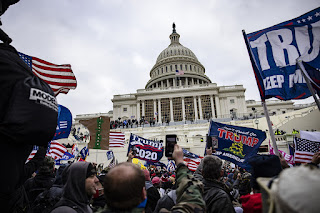
If that sounds familiar, it should. After January 6, the country watched a flood of charges, including for non‑violent conduct that in other contexts would have been handled with citations or local misdemeanors. We also learned that federal informants and assets were present in or around several groups in Washington that day. The memos suggest this was not improvisation. It was the execution of a plan conceived months earlier.
The most explosive allegation is not that the FBI planned for unrest, but that the strategy was applied asymmetrically. It was aimed at conservatives, not liberals. The memos anticipated unrest from one direction: Trump supporters contesting the election. There is no indication of a parallel plan to infiltrate or mass‑prosecute left‑wing groups if they rejected the result or returned to the tactics that had already burned American cities in the summer of 2020.
That asymmetry is the heart of the problem.
In 2020, federal and local authorities watched as courthouses were attacked, police precincts were besieged, and entire city blocks were claimed as “autonomous zones.” Many of those incidents involved organized groups and repeat offenders. Yet the prosecutorial posture was often lenient: dropped charges, plea deals, and political leaders eager to describe the unrest as “mostly peaceful.”
Contrast that with January 6. Whatever one calls that day (riot, breach, or insurrection) it has been treated as a singular, almost sacred event in the eyes of the federal government. Defendants have faced aggressive charges, pre‑trial detention, and sentences far exceeding what many violent offenders receive in ordinary cases. If the 2020 memo framed unrest from the right as a national‑security event while unrest from the left was treated as a political inconvenience, that is not law enforcement. That is partisanship with a badge.
And I cannot ignore the human cost of this shift, because I know several people who were in Washington that day… not as rioters, but as citizens who traveled to hear the President speak. One of them, Derek Kinnison, served as the security lead at my church. Derek and three friends arrived at the Capitol well after the initial breach. They had stopped at their hotel to use the restroom and grabbed a quick bite, and like thousands of others, they were still making their way from the Ellipse when the first reports of unrest began circulating.
By the time they reached the Capitol’s lawn, the main confrontation was already over. What did they do when they arrived? They prayed.
I have seen the video myself: four men standing in a circle with arms over each other’s shoulders on the grass, heads bowed, praying for peace and clarity. They never entered the building. They never confronted law enforcement. They never engaged in violence. They spoke with people on the grounds about what had happened and then left.
Yet all four of their homes were later raided by the FBI. All four were prosecuted. All four were convicted and sent to federal prison – only to be released after President Trump issued pardons after he took office in 2025.
Their experience is not unique. At least half a dozen people I know personally tell the same story: the violence began before they even arrived and there was word that agitators had been shipped in by bus. The breach occurred around 1:10 p.m., roughly when President Trump finished speaking. For most attendees, it took thirty to forty minutes to walk from the Ellipse to the Capitol due to the size of the crowd. Many arrived to find the confrontation already over; yet they, not the instigators, became the focus of federal prosecution.
This is where the GAO’s January 2026 report becomes essential. The report documented that the FBI opened 127,000 “assessments” between 2018 and 2024: investigative probes that require no factual predicate and can employ techniques such as informants and physical surveillance. As the report states, these assessments “require an authorized purpose but not any particular factual predication,” and can be launched even when no crime is suspected.
Among these were 1,200 “Sensitive Investigative Matters” targeting politicians, journalists, religious leaders, academics, and political organizations. The GAO found that over 500 targeted public officials, over 150 targeted religious organizations, and over 50 targeted journalists. And the report confirmed that the FBI had, in some cases, opened assessments “based solely on the exercise of First Amendment‑protected activities.” A clear constitutional violation.
The review was triggered by a bipartisan request from Rep. Jamie Raskin and Rep. Nancy Mace, who warned that assessments “operate as de facto investigations that can be launched without a factual predicate of criminal wrongdoing” and may result in “improper monitoring of protected First Amendment activity.” The GAO confirmed their fears.
When you place this report beside the January 6 planning memos, a troubling picture emerges: a federal law‑enforcement culture increasingly comfortable treating political dissent as a national‑security threat, and increasingly willing to use tools of surveillance and prosecution without the constitutional guardrails that once defined American justice.
A government that can investigate without cause can prosecute without restraint. A government that can surveil political opponents can silence them. A government that can treat prayer on a lawn as a federal offense can treat any dissent as a threat.
The issue is not January 6. The issue is not left versus right. The issue is whether the most powerful law‑enforcement agency in the country has slipped the leash of constitutional limits, and did so knowingly as a part of a deep state infiltration that exists for partisan reasons and operates for partisan outcomes.
If we allow this to stand and if we shrug at assessments without evidence, surveillance without cause, prosecutions without equal protection, and cruel and excessive punishments for crimes committed by planted infiltrators and FBI assets, then the question is no longer whether the FBI planned for January 6 and carried out one of the greatest false flags in American History…The question then becomes what the FBI, or any other part of the hard-left’s deep state, is planning for all of us.
— Political Pistachio Conservative News and Commentary