

By Douglas V. Gibbs
The design for Operation Epic Fury based on credible intelligence was launched against Iran long before the actual attack. The planning likely goes way back. It wasn’t hoped for, but it was necessary against a country who has consistently thumbed its nose at any pressure put upon it, thumbed its nose at the U.S. and Israel during diplomacy, and simply said that it was their goal to create chaos in the world, and they had the nuclear capabilities to back up their madness. How do you reason with the unreasonable? How do you negotiate with someone who hates you and is willing to kill you and anyone associated with you because you are not their religion, or not their ideology, or both?
We’ve made that mistake, before. North Korea was not taken seriously, and now is essentially untouchable because of their nuclear capabilities. Presidents during the 1990s kicked the can down the road, and then in 2006 the communists of North Korea tested a nuclear weapon. They have conducted five tests since then.
Once a hostile state successfully acquires nuclear weapons, it becomes significantly more difficult to influence its behavior through diplomacy or conventional military pressure, thereby locking in a dangerous new strategic reality. The failure of preventing North Korea from becoming a nuclear-armed state is a cautionary tale we need not repeat with Iran.
Diplomacy is fine, but if it fails, action must be taken. A nuclear weapon creates a powerful deterrent shield, which allows a regime to act with greater impunity because they know that the cost of disarming them becomes catastrophically high due to the potential of a nuclear response.
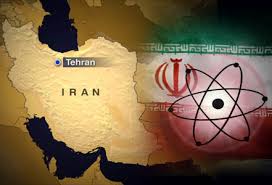
If Iran ever achieved nuclear weapons, it would be a point of no return. The recent IAEA report revealed that Iran had enriched uranium to levels approaching weapons-grade and amassed an unprecedented stockpile of it without a credible civilian purpose, giving it the capacity to produce fissile material for multiple bombs on short notice. From this perspective, Iran was not just developing a nuclear program; it was on the verge of finalizing a nuclear weapons capability that would permanently alter the balance of power in the Middle East. The fear is that a nuclear-armed Iran would be emboldened to expand its influence through regional proxies (like Hezbollah and the Houthis), threaten Israel and Europe, and disrupt global oil supplies, all while being shielded from serious military reprisal by its own nuclear arsenal.
The reality of the matter became crystal clear while Iran continued to thumb their nose at everyone during diplomacy, leading President Trump to realize that the only way to prevent a repeat of the North Korean scenario was to act decisively before the nuclear threshold was crossed. Trump, however, did not wish to repeat the mistakes of Iraq and Afghanistan, so he opted for a targeted military strike aimed at setting back or destroying Iran’s nuclear program with Operation Midnight Hammer in June, and now has followed that up with a U.S. military option framed as one that will force Tehran to negotiate. “Operation Epic Fury” is designed to destroy Iran’s offensive capabilities and ensure “they will never have nuclear weapons.”
In the end, the conclusion was going to be pretty binary: Either accept a nuclear-armed Iran and the permanent threat it poses, or use military force preemptively to prevent that outcome.
War is not a pleasant thing, and nobody in their right mind supports the idea under normal conditions. President Trump has a track record of being against unreasonable war. He’s not a fan of putting boots on the ground, he railed against the Iraq War during Bush’s presidency, and during the first year of this presidency (second term) he negotiated an end to eight wars around the world. But, the same President who established the Board of Peace, and has called himself the Peace President, recognized it was absolutely necessary to launch strikes against Iran last Sunday.
The war in Iran was not unprovoked. President Donald Trump took a bold action against an adversary that has been attacking Americans since the Tehran Hostage Crisis in 1979. The Islamic Republic has been threatening the existence of Israel with constant attacks through their proxies, their own missile attacks, and through terrorism. Iran has been the primary sponsor of Islamic terrorism around the world for over forty-five years. They have destabilized the region and they have terrorized the entire world as they push their madness through key spots in the United Nations and fund it through oil sales. A series of recent protests inside the country challenged the world’s worst Islamic tyrant, and he responded by executing them by the tens of thousands.
A friend of mine escaped Iran in 1982, and he told me that the regime is not loved by the people. Persians love America, and the underground Christian movement is the fastest growing in the world.
Opponents call Trump’s military move against Iran a “regime change,” a dirty phrase that brings our minds back to Iraq. The elimination of Saddam Hussein moved Iraq from the frying pan and into the fire. The tribal mentality of Iraq’s population was not capable of maintaining any ideas of a new system devised and planted by the United States. That is not to say regime change is not possible – it just doesn’t work when it is from a political angle. When we turned Japan around after World War II, it was an economic change. We introduced the free market system, and Japan thrived.
The move against Iran isn’t just about Iran, either. China’s global influence has relied on two primary oil suppliers, Iran and Venezuela. Now, both have been overthrown by American might. Peace is not possible when you have the kinds of regimes that existed in Venezuela and Iran, and taking down China is not possible if the global network that China uses to strike out against the United States and fuel their communist machine remains intact. Using the argument that the attack against Iran was to stop nuclear weapons makes the attack very palatable, and there is a lot of truth to it. But it is also a part of the chess game with China, and the attack was conducted at the right time. Should we have waited until a nuclear missile was launched from Iran and detonated over a major Israeli city, or European city, before we decided that a nuclear Iran might be a danger to the world?
I am not a fan of war, but I recognize sometimes it is necessary. I will admit, I am nervous about the indication that boots might end up on the ground. I do not want a long, drawn-out, ground war like we had in Iraq. Hit the targets, weaken the regime, let those who have resisted the Islamic regime take control, and then send in personnel to guide them the best we can.
That’s the best we can do, and frankly, I don’t know the answer about if this attack against Iran was truly the best move. Only time will give us that answer.
— Political Pistachio Conservative News and Commentary