
By Douglas V. Gibbs
Free economies are subject to the law of supply and demand and the concept of incentives. For free markets to prosper, government intervention in markets must remain at a minimum. Government interference, after all, alters human and business behavior.
“If you tax something, you will get less of it.” The economic saying is a direct consequence of how taxes impact the cost of goods and services.
The Law of Demand states that, all else being equal, as the price of a good or service increases, the quantity demanded for that good or service decreases. A tax is effectively an increase in price.
For Consumers, when a government imposes a tax on a product (like a gasoline tax or a cigarette tax), the price that consumers pay goes up. Faced with a higher price, some consumers may make the decision to buy less of the product, switch to cheaper alternatives, or stop buying it altogether. A high tax on cigarettes, for example, is designed specifically to make smoking more expensive and thus reduce consumption.
For producers a tax becomes an increase in the cost of doing business. The price they receive for their product is effectively lower (after the tax is paid to the government) which ultimately reduces their profit margin, making the production of the good less attractive. Some producers may then work to offset the cost by reducing their workforce, reducing the quality, or they might reduce their output. Other producers may exit the market entirely to pursue more profitable ventures.
Taxes create a disincentive. They make an activity more costly, whether that activity is working, investing, or producing a good.
Income taxes work the same. High marginal income tax rates can disincentivize individuals from working more hours or seeking higher-paying jobs, as a larger portion of their additional earnings goes to the government.
The existence of capital gains taxes, or increasing them to a high level, can disincentivize people from investing their capital, which can reduce the funds available for businesses to expand and innovate.
The degree to which a tax reduces activity depends on its “price elasticity of demand.” If demand for a product is sensitive to price changes, like with restaurant meals, a tax will cause a significant drop in quantity. If people are not very sensitive to price, like with gasoline or insulin, the reduction in quantity will be smaller, but the government will collect more revenue unless the tax becomes so burdensome that people are simply unable to continue to purchase the product.
Progressives believe that fossil fuel energy must be reduced to save the planet, so they’ve increased taxation across the board to reduce the use of these fuels. They’ve added taxes on carbon emissions which are also intended to make fossil fuel energy more expensive, thereby encouraging a shift toward cleaner, renewable energy sources. The problem is, the alternative products would need to be less expensive in order for consumers to make the switch, and those products are not – so, to get people to abandon fossil fuels they’ve used subsidies to make the alternatives more affordable, which then creates a whole new problem.
The subsidies cost money, and since the usage of fossil fuels has been reduced as hoped (though perhaps not to the level hoped for), the tax revenue has been reduced as well. So, to replace the falling revenue progressives are calling for mileage taxes and a scheme to increase taxes on the wealthy and larger corporations. They figure the rich have plenty of money, so that’s a pool of money they can keep going to in order to fund their subsidies that they can no longer afford using other funding sources.
Sweden chased a similar concept of “Tax on the Rich” in the 1990s, and the result for that country was catastrophic. Sweden imposed extremely high taxes (up to 85%) on top earners. This led to a significant brain drain, where wealthy individuals and high-earning professionals left the country, and many entrepreneurs simply stopped expanding their businesses to avoid entering the highest tax bracket. The government eventually had to reverse course.
The subsidization of progressive pipedreams also run against basic economic principles. As the old saying goes, “If you subsidize an industry, you will kill the industry.”
The saying might seem counterintuitive. How can giving money to an industry kill it? The answer lies in how subsidies distort market signals and create dependency.
In a free market, prices act as signals. A high price for a product signals that it is in high demand or that it is scarce, encouraging more producers to enter the market and increase supply which then will lower the price and then encourage more consumption. A low price that gets too low signals the opposite and then the system self-corrects until the cost changes direction, or other factors change course. Subsidies corrupt these signals.
A subsidy allows inefficient companies to survive. In a competitive market, a company that cannot produce a good or service at a low enough cost to make a profit would go out of business. Its resources (labor, capital, land) would then be freed up and reallocated to more productive and efficient industries. A subsidy masks this inefficiency, allowing the weak company to continue wasting valuable resources and negatively influencing the market.
When a company knows it will receive a government check regardless of its performance, the incentive to innovate, cut costs, improve quality, or respond to consumer demands is severely reduced. Why go through the difficult work of becoming more efficient when the government will cover your losses? This leads to stagnation.
Industries that become reliant on subsidies often lose the ability to compete on their own. They focus their energy on lobbying for more subsidies rather than on improving their products. This creates a vicious cycle where the industry’s survival depends entirely on continued government support, not on its own merits. This is a form of moral hazard, where the industry is insulated from the consequences of its own bad decisions, and government artificially holds up a market. The longer that goes on, when reality finally causes it to adjust the burst of the bubble becomes more severe the longer the artificial support by government lasts.
Private investors are less likely to invest in an industry that is heavily subsidized. They know they will have to compete with companies that have an unfair advantage from the government, and the long-term health of the industry is questionable due to the distortions caused by the subsidies.
Before its collapse, Venezuela’s oil industry was a source of massive subsidies for the entire economy. The government used oil revenue to subsidize everything from gasoline to food. When oil prices fell, the entire system collapsed because the underlying industries had become completely dependent on the government’s handouts and were not efficient or sustainable on their own. The industry itself was starved of reinvestment as money was diverted elsewhere.
Free markets work best when prices reflect reality. Taxes distort reality by making things seem more expensive than they are, and subsidies distort reality by making things seem cheaper and more viable than they are. Both interventions by government, while often well-intentioned, lead to unintended negative consequences by disrupting the natural incentives that drive efficiency, innovation, and prosperity.
Which brings us to the Electric Vehicle Industry. Automakers are pulling back from the Electric Vehicle industry. It is costing them tens of billions of dollars. That’s a lot of money for any major industry to lose. This brings us back to the iron law of economics we just discussed: If you want to kill an industry, subsidize it.
The green energy industry (solar and wind power), which has been heavily boosted with taxpayer dollars for almost 50 years now, is still an inconsequential form of overall energy supply. Dozens of allegedly promising firms collected billions of taxpayer dollars and were supposed to be the energy companies of the future. Now they have vanished, never to rise again.
Electric Vehicles are proving to be an even larger bust. Tens of billions of taxpayer dollars have been thrown into the EV industry by former Presidents Barack Obama and Joe Biden. Market growth was never achieved, and now it is all falling apart at the seams.
While in a competitive market EVs and hybrids may possess a niche for certain buyers, progressives so obsessed with ending fossil fuel consumption overnight used bad economic principles to kill the very industries they believed government could create and sustain. For them, to save the planet from the highly questionable concept of Climate Change, they demanded an immediate transition to electric cars. They called upon Americans to obey their plans for a new industry because the government says so, and because if you don’t the coastal cities will all be under water, soon.
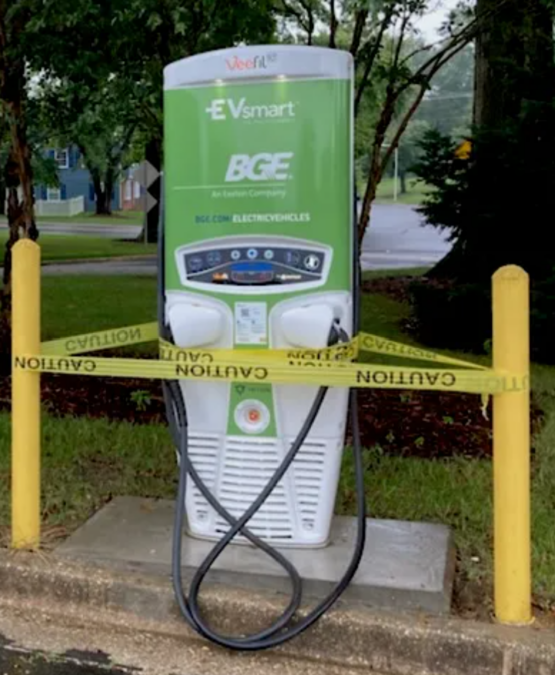
The coastlines are fine, and what they were doing from an economic point of view was that they were sowing the seeds of the industry’s own destruction. The industry rose because it was hooked on the fool’s profits of taxpayer handouts for EVs, including $7,500 tax credit to entice people to buy an EV, billions of dollars of manufacturing subsidies, free charging stations, choice parking spaces, and other special treatments.
As with Obamacare, the large corporations got sucked in with a promise of new customers and the promise that government will keep funding it whether it succeeds or fails. In truth, they were building cars for the politicians, not the car buyers. That’s not how free markets succeed. But, if they truly understood economics, the arrogant collectivist politicians in Washington would have never followed such a folly-laced path. Free markets abhor government intervention, government interference kills competition and incentive, and Americans love our cars and our freedom of choice in a free market. We were never going to allow the politicians to dictate to us what kind of car to buy and drive.
EV sales also had to endure tales of drivers being stranded in the mountains with no juice left in the battery, or cars not starting on frigid winter mornings. This made car buyers wary. Also, there have been legitimate concerns about putting the entire transportation system on the strained electric grid system that still runs on a foundation that is based on nineteenth century ideas.
So, despite all the federal and state handouts to the industry, EV sales fell by half in 2025 once the tax credit expired last year. Sales have fallen to their lowest level in four years. Ford, General Motors, and Stellantis all lost money thanks to overinvestment in EVs. The unsold cars are now piling up on the dealer lots because few want them, nor can afford them without the subsidies attached.
Someday, perhaps, electric cars may be the vehicles of choice in the future. That will depend on the incentive of innovation that may eventually lead to battery technology improving. The cost of the batteries, and the cars in general, still remains too high, and the reliability for any driving beyond around town is just not where it needs to be if anyone is going to be convinced to spend that kind of money on a vehicle.
The growth of the industry, and the incentive by consumers to participate in the market will never develop as long as government sticks its subsidies and regulations into the auto industry. As economists have been saying ever since the ideas of a free market first appeared in history, the power to tax and the power to subsidize is the power to destroy.
— Political Pistachio Conservative News and Commentary