

By Douglas V. Gibbs
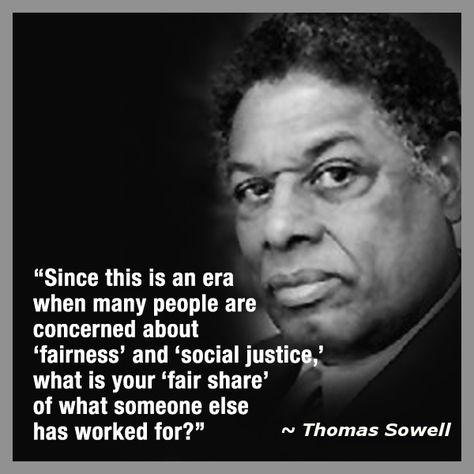
Thomas Sowell’s provocative quote, “If liberals understood economics, they wouldn’t be liberal,” is a concise summary of a central theme running through his vast body of work. It’s not merely an insult; it’s the intellectual core of his argument about the fundamental differences between conservative and liberal/leftist/progressive worldviews, particularly regarding the role of government in society.
Sowell’s argument is that liberal policies, while often well-intentioned and driven by a desire to create specific, positive outcomes, consistently fail because they ignore the fundamental, often counterintuitive, principles of economics. He contends that a genuine understanding of how markets, incentives, and human behavior actually work would lead a person to reject liberal solutions in favor of conservative ones.
Here are the key pillars of his argument:
1. The Focus on Intentions vs. The Focus on Incentives and Consequences
This is the most critical part of Sowell’s thesis. He argues that liberal thinking is “stage one” thinking, focusing only on the immediate, intended goal of a policy.
The Liberal View (Intentions): “Rent is too high for poor people. Therefore, let’s impose rent control to make housing affordable.” The intention is noble: help the poor afford housing.
Sowell’s Economic View (Consequences): Sowell forces you to think about “stage two” and beyond. What happens after rent control is imposed?
Disincentive for Landlords: Landlords receive less income, so they have less money and less incentive to maintain their properties. Quality declines.
Disincentive to Build: Developers see that building rental housing is no longer profitable. The supply of new housing dries up.
Creation of Shortages: With existing units deteriorating and few new units being built, a severe housing shortage develops. It becomes much harder to find any apartment, and the few available are often in poor condition.
The Final Result: The policy designed to help the poor ends up creating a chronic shortage of low-quality housing, ultimately hurting the very people it was meant to help.
Sowell applies this same framework to almost every major liberal policy:
Minimum Wage: Intention is to raise the income of low-skilled workers. The economic consequence is that employers, faced with higher labor costs, will hire fewer workers, automate jobs, or cut hours. The result is higher unemployment among the least skilled and experienced – the very group the policy was supposed to help.
Welfare Programs: Intention is to provide a safety net. The economic consequence is that these programs can create a disincentive to work, as the combination of benefits and a low-wage job can result in a net loss of income, trapping people in a cycle of dependency.
2. The Knowledge Problem
Drawing heavily from economist F.A. Hayek, Sowell argues that no central planner or government bureaucrat can possibly possess enough information to run an economy effectively. The necessary knowledge about local conditions, individual preferences, resource availability, and changing circumstances is dispersed among millions of people.
The Liberal View: A panel of experts can design a healthcare system, an energy policy, or an industrial plan that will be more efficient and equitable than the chaotic “free market.”
Sowell’s Economic View: The price system in a free market is a miraculous mechanism for communicating this dispersed information. A rising price for copper signals to millions of people that copper is becoming scarcer relative to demand, incentivizing everyone from miners to recyclers to consumers to adjust their behavior accordingly. A government planner cannot replicate this. Their attempts to allocate resources by decree are inevitably based on incomplete information and lead to massive inefficiencies, like the long lines for bread in the Soviet Union.
3. The Fallacy of “Sticking It to the Rich”
Sowell frequently argues that liberal policies aimed at taxing corporations and the wealthy are economically illiterate because they fail to understand who actually bears the cost of those taxes.
The Liberal View: “Let’s raise taxes on corporations and the rich to make them pay their fair share.”
Sowell’s Economic View: Corporations don’t really pay taxes; they collect them. They pass the cost on to others in the form of higher prices for consumers, lower wages for employees, or reduced returns for shareholders (many of whom are ordinary people with 401(k)s and pension funds). The CEO of a company might be the one writing the check to the IRS, but the money is coming from the company’s operations, which includes everyone who works for it and buys from it. Therefore, taxing a corporation is often just an indirect way to tax the general public.
Conclusion: Vision of the World
For Sowell, the divide isn’t about being “nice” versus “mean.” It’s about having a “constrained vision” versus an “unconstrained vision” of the world.
The unconstrained vision, which he attributes to liberalism, believes that human nature is perfectible and that smart, benevolent people can design ideal solutions to society’s problems.
The constrained vision, which he attributes to conservatism, understands that human nature is flawed, knowledge is limited, and the best outcomes arise from systemic processes (like the market) that account for these realities, rather than from grand designs.
Therefore, when Sowell says “if liberals understood economics, they wouldn’t be liberal,” he is arguing that economics is the discipline that systematically reveals the flaws of the unconstrained vision. It is the science of trade-offs, incentives, and unintended consequences, and he believes its lessons lead inexorably to the conclusion that individual liberty and free markets, while imperfect, produce far better results for society than the well-intentioned but hubristic schemes of central planners.
— Political Pistachio Conservative News and Commentary