

By Douglas V. Gibbs
As we’ve just passed another April 15th, many of us have felt that familiar knot in our stomachs as we signed over a portion of our hard-earned money to the government. The question that often arises in the hearts of believers is: “What does God’s Word say about taxes?” Is taxation biblical? Is it right for Christians to participate in a system that often seems wasteful, corrupt, or contrary to our values?
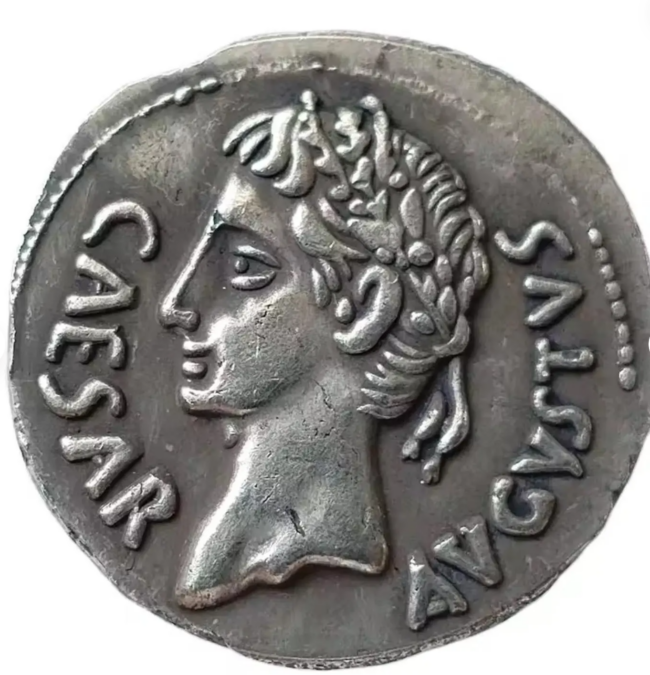
The most direct answer from Scripture comes from Jesus Himself in Mark 12:17, when He was confronted with a politically charged question about paying taxes to Caesar. Holding up a Roman coin, He delivered one of the most profound statements in all of Scripture: “Render to Caesar the things that are Caesar’s, and to God the things that are God’s.”
In these few words, our Lord established a principle that would guide His followers for millennia: There is a proper place for earthly government and a proper place for divine authority. The coin bore Caesar’s image, so it belonged to Caesar. But we bear God’s image, so we belong to Him.
Government is a “necessary evil,” as some philosophers have noted. Romans 13:1-7 provides a look at government’s role and our relationship to it. Paul wrote, “Let every soul be subject to the governing authorities. For there is no authority except from God, and the authorities that exist are appointed by God.”
This is not to say we are to become blind subjects of a government that violates God’s principles. God expects us to be active participants in political things and to do the work to create a godly culture and to influence our government to operate in a godly manner. But, regardless of that government’s policies, we are to operate legally within its authority as long as we are not violating God’s Law to do it.
That said, when Jesus Christ walked the Earth, taxes were far more oppressive than what we may experience toady. The Roman tax system was designed not just to fund the government but to enrich the ruling class and subjugate conquered peoples. Tax collectors were often despised collaborators who enriched themselves by collecting more than what Rome required.
Jesus never led a tax revolt. He never encouraged His followers to withhold their money as a form of protest. Instead, He taught submission to authority while calling His followers to a higher citizenship in heaven. All authority, after all, ultimately flows from God Himself.
The early Christians lived under one of the most brutal regimes in history, yet they paid their taxes. They didn’t compromise their faith, but they didn’t refuse to render to Caesar what was Caesar’s either.
Getting back to the “render unto Caesar” passage (Mark 12:17), we also need to recognize that the verse carries a much deeper meaning than simply acknowledging that coins with Caesar’s image belonged to Caesar. When we consider it alongside Malachi’s teachings about God’s ownership of all precious metals, we discover a profound theological truth.
In Malachi 3:8-10, God accuses Israel of robbing Him by withholding tithes and offerings. This passage establishes a fundamental principle: everything ultimately belongs to God, including our material possessions. As Haggai 2:8 states, “The silver is mine, and the gold is mine, declares the Lord Almighty.” This divine ownership claim is foundational to understanding Jesus’ response about taxes.
When Jesus held up the Roman denarius and said, “Render to Caesar the things that are Caesar’s, and to God the things that are God’s,” He was making a profound theological statement about ownership and stewardship. The coin bore Caesar’s image, so it could legitimately be given to earthly authorities. But the deeper implication is that everything, including the coin itself, ultimately belongs to God, who is the true owner of all creation.
In using such argumentation, Jesus subordinates the taxation issue to the greater demand of God upon our lives, but he does not thereby deny the validity of taxation, even that of the potentially abusive Roman system. Nor does he deny that money belongs to God.
Malachi 3:3 further reinforces this principle with the imagery of God as a refiner and purifier of silver and gold, suggesting that God has the right to purify what belongs to Him because He is the ultimate owner. The Hebrew term “segullah” used in Malachi 3:16-17 refers to “valuable property, that which is laid by, or put aside, hence a treasure of silver and gold,” emphasizing God’s special claim over precious things.
So when Jesus said to render unto Caesar, He wasn’t just establishing a practical principle for civic obedience. He was teaching a profound truth about dual ownership: while we have legitimate obligations to earthly authorities, our ultimate allegiance and everything we possess belongs to God. The coin may temporarily bear Caesar’s image, but all silver and gold ultimately bear God’s image as their Creator and rightful Owner.
This perspective transforms how we view taxes not merely as a civic duty but as an act of worship that acknowledges God’s supreme ownership over all our resources, even as we faithfully fulfill our obligations to human governments.
The Pharisees and Herodians were trying to trap Jesus with a politically charged question about paying taxes to Rome. If Jesus said “yes” to paying taxes, He would lose credibility with the Jewish people who resented Roman occupation. If He said “no,” He could be reported to Roman authorities as a revolutionary. Jesus brilliantly turned their trap back on them by first asking for a denarius, the Roman coin used for paying the tax.
When they produced it, He asked whose image and inscription were on it. They replied “Caesar’s,” and only then did He give His famous response: “Render unto Caesar the things that are Caesar’s, and unto God the things that are God’s.”
This was a masterful exposure of their hypocrisy. As one scholar I once heard explained: “Basically, give Caesar his money that bears his image and give your life to God, because you bear his image.”
The religious leaders were carrying Caesar’s coin, bearing the image of a pagan emperor who claimed divinity, while claiming to serve God alone. By producing the coin, they revealed their own compromised position.
This connects directly to Malachi’s critique of the priesthood. Malachi 3:2-3 specifically addresses the priests, saying God “shall purify the sons of Levi, and purge them as gold and silver, that they may offer unto the Lord an offering in righteousness.” The passage continues with God’s accusation that the priests had robbed Him by withholding proper tithes and offerings.
Jesus was essentially saying: “You’re so concerned about whether to give money to Caesar that you’re carrying his image in your pockets, yet you’ve been robbing God of what is rightfully His. You’re more faithful to earthly authorities than to God Himself.”
The religious leadership had become like the money changers Jesus later drove from the temple; those who “exploited the religious zeal of the visitors to Jerusalem” by exchanging foreign coins for Jewish money “at an exorbitant profit.”
They had turned worship into commerce and compromised their spiritual authority for financial and political expediency.
Jesus’ response exposed their misplaced priorities. They were focused on the relatively minor question of whether to pay taxes to Caesar while ignoring the greater issue of their own unfaithfulness to God. They were meticulous about ceremonial purity while being corrupt in their hearts, which was exactly what Jesus condemned them for elsewhere (Matthew 23:23-24).
The deeper meaning of Jesus’ statement is this: If you’re so concerned about giving Caesar what bears his image, then how much more should you give to God what bears His image, namely, yourselves, created in God’s image (Genesis 1:27)? The religious leaders had failed to render to God the things that were God’s, while scrupulously maintaining their relationship with Caesar’s system.
This aligns with Malachi’s broader critique of a priesthood that had become corrupt and unfaithful. Malachi accuses them of offering “blind sacrifices” and keeping the best for themselves while giving God the defective animals (Malachi 1:6-14). Similarly, Jesus exposed the religious leaders of His day as those who “devour widows’ houses” while making long prayers (Mark 12:40) and being careful to tithe even the smallest herbs while neglecting justice and mercy (Matthew 23:23).
In both Malachi and Jesus’ “render unto Caesar” statement, we see a prophetic critique of religious leadership that had compromised its integrity and failed to give God His rightful place as the ultimate authority.
— Political Pistachio Conservative News and Commentary