

By Douglas V. Gibbs
Trump’s Masterclass in Deal-Making Diplomacy
In every corner of human endeavor, from the boardroom to the broadcast studio, one truth remains constant: relationships are the currency of success. As a 15 year terrestrial radio host veteran, I have learned this lesson firsthand. The advertisers who remained loyal through ratings fluctuations and market changes weren’t those swayed by spreadsheets and demographics alone, but those with whom I’d built genuine connections based on trust, and a mutual desire to spread the message of constitutional originalism. This principle, building lasting and mutually beneficial relationships, transcends industries. It’s the foundation upon which lasting business empires are built and political coalitions are forged.
Nowhere is this truth more evident than in the political arena, where the ability to build, maintain, and leverage relationships can mean the difference between historic achievement and legislative stagnation. For decades, the Republican establishment mastered the art of playing along to get along – acting as if they believed in limited government, but feeding off of the government leviathan no different than their Democratic Party adversaries. It created a belief that it all was just one big uniparty. A polite game of politics on the surface while deep beneath the surface the beasts of tyranny devoured the American System while swearing up and down that they were somehow doing what they could to defend it. The GOP of old played the “across-the-aisle” game, but it was all ineffective relationship-building and a maintenance of cordial ties across the aisle while consistently conceding on policy priorities. Then came Donald Trump, who understood something the D.C. insiders had forgotten: relationships don’t have to be about congeniality and appeasement. Giving in to the other side’s madness is not compromise. It is best to take the bull by the horns, and then create relationships from a position of strength. Then, they become about leverage and making sure that your side isn’t taken advantage of during the game of political maneuvering.
Trump’s approach to relationship-building has always been transactional and strategic. If you wish to understand his strategies, be aware that he articulated the concept in “The Art of the Deal.” Unlike his predecessors who viewed relationships through a lens of institutional decorum, and a part of the uniparty, Trump recognized that personal connections could be used to manipulate the playing field to one’s political advantage. This became evident in his unconventional diplomacy with North Korea’s Kim Jong Un, where direct engagement and personal rapport created channels of communication unavailable to previous administrations. His Middle East policy yielded the Abraham Accords not through traditional diplomatic processes but through personal relationships with leaders like Benjamin Netanyahu and Mohammed bin Zayed Al Nahyan, who responded to Trump’s deal-making mindset rather than bureaucratic overtures.
The transformation of the GOP under Trump’s leadership reflects this relationship-based approach. Where establishment Republicans built fragile coalitions based on shared social circles, Trump constructed a movement based on loyalty and direct connection with his supporters. This goes way beyond being a mere political strategy. It’s a fundamental reimagining of how relationships function in service of a greater purpose. The new MAGA-led Republican Party understands that relationships without leverage are just friendships, and friendships don’t secure borders or appoint conservative judges.
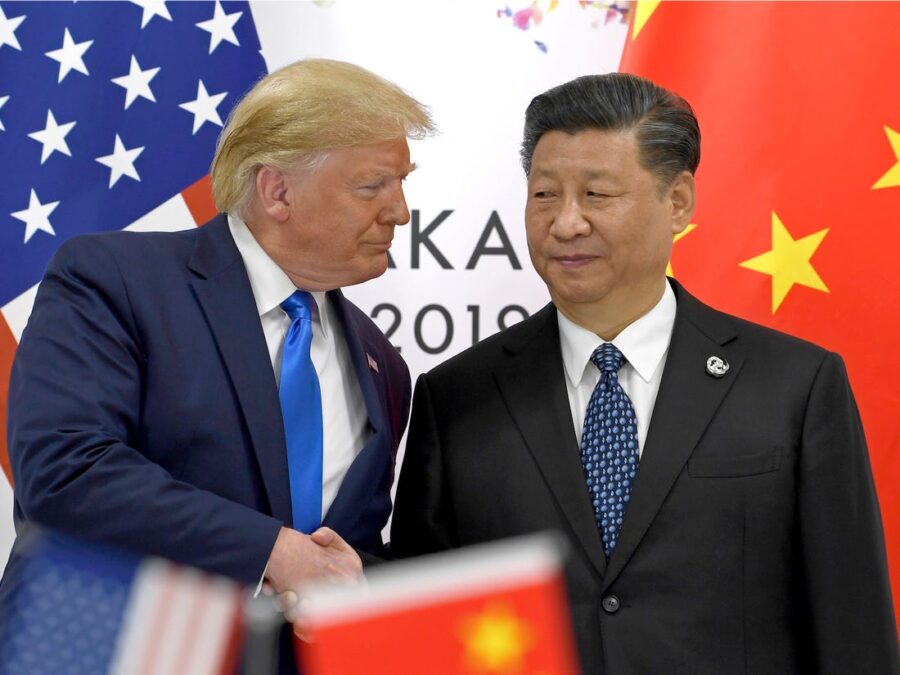
Nowhere was Trump’s mastery of relationship-building more evident than in his dealings with China. The conventional wisdom held that engaging China required institutional diplomacy and mutual respect for established protocols. Trump rejected this premise entirely. He understood that the Chinese leadership respects strength above all else, and that any meaningful relationship had to be built from a position of undeniable leverage.
Before his historic meeting with Xi Jinping, Trump strategically positioned himself through a series of bold moves that demonstrated his willingness to disrupt the status quo. By challenging Iran’s nuclear ambitions, confronting Venezuela’s socialist regime, and refusing to be bound by traditional diplomatic constraints, Trump established himself as a leader who operated outside established norms. This was far from being random policy-making. It was deliberate positioning designed to maximize leverage before sitting down with Xi.
When the meeting finally occurred, the Chinese rolled out the red carpet – literally. Children presented flowers, elaborate ceremonies were staged, and every visual cue suggested warmth and respect. But Trump understood something critical: this was theater, not transformation. He knew the Chinese couldn’t necessarily be trusted, that their overtures were calculated optics designed to play to Western sensibilities about diplomacy. As he departed, Trump’s team discarded everything given to them by the Chinese. Trump knew that the Chinese could not be trusted, and that their performance was precisely that: a performance.
But, if one can remember back to Obama, the pomp-and-circumstance was not provided for President Barack Obama. There was no red carpet, or pageantry. The Chinese did not respect, nor fear Obama. They could care less about his visit. They believed at that time, they were dealing from a position of strength.
During his recent trip to China, Trump’s relationship expertise shined brightly. Rather than being taken in by the pageantry or offended by the Chinese’s subsequent behavior, he remained focused on the strategic objective. He had entered the meeting from a position of strength, established his credibility as an unpredictable but formidable negotiator, and extracted concessions where possible; all while recognizing the fundamental limitations of the relationship itself.
This masterclass in diplomatic relationship-building reflects the core principles of “The Art of the Deal” applied to international relations. Trump understood that effective deal-making requires three essential elements: leverage, credibility, and the willingness to walk away. His relationship with Xi wasn’t built on mutual affection but on mutual respect for each other’s capabilities and limitations. The Chinese leadership respected Trump because they recognized he couldn’t be manipulated through traditional diplomatic channels.
As the Republican Party continues its transformation under Trump’s influence, this lesson in relationship-building becomes increasingly relevant. The future of conservative governance depends on emulating and embracing Trump’s approach: build relationships from strength, maintain them with leverage, and never mistake optics for substance.
The art of the relationship, properly understood, isn’t about making friends. It’s about making progress. In business, in broadcasting, and especially in politics, those who master this truth will shape the future. Donald Trump’s meeting with Xi Jinping wasn’t just diplomatic theater; it was a demonstration of how relationship-building, when properly understood and strategically deployed, becomes America’s greatest asset on the world stage.
— Political Pistachio Conservative News and Commentary