
By Douglas V. Gibbs
My dear friends, let me tell you the story about a Christmas Miracle that happened at Trenton back in 1776…
You have to picture the scene. It’s December 1776. The American Revolution is hanging by a thread, and I mean a thin, frayed, nearly broken, thread. General George Washington’s army is cold, hungry, and demoralized. The Patriots have only won three of the first eleven major battles of the War for Independence. The British think the whole rebellion is basically over. They’ve pushed America’s small remainder of troops across New Jersey, right into Pennsylvania.
They’re already writing the obituary for the American cause.
And who’s sitting pretty for Christmas in Trenton?
Not the British regulars. Not even close. They outsourced the job. They hired German Hessian mercenaries, professional soldiers from Hesse‑Kassel, to babysit New Jersey for them.
Because nothing says “we understand the American people” like sending foreign rent‑a‑troops to occupy their towns.
But General Washington had been learning on the job, and realized it was time to think outside the box. He had developed an incredible amount of grit during all of the failures. He was ready to stop losing, and his new path to victory had vision that nobody saw coming. After all, he had something the British command didn’t: the willingness to take a risk so bold it bordered on insane.
While the Hessians were relaxing after Christmas celebrations, Washington was preparing the most daring move of the war. In the middle of a brutal winter storm that included the whole enchilada: ice, snow, sleet – he led 2,400 men across the Delaware River. A frozen Delaware River. They had to break up the ice and not only float men, but equipment too, across the river in the frigid weather complete with howling winds. Two men died just from exposure as they marched across the New Jersey landscape after the crossing had been completed. And the other two armies didn’t make it across. It was all up to Washington and his men; with bleeding feet and limited ammunition.
But Washington was determined because he knew that if he didn’t strike now, the Revolution was finished.
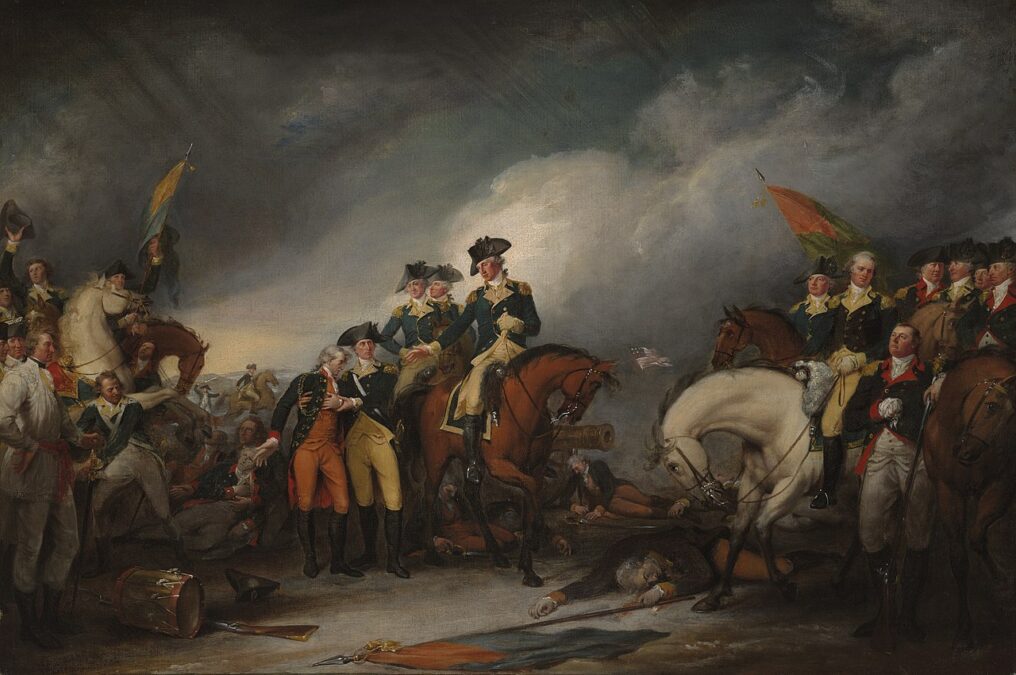
Despite getting there later than planned, in the morning hours of December 26, Washington’s forces hit Trenton like a thunderclap. The Hessians, commanded by Colonel Johann Rall, were caught completely off guard. While there is no historical evidence supporting the idea that the Hessians were fighting off a hangover after a day-long Christmas celebration, many historians consider that was a probability… you know, considering how the Germans love their beer, and everything.
The Americans moved fast: wide eyed, sober, coordinated, and disciplined.
The Hessians tried to rally, but it was too late.
By the time the smoke cleared:
• 22 Hessians were killed
• 83 wounded
• 800–900 captured
The American casualties?
Only a handful were wounded, including future President of the United States, James Monroe, who had to have an artery clamped to save his life.
The final tally wasn’t just a victory. It was a statement.
The Battle of Trenton was small in scale but enormous in impact. It revived American morale, proved the Continental Army could win, and set the stage for another victory at Princeton a week later. For historians, the two battles served as a turning-point in the war. The British thought the rebellion was collapsing, and Washington showed them it was just getting started.
This was the moment the Revolution got its second wind.
This was the moment America said: “We’re not done yet.”
So when you hear people talk about the American Revolution as if it were inevitable, realize that the upstart Americans were big-time underdogs. Victory was far from inevitable. It was held together by courage, audacity, leadership, and Faith in God. As the Declaration of Independence proclaimed in its final stanza, they were fighting “with a firm reliance on the protection of divine Providence.” They refused to quit even when the smart money said it was over knowing that God was with them, and because liberty was worth the fight.
Washington and his troops didn’t just cross a river.
They crossed the line between defeat and destiny.
And that, my good friends, is the real story of Trenton.
— Political Pistachio Conservative News and Commentary
(Help fund my radio programs… become a $9 Patron)