

By Douglas V. Gibbs
The damage done by the Biden administration to the economy was caused by pumping fiat money into the system and creating an environment where the cost of doing business and the government’s interference with the ability to increase supply reached prohibitive levels. The massive flow of dollars into the economy is an old Keynesian tactic called “priming the pump.” The theory is that putting more money into the system so that consumers may use it to buy things encourages economic activity. Except, it actually achieves the opposite. Inserting fiat money into the system increases inflation, and as prices rise, consumerism drops. Basic economics revolves around the concept of supply and demand, and the cost of doing business. Increased supply reduces prices, and a reduction of the cost of doing business reduces prices. Government’s role when it comes to improving the economy is simple: Get out of the way. Reduce regulatory restrictions, reduce fees, reduce taxes on business, and remove as many other obstacles as possible that stand in the way of production. This is what President Trump has been doing.
From day one he has reduced federal regulations on the business sector, he has been working on reducing taxes (many of which the Big Beautiful Bill launches into effect the first of the year), and he has been using tariffs to level the playing field and encourage domestic manufacturing and production. Meanwhile, he has reversed the Biden policies that interfered with the supply chain from inventory to energy prices when it comes to transporting these goods. While some of the improvements in our economy were apparent immediately, now the numbers are really beginning to emerge and it’s looking good for the economy – and in turn looking good for the Trump presidency.
The U.S. economy grew 4.3% annually in the third quarter according to new data released. The U.S. GDP, which is the country’s output of goods and services, far outpaced the forecast of 3.2%, and the third quarter number even outpaced the unexpected annualized growth of 3.8% during the second quarter.
With the improvement in the economy becoming evident to the naked eye, U.S. consumers are growing more hopeful about their future financial prospects. Recession fears have eased at the margins and polls have shown that a large segment of consumers have moved away from saying a recession over the next 12 months is “very likely” with many instead saying the downturn is “not likely.” The largest share still believes a recession is “somewhat likely,” but overall outright alarm over the economy has receded from earlier this year.
The job market is also improving with jobless claims falling for the second straight week, declining by 10,000 to 214,000 for the week ending December 20, according to the Department of Labor. The long-term unemployment rate still remains higher than desired, but with many investments in domestic manufacturing going into action in 2026, that number is expected to move downward in the coming months.
Inflation trends eased to 2.7 percent in November, with core inflation numbers down to 2.6 percent, the lowest since early 2021 at the end of President Trump’s last presidency. The Federal Reserve, in turn, lowered interest rates for a third time this year during the early days of December, with more cuts expected in 2026. The ultimate goal for inflation would be to reach 2%.
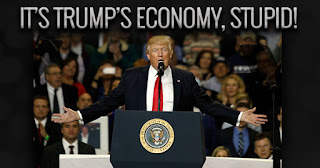
As inflation reaches levels lower than the experts expected, and economic growth is heading in the right direction beyond their expectations, we are reminded that voters tend to vote with their wallets. “It’s the economy stupid,” coined by James Carville in 1992 is becoming the GOP rallying cry as we approach the mid-term elections. The improving economy is all a direct result of President Trump’s economic policies and tariffs. Net exports are on the rise as the trade playing field levels, A.I. is increasing productivity, businesses are investing and spending, and consumerism is the strongest it has been in four years. Reaching a 5% GDP goal in the opening quarters of 2026 looks very achievable, something the Democrats during Biden’s reign (and also during Obama’s presidency) arguing such numbers would never happen again and that their economic numbers were simply the new normal.
The state of the American economy and their own personal finances are the primary concern of American voters, and as the Golden Age begins to burn even brighter it may fool the experts one more time. Typically, the political party in power does not do well in mid-term elections. However, if the economy continues to improve in 2026 the Republicans could very well gain seats in both Houses of Congress after the mid-term elections in 2026 with representatives fully in tune with President Trump’s agenda.
— Political Pistachio Conservative News and Commentary