

By Douglas V. Gibbs
I was able to spend some time earlier this week with Chris Dudley, former NBA player who is running for Governor of Oregon. I was impressed with his presentation, not only because of his stance on the issues, but his understanding of reality. He was asked if he planned, if elected governor, to eliminate the sanctuary state identity that Oregon has embraced. He responded that he can’t just get rid of it with a gubernatorial executive order since the designation exists according to law. With the veto pen he can stop things from getting worse, but he needs help from the legislature to start getting rid of damaging laws. The answer was exactly correct.
After the meeting, Mr. Dudley and I had a chance to talk without the crowd, and once my knowledge regarding the United States Constitution became a topic, he asked me a very good question that a lot of people have been asking of late. “Can President Trump eliminate mail-in balloting or make other changes regarding the election with an executive order?”
President’s have historically operated in a manner that basically says, “If Congress won’t give me what I want, I will go around the legislators with an executive order.” This attitude led to Barack Obama’s infamous quip, “I’ve got a pen and a phone.” Biden also barked about going around Congress if he didn’t get what he wanted, and even went beyond the threat of having a pen and a phone – he had an autopen to do the work.
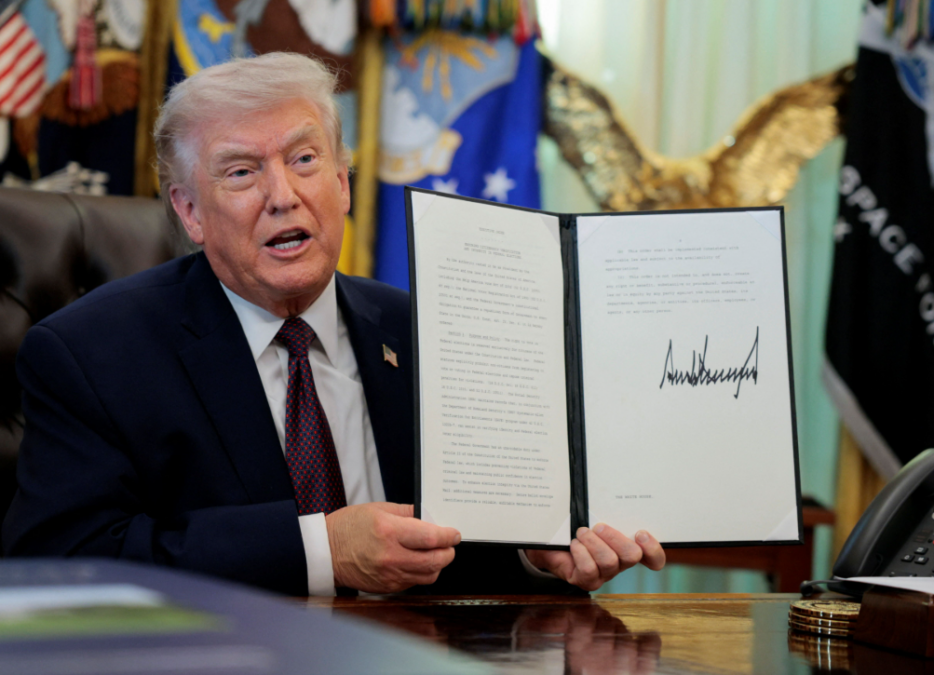
President Trump has used the executive order power quite a bit, and more often than not the E.O. is supported by existing legislation. While President Trump’s E.O. requiring citizenship verification for federal elections is technically supported by existing legislation, his E.O. requiring states to impose strict restrictions on mail-in ballots is not supported by law (though it will be if the SAVE America Act passes – but that EO would need to follow the signing of that law, not preceed it). Senate Minority Leader Chuck Schumer and House Minority Leader Hakeem Jeffries have gone so far as to join major Democratic political organizations in a lawshit against President Trump regarding his call through executive orders for increasing federal involvement. In a joint statement, Schumer, Jeffries, and Democratic committee leaders criticized the executive actions, stating, “Donald Trump is desperately trying to rig our elections by making it harder to vote for seniors, Americans with disabilities, members of the military, rural communities, and other working families who rely on vote-by-mail. This move is blatantly unconstitutional, and we will fight against it.”
The argument is a false one. Mail-in voting and absentee ballots are two different things. The former is about sending mail-in ballots to everyone, and the latter are mail-in ballots requested and applied for because the person realizes that they will not be able to vote in person due to a legitimate reason. President Trump’s EO does not disallow absentee ballots. His executive order regarding mail-in balloting mirrors law currently working its way through Congress that has been opposed by Democrats, which calls for eliminating mail-in balloting to anyone without any kind of process to request it for a legitimate reason. Absentee ballots are an important part of the system for those who find that they cannot vote in person – but that does not mean that we should challenge the chain of custody regarding “all” ballots with mail-in balloting. The fact is, when the system is operating on mail-in balloting like we see in places like Oregon and Washington, the opportunity for irregularities and fraud is greater.
It’s the same argument they’ve been using against Voter I.D. laws and proving one is a citizen and eligible to vote in a federal election: any obstacle is unconstitutional – which is a round-about way of saying that people who belong to certain groups are not smart enough or responsible enough to take care of their own affairs or paperwork.
Regardless of one’s feelings about the issue, the question regarding Trump’s E.O.s is simple: Is the executive order executing an existing federal law that is already on the books? If it’s not, then it is a proclamation, which is not legally binding.
Proof of citizenship and not allowing ballots to be counted if they arrive after election day are supported by law. Voter I.D. and restricting mail-in balloting to absentee ballot rules are not technically currently federal law.
Which, by the way, tells us why passing the SAVE America Act is so crucial.
— Political Pistachio Conservative News and Commentary