
By Douglas V. Gibbs
Tariffs have been a common tool of American statecraft since the founding. Though often portrayed as harmful by powerful economic and ideological interests, they have historically been central to debates over national prosperity and sovereignty.
From 1789 through the late nineteenth century, tariffs supplied most federal revenue. Early leaders viewed them as essential to economic independence and a normal instrument of governance.
Over time, however, free‑trade ideology gained influence. Economists labeled tariffs “distortions,” and international institutions promoted tariff reduction as a moral imperative. As Marxist thought spread through academia and media, tariffs were recast as backward “protectionism,” even though nations continued using them aggressively.
The turning point in the public imagination was Smoot–Hawley. Though enacted after the 1929 crash, it became a convenient scapegoat for the Great Depression. When I entered AM radio, a co‑host reflexively blamed Smoot–Hawley for the economic collapse rather than the Federal Reserve as I claimed, echoing the Keynesian cautionary tale still repeated today. The myth stuck: tariffs supposedly caused global catastrophe, even as other nations freely imposed steep duties on American goods.
This imbalance encouraged multinational corporations to embrace offshoring and global supply chains. Corporate lobbies and think tanks framed any U.S. tariff as a job killer, a tax on consumers, or isolationism. Public perception followed the “experts,” and tariffs became taboo.
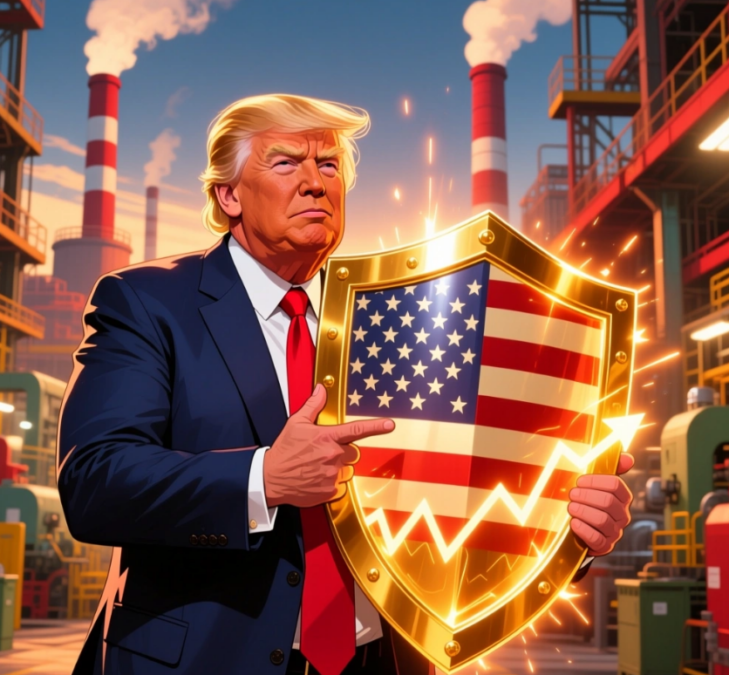
President Donald Trump recognized the asymmetry. While American politicians, academics, and media demonized tariffs, other nations used them as a wealth‑redistribution mechanism, penalizing U.S. prosperity while enjoying minimal American retaliation. Trump used tariffs as bargaining leverage, national‑security tools, industrial policy instruments, retaliation mechanisms, and revenue sources. He also noted that many critics supported tariffs when politically convenient.
Historically, tariffs are condemned when used by opponents but praised when used by allies. Trump exposed this inconsistency: tariffs were never inherently demonized, only selectively so.
By championing tariffs, Trump challenged the free‑trade orthodoxy dominating academia and media. Global corporations, benefiting from low U.S. import barriers, spent billions shaping public messaging. Smoot–Hawley became a morality tale used to frighten Americans away from policies other nations used freely. Politicians weaponized this narrative, ignoring the fact that tariffs were the backbone of American economic policy for 150 years.
So when Trump declared Liberation Day and called “tariff” his favorite word, critics predicted runaway inflation and a recession. Instead, the opposite happened.
The Bureau of Labor Statistics’ February 13 Consumer Price Index report delivered a major win for Main Street. Annual inflation slowed to 2.4%, down from 2.7%; the lowest since May. Monthly inflation rose only 0.2%. Core inflation fell to a five‑year low of 2.5%.
Shelter remained the main driver of inflation; most other categories were stable. Tariff‑sensitive goods showed minimal movement: new vehicles up 0.1%, apparel up 0.3%. Food rose 0.2%, and energy declined 1.5%.
If tariffs were as destructive as critics claimed, why has inflation risen only about 2% over the past year?
Until this report, experts insisted consumers were being crushed by tariff‑driven price spikes. A New York Federal Reserve paper argued that U.S. firms and consumers always bear the tariff burden. But the data contradicts that claim.
Some isolated price increases, such as in the beef industry, stemmed from supply issues, not tariffs. Meanwhile, the Truflation CPI Index shows annual inflation near 0.7%, far below federal estimates.
Experts are bewildered. According to their models, tariffs should have triggered widespread inflation. They didn’t.
Why? Partly because U.S. firms absorbed costs, cut expenses, or benefited from lower input prices. But the more important reason is structural: many companies shifted production to the United States. To maintain profit margins without losing customers, firms increased domestic production, which created jobs, expanded supply, and encouraged competition – driving prices down and quality up. That’s basic economics.
Consumers also shifted to non‑tariffed goods or to companies that rerouted supply chains to lower‑tariff markets. The results speak for themselves: the U.S. trade deficit has nearly halved since the Liberation Day tariffs. Manufacturing is returning to American soil, boosting GDP, employment, and long‑term economic resilience.
Yes, tariffs caused a brief, one‑time price bump across some goods. But the market has already adjusted. That short‑term increase is the worst Trump’s trade agenda will produce. The free market is funny that way…supply‑side dynamics always eventually win.
By summer, the economy may be roaring, and inflation could fall to levels even conservative analysts didn’t anticipate. With midterms approaching, the stakes are high.
Democrats who initially demonized Trump’s tariffs now understand they are central to his economic success. They are working aggressively to derail the tariff strategy. If they succeed, deflation may follow, and they will blame Trump. If they fail, the U.S. could enter a new period of prosperity, Trump’s “Golden Age,” reshaping the political landscape in ways that could become catastrophic for the opponents of U.S. Liberty and Prosperity.
Our future hangs in the balance, and tariffs are the key.
— Political Pistachio Conservative News and Commentary