
By Douglas V. Gibbs
Demonstrations in Iran continue after the collapse of Iran’s currency and long-standing public discontent. Widespread strikes and student protests across Tehran and multiple provincial cities has been met with violent responses by government security forces.
Reports of live fire and tear gas has confirmed the reality that the government is not only cracking down on the protesters, but they are using lethal force that has so far resulted in the deaths of possibly as many as 20,000 people.
Iranian officials publicly defend the government’s approach. Independent analysts indicate the internal structural strains have reached a “critical threshold,” as the country experiences chronic water and energy shortages.
The pressure has been building for years. This is an echo of the Iranian civilian uprising in 2009 that Barack Obama admits his administration made a “mistake’ in not supporting. “Every time we see a flash, a glimmer of hope, of people longing for freedom, I think we have to point it out. We have to shine a spotlight on it. We have to express some solidarity about it,” he said.
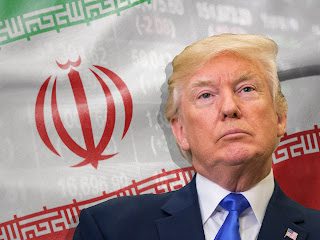
President Trump has taken the opposite tact in a robust embrace of everyday Iranians. If Iran “violently kills peaceful protesters, which is their custom, the United States of America will come to their rescue,” Trump wrote in a post. “We are locked and loaded and ready to go.”
While President Trump has not revealed his strategy, Iranian dissidents have cheered his statements. Among the tactics used by the United States, tougher sanctions will likely be one of them, though military forces are in the region and at the ready.
Obama was afraid of offending the Iranian leadership, but Donald Trump believes in using a firm hand internationally, and siding with those seeking liberty, which is why he was quick to make it clear where he stood when it came to the protests against the Iranian regime. President Trump’s actions against Iran have served as key influences on the rising unrest. Back in July of 2025 he sent B2 bombers to strike against Iran’s nuclear-weapons-making facilities, and in 2020 he sent American forces into Iran to successfully kill Qassem Soleimani, the general in charge of Iran’s notorious Islamic Revolutionary Guard Corps. The Trump administration has also indicated they are willing to augment those actions to embrace Iran’s protesters. A carrier strike group led by the USS Abraham Lincoln has been deployed to the region, and while military action seems to be on the table, President Trump has been engaging Iran’s government through diplomatic channels. President Trump has indicated that the United States would “act accordingly” if repression continued. Iran has denied the execution of protesters, and the administration is monitoring the clashes in Iran closely and has warned allies against economic ties with Iran.
Iranian leadership has warned against the American president “meddling” in the internal political affairs of Iran, while also blaming Trump for the unrest. “Trump should know that intervention by the U.S. in the domestic problem corresponds to chaos in the entire region and the destruction of U.S. interests,” Ali Larijani, a former parliament speaker and current secretary of Iran’s Supreme National Security Council, wrote on X, as reported by CBS. “The people of the U.S. should know that Trump began the adventurism. They should take care of their own soldiers.”
In a discussion with an individual who fled Iran in 1982, I was told that there is very little public support for the Islamic regime in Iran. “Persians hate the Arabs for bringing Islam to the region, and only abide by Islamic law out of fear.” According to my contact, pro-U.S. sentiment is strong in Iran, and Christianity is the fastest growing religion in the Middle Eastern country.
According to Ali Safavi, one of the leaders of the Iranian opposition, “…for 46 years, the Iranian regime and its leaders, including Khamenei, have been engaged in acts of genocide and crimes against humanity, and unfortunately, the inaction of the international community in all these years only emboldened them in these atrocities.” Safavi said he did not believe the United States would need to commit any troops or military power for regime change to occur in Iran. “The overthrow of the ruling dictatorship is only possible at the hands of the people of Iran and the organized resistance, a responsibility that the resistance units and rebellious use are striving to fulfill. And toppling this regime, of course, requires neither foreign troops, nor foreign funding. Instead, the international community, the European Union and the U.S. should recognize the right of the Iranian people to topple this regime and so, in this context, and a decisive statement of support for what is happening in the future of Iran today, is certainly encouraging to the Iranian people.”
Safavi had indicated the rest of the world can help the opposition movement with a few actions. He has called upon Europe to designate the Iranian Revolutionary Guard Corps as a foreign terrorist group like Trump did in 2019. He has called upon all Western countries to expel all Iranian diplomats. He has urged the United Nation’s National Security Council to express support for the Iranian people and to condemn Tehran’s crackdowns. He has called for the imposition of a ban on all Iranian banking globally, including ending the country’s ability to conduct transactions in the SWIFT banking system. He has called for a worldwide ban on Iranian oil sales.
Former CIA analyst and National Security Chief of Staff Fred Fleitz told Just The News that President Trump needs to quickly revamp the messaging on its foreign-facing radio and TV networks like Voice of America and Radio Liberty so that the Iranian people know of Trump’s support, something that they often can’t see because much of social media and Western news is blocked in the country.
“The Iranian regime does not want the people to know that protesters are being killed. We have to get the message into the country that this is happening, because if the people know that the regime is responding to their peace of protesters by killing protesters, which the regime doesn’t want to know about, these demonstrations could snowball,” he explained.
Fleitz said the current protests may not be strong enough yet to topple the regime, but could rise to that level soon.
“I think it’s a significant threat,” he said. “It has not yet reached critical mass to become a revolution, or something we can say will overturn the regime. But it is getting stronger,” he said.
“Iran is looking at FREEDOM, perhaps like never before,” Trump wrote in a Jan. 10 post on Truth Social. “The USA stands ready to help!!!”
The president’s message has remained consistent since that post, calling the Iranian regime “religious Nazi henchmen,” and stating that the regime’s “brutality against the great people of Iran will not go unchallenged. Make Iran Great Again.” Trump’s rhetoric, according to Senator Lindsey Graham, has become a symbol of solidarity with demonstrators. He urges people to publicly stand with Iranians calling for change.
Protesters have torched government buildings and the Al-Rasul mosque in Tehran, the latter a symbol of the Islamic regime. In a video released of the burning mosque, chants of “death to the dictator” and “death to Khamenei” could be heard. Exiled Iranian crown prince Reza Pahlavi issued a message calling on supporters to continue demonstrations and called for nationwide strikes in key sectors, including transportation and energy. He also appealed to members of Iran’s security forces to slow and disrupt what he called the regime’s “machine of repression.”
The protests were sparked in late December 2025, and continue to evolve becoming the most sustained nationwide challenge to the Islamic Republic since the dawn of the regime nearly fifty years ago.
— Political Pistachio Conservative News and Commentary