
By Douglas V. Gibbs
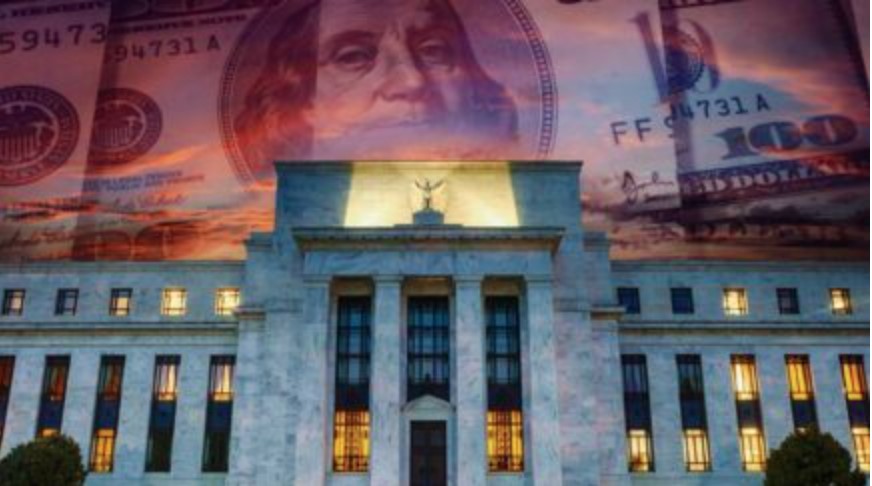
For more than a century, the Federal Reserve has operated as America’s central bank, an institution whose very existence challenges constitutional limits. Article I, Section 8, Clause 5 grants Congress the authority “to coin Money [and] regulate the Value thereof,” and Article I, Section 1 makes clear that legislative powers “vested” in Congress cannot be delegated away. By that reading, the Fed stands as an unconstitutional institution.
Yet the reality remains: the Federal Reserve exists, wields enormous influence, and shapes the economic landscape every American must live in. If the Fed cannot be abolished in the near term, then the next best option is to minimize the damage it can do. That is the context in which President Trump’s choice of Kevin Warsh should be understood.
Warsh’s pedigree is impressive, but what makes him compelling is not the résumé as much as his worldview behind it.
• Stanford bachelor’s degree
• Harvard Law School graduate, with additional coursework at Harvard Business School and MIT Sloan
• Morgan Stanley executive before entering government
• White House economic adviser under President George W. Bush
• Youngest Federal Reserve governor in history, appointed at age 35
• Fed governor from 2006–2011, navigating the global financial crisis
• Hoover Institution fellow and Stanford Graduate School of Business lecturer
During his Fed tenure, Warsh represented the United States at the G‑20, oversaw internal operations, and served as administrative governor. He understands the institution from the inside; its strengths, its blind spots, and its political temptations.
What sets Warsh apart is not his establishment credentials but his willingness to criticize the establishment.
Warsh has repeatedly argued that the Fed has:
• Kept monetary policy too loose for too long, especially during the Biden years
• Expanded its balance sheet beyond any reasonable mandate
• Wandered into political and social activism, far outside its statutory role
• Relied too heavily on “forward guidance,” a practice he argues distorts markets and substitutes messaging for sound policy
In an April 2025 speech at the International Monetary Fund, Warsh warned: “Moving markets with rolling Fed incantations is tempting, but unhelpful to the Fed’s deliberations, and ultimately, to its mission.”
His prescription is simple: Push less money into the economy. Shrink the balance sheet. Restore discipline.
This is not the first time Warsh has been in the running for the top job. In 2017, he was a leading contender to replace Janet Yellen until Treasury Secretary Steve Mnuchin recommended Jerome Powell instead. Warsh’s name resurfaced again as a potential Treasury secretary during Trump’s second-term transition.
Now, with Powell’s term ending in May 2026, Warsh is once again the nominee, but this time with a clearer philosophical alignment.
President Trump has pursued a strategy of:
• Supply-side growth
• Innovation and manufacturing revival
• Lower interest rates to fuel expansion
Warsh is not a doctrinaire dove, but he understands Trump’s economic aims and has spent decades preparing for a moment when the Fed might be steered back toward discipline, transparency, and statutory restraint.
The Biden administration’s monetary and fiscal policies pumped unprecedented amounts of fiat currency into the economy, driving inflation to 9%. Trump’s policies have brought inflation down significantly, but it remains above the Fed’s 2% target. Warsh’s approach, tightening the balance sheet while coordinating with a pro-growth White House, may be the combination needed to finish the job.
Warsh’s nomination is not guaranteed. Senate Democrats oppose nearly every Trump initiative, and some Republicans have signaled procedural resistance tied to unrelated investigations. Confirmation will be a battle.
But if Warsh is confirmed, the implications are enormous.
Warsh would enter the chairmanship with:
• Deep institutional knowledge
• A reformer’s mindset
• A willingness to challenge the Fed’s culture
• Alignment with Trump’s economic vision
If he succeeds, the Federal Reserve could shift away from the activist, interventionist posture of recent decades and toward a more restrained, constitutional, and economically grounded role.
Whether that happens depends on the Senate. But the stakes are clear: A Warsh-led Fed could mark the most significant philosophical shift in American monetary policy in a generation.
In the end, Kevin Warsh’s confirmation is not merely about who occupies the chair at the Federal Reserve. It is about whether the central bank will continue drifting into political activism and monetary excess, or whether it will be forced back toward discipline, restraint, and its narrow statutory purpose. Warsh is one of the few figures in modern monetary policy who both understands the Fed’s internal machinery and openly challenges its excesses. At a moment when inflation remains stubbornly above target, when the balance sheet is bloated from years of intervention, and when the American economy is poised for a supply‑side resurgence, the nation cannot afford another era of drift. Warsh represents the possibility of a course correction. That is why his confirmation matters; not just to President Trump’s economic agenda, but to the long‑term stability of the dollar, limitations on the interference of the American economy by the central bank, and the constitutional principle that institutions must remain within the boundaries of their delegated authority.
— Political Pistachio Conservative News and Commentary