
By Douglas V. Gibbs
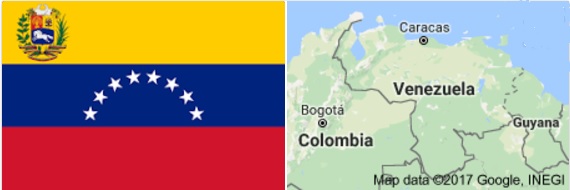
Venezuela was once one of the wealthiest countries in the world on a per-capita basis, powered by enormous oil reserves and a relatively stable western democratic free-market system. Then, as their prosperity peaked and oil exports increased its influence on their economy, they moved away from domestic manufacturing and domestic agriculture, becoming more dependent upon imports for things they once produced. Then, in 1999, the voters fell for the trappings of socialist promises, and elected Hugo Chavez as their president. Chavez then launched the Bolivarian Revolution, transforming the economy into a state-controlled socialist model. The government nationalized oil, agriculture, telecommunications, steel, electricity and more. Then, price controls were placed on food, fuel, and consumer goods. Currency controls distorted the markets and encouraged corruption. Then, pushed by Cultural Marxism’s call for social justice, massive social spending ensued, funded almost entirely by high oil prices. While in the beginning the policies were viewed as fair, and a way to create better equity in society, they hollowed out private industry and placed the country’s economy solely on government decisions and a lack of any private innovation or domestic production.
Oil production ultimately declined, largely due to mismanagement, and the domestic economy collapsed. Once Chavez was gone, the deterioration of the economy increased, with living standards dropping by 74% between 2013 and 2023 under Nicolas Maduro who replaced Chavez when the communist leader died on March 5, 2013. Maduro doubled down on Chavez’s policies of central planning and repression, leading to hyperinflation and a contraction of GDP by more than 75%. Seven million Venezuelans fled by 2022, creating one of the world’s largest refugee crises.
As nationalization destroyed the private-sector and any industrial efficiency, price controls made production unprofitable, expropriations scared off investment, and state-run enterprises became politically staffed and mismanaged, black markets and corruption gained footing and began to bleed throughout the system. Lack of accountability fed the corruption, and the concentration of power increased to protect the corruption. Incentive was eliminated, productivity was destroyed, and the market system collapsed thanks to the socialist policies of Chavez and Maduro.
As with any collapsed state and runaway widespread corruption, organized crime found a footing. With the breakdown of institutions, and the weakening of government, criminal networks filled the vacuum. Security forces went unpaid, borders became porous, oversight and accountability evaporated, and as a result criminal groups became the de facto authority. The rise of criminal organizations was accepted by the Maduro regime, and government officials became enablers of the criminal organizations. Maduro allowed, provided little resistance to, and profited from drug trafficking, money laundering, arms trafficking, and human trafficking. Venezuela became a key corridor for cocaine moving from Colombia to global markets. Why? Weak border patrol, corrupt military and policing units, strategic Caribbean access and corrupt communist government made Venezuela a perfect tool for criminal organizations. The government, after all, could no longer stop them, much less cared to stop them.
As time passed, the rise of megabandas emerged. Megabandas are criminal groups with more than two-hundred members, have access to military-grade weapons, and who have achieved territorial control over neighborhoods or regions in Venezuela. For example, El Koki, a gang leader who controlled a population of 700,000 in Caracas operated with tacit approval from the Maduro government.
These gangs run extortion rackets, control drug distribution and operate with political protection. Sometimes, they even act as paramilitary forces for the Maduro regime. Venezuela’s citizens, as a result of trading a western-style free market for socialism, are now experiencing mass unemployment, food scarcity, and hyperinflation. For a lot of people, drug trafficking and other criminal activities become their main viable options for survival. When the legitimate economy dies, a black market inevitably becomes the primary economy.
Here in America, the Democrats, while in power, turned a blind eye to what was going on, and the hardcore socialists I’ve talked to even went so far as to blame Venezuela’s fall on American multi-national corporations, rather than the political socialist policies of Venezuela’s government leaders. President Trump, however, views what is going on as a national security issue, and he has made it one of the priorities of his administration to take action regarding the threat.
According to the Trump administration, Venezuela’s collapse created criminal and trafficking networks involved in drug trafficking, illicit finance, and organized crime. These criminal networks are directly tied to drug flows, which harm Americans. President Trump has made it a mission to protect the U.S. homeland from narcotics and criminal organizations operating from Venezuela.
So, President Trump has taken action as Commander in Chief to launch strikes on drug-smuggling boats, to seize sanctioned tankers in international waters, and now to hit a “big facility” where drug-running boats were loaded.
President Trump acknowledged Monday, December 19, 2025 that U.S. forces struck a facility in Venezuela, describing a “major explosion” at a dock area used to load boats with drugs. While President Trump has described his actions against Venezuela as moves designed to “squeeze” Maduro’s government, this is the first land-based strike in Venezuela under Donald Trump’s presidency.
“We hit all the boats, and now we hit the area, it’s the implementation area. That’s where they implement. And that is no longer around,” said President Trump regarding the strike while meeting with Israeli Prime Minister Benjamin Netanyahu at Mar-a-Lago in Florida. While the President has denied that he plans to start a land war in Venezuela, or that he seeks “regime-change,” he has also signaled that he is willing to expand military actions from maritime strikes to land-based targets if that is what is necessary to disrupt narcotics trafficking and diminish the Maduro regime’s influence.
— Political Pistachio Conservative News and Commentary