
By Douglas V. Gibbs
The English Colonies, particularly the ones in the north, were established on a concept today we call Religious Freedom. The Church of England as the established religion in England worked with the government to crush any competing religious denomination, and as a result a large swath of Englishmen sought to embark on the perilous journey to the New World so that they could worship without a government hand or established religion dictating the terms. Ironically, in most of the colonies in America the inhabitants created their own systems of established churches. In 1787, when delegates from twelve states met in the Constitutional Convention, nine of the thirteen states had established religions.
In 1791, the Bill of Rights was ratified by the states. In the First Amendment, it reads, “Congress shall make no law respecting an establishment of religion, nor prohibiting the free exercise thereof.” The language was clear and specific. The United States Congress had no authority from the beginning to make any law establishing a countrywide, federally blessed state church, nor could Congress pass any law prohibiting the free exercise of religion; that last part a nod to the country’s foundational concept of religious freedom. The clause did not apply to the states, but to the federal government, as the language reveals. President Jefferson, in an exchange of correspondence with the Danbury Baptists of Connecticut in 1801, confirmed that notion when he explained that the federal government could not help them with their dilemma against the Puritan Church (called the Congregationalist Church at the time). Religion was a state issue, and religious freedom at the state level required local state legislation.
Constitutional scholars, even the most liberal, agree that the Bill of Rights only applied to the federal government at the time. The language in the Preamble of the Bill of Rights is explicit that the purpose of the first ten amendments was “to prevent misconstruction or abuse of its [federal government’s] powers.” The false doctrine that the Bill of Rights must be applied to the states with the federal government as an enforcer didn’t even emerge until the ratification of the Fourteenth Amendment, but that is based on a modern broad interpretation of the Due Process Clause which was rejected on the floor of Congress during the debates over the Reconstruction Amendment, per the Congressional Globe (congressional record) of the time. So, the notion that the established religions were expected to be “disengaged” because of the First Amendment, and that they had all “complied” by 1833 is a very uneducated position, at best.
This is not to say that state-supported religions were approved of. They were not. The states did indeed eventually eliminate all of their established religions within a generation of the ratification of the Bill of Rights. The Bill of Rights not applying to the states is not a suggestion that the Founders approved of state churches, but that they respected the concept of state sovereignty. Leaving local issues in the hands of the states was discussed at length during the 1787 Constitutional Convention, and the federal government enforcing anything against the states, much less through a Bill of Rights that would later emerge during President Washington’s first term, was rejected by the delegation not only because of the concept of states’ rights, but because they knew the states would never ratify the document if such a provision was included. The same discussions arose during the congressional debates over the Bill of Rights in 1789, with the representatives of both Houses of Congress rejecting the notion that that the federal government had any authority to enforce the clauses of the Bill of Rights against the states.
No Founding Father ever used the term separation of church and state, except Thomas Jefferson in a letter to the Danbury Baptists, of which he explained what he meant by a “wall of separation between church and state” was that religion was a state issue, and the federal government had no authority to dictate to a state what they did regarding religion. The definition of a separation of church and state as understood by today’s progressives was not only rejected by the political leadership during the founding era, the population would have also rejected it if such a notion had been even attempted to be put in place. The country was a very spiritual one, with a population that, as Alexis de Tocqueville would later comment, took their faith very seriously. He wrote, “Religion in America takes no direct part in the government of society, but it must be regarded as the first of their political institutions… I do not know whether all Americans have a sincere faith in their religion – for who can search the human heart? But, I am certain that they hold it to be indispensible to the maintenance of republican institutions.”
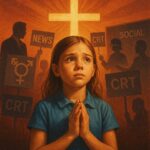
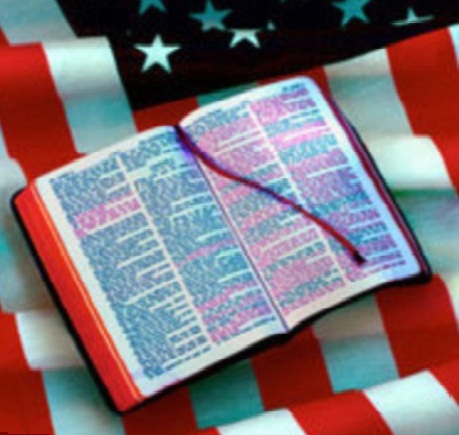
Today’s Christians largely hold to these ideas that America was founded upon a solid Christian foundation, and that the faith of the Founding Fathers was not only an important part of the structuring of the country’s constitution and governmental system, but that a separation of powers not only existed among the three branches of government, but between the states and the federal government as well. As for the notion of “Christian Nationalism,” which is progressive leftist code for “theocracy,” it is an idea cooked up in the minds of the political left due to their hatred (or perhaps fear) of Christianity. No reasonable Christian holds any view that a theocracy with religious leaders running the government is even remotely a good idea, much less in line with the principles of our constitutional republic. But, that doesn’t mean the opposite is true, either, and that we have strictly a secular government that has the authority to crush any notions of faith rearing its head in the halls of government, or any notions of political speech being spoken from the pulpit. The Founders intended for this country to be deeply religious where Christians were bold leaders in the shaping of the culture, and influential in the public square. Christianity in America was originally intended to be involved in the shaping of public morality and civic virtue without becoming a tool of government, nor erased from the hearts of America’s leaders. Spiritual vitality has long been at the foundation of this country, and the Founders expected the citizens to influence the culture and for Christianity to guide the conscience of the politicians and the convictions of the pastors, without either institution dominating the other. Christianity as an active part of American Society is essential to preserve the principles of the Constitution, our moral compass, and the true essence of what liberty is truly all about.
— Political Pistachio Conservative News and Commentary