

By Douglas V. Gibbs
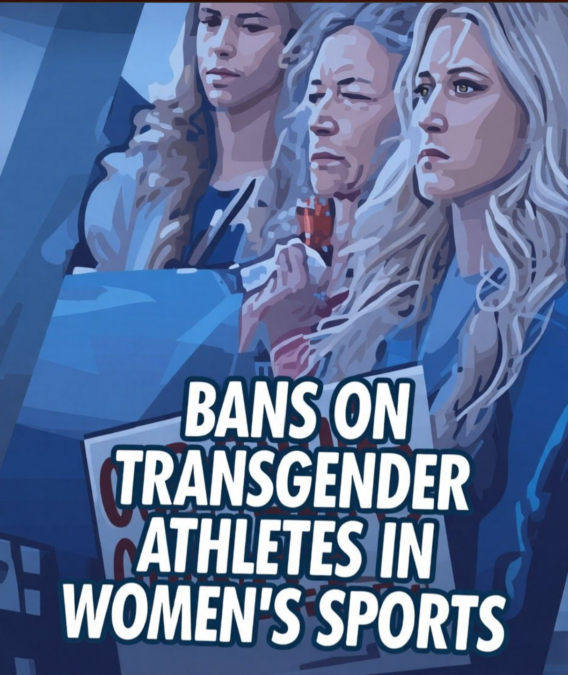
Little v. Hecox, a case pitting a transgender Boise State University student against an Idaho law prohibiting biological males from competing on female sports teams from elementary school through college, has now reached the United States Supreme Court. The High Court heard oral arguments on January 13, 2026. The case carries enormous weight because it tests whether state laws barring males who identify as females from participating in women’s sports violate the Equal Protection Clause of the Fourteenth Amendment. The final ruling regarding the law at issue, the 2020 Fairness in Women’s Sports Act, could shape national policy on sex classification, athletics, and the legal status of transgender identity in sports.
The legal battle began in 2020 when a federal district court blocked the law as unconstitutional. The Ninth Circuit affirmed the injunction in 2023. The Supreme Court took up the case in 2025 and began hearing arguments in 2026. Idaho contends that the state has a compelling interest in preserving fair competition and athletic opportunities for women, interests long recognized under Title IX, which has always distinguished athletes based on biological sex, not gender identity.
Hecox argues the law unfairly targets transgender women, triggering heightened scrutiny under Equal Protection. Without saying it directly, Hecox is arguing for Civil Rights Law protection. The respondent further claims Idaho has not demonstrated that transgender athletes pose a systemic threat to women’s sports, that the law is overbroad (reaching even children and intramural sports), and that it violates both the Equal Protection Clause and Title IX.
But, the Equal Protection Clause does not require states to enact special protections for any group. It simply forbids laws that violate Equal Protection. The central question, then, is whether Equal Protection applies when a claimed identity departs from biological reality and exists solely in the mind of the claimant.
Based on the justices’ questioning, the Court appears inclined to affirm that states have broad authority to define sex categories in athletics. The Court may also revisit Bostock v. Clayton County (2020), which held that discrimination based on transgender status is discrimination “because of sex” under Title VII. One wonders if Justice Clarence Thomas’ opinion in 2019 Garland v. United States, as well as being a recurring argument that surfaces often that courts should overturn wrong precedents if they conflict with the Constitution, not just follow them, will become a part of the discussion. He has said a number of times, “It is not the job of judges or justices to abide by wrong precedent, but by the Constitution and existing law”, viewing precedent as non-binding if it lacks constitutional grounding, urging courts to correct errors rather than perpetuate them.
The ruling of Little v. Hecox will clarify whether Title IX’s use of the word “sex” includes gender identity in sports. With many states enacting similar laws, the Court’s decision will likely settle their constitutionality nationwide.
Although I cringe when federal courts decide whether state laws may continue to exist, given that striking down legislation is a legislative power and the judiciary was meant to only wield judicial powers as per the concept of a Separation of Powers, I also recognize the need for national clarity on this issue.
One moment in the oral arguments was particularly striking: Justice Samuel Alito’s exchange with Kathleen R. Hartnett, attorney for Hecox. His questioning cut through political rhetoric and landed squarely on legal ground, exposing the ideological and mental contortions required to deny biological reality. It echoed the “What is a woman?” question raised in Matt Walsh’s documentary and posed to Justice Ketanji Brown Jackson in 2022. For both Justice Jackson and the activists in Walsh’s film, the answer amounted to a circular claim that a woman is simply anyone who says they are. In a recent street interview, a transgender individual gave the same answer: I am a woman because I think so “In my mind.”
Justice Alito asked Hartnett, “How can a court determine whether there’s discrimination on the basis of sex without knowing what sex means for equal protection purposes?”
Hartnett responded that the statute’s definition was tied to “birth,” which “categorically excluded” her client from women’s teams. Yet her argument attempted to accept biological reality for practical purposes while still claiming discrimination.
Alito then offered a simple hypothetical: a student with male genes, male reproductive anatomy, no puberty blockers, no hormones, no surgeries – who simply declares, “I am a woman.” Could a school bar this student from the girls’ team?
After frantic circling around the question, Hartnett finally conceded that the school could.
Alito pressed further: If the student sincerely believes he is a woman, is he a woman? Hartnett replied that she would “respect their self-identity,” but ultimately admitted that such a person would retain a “sex-based biological advantage” making competition unfair.
In other words, identity in the mind does not override biological reality.
Alito then delivered the decisive point: “So what you seem to be saying is yes, it is permissible for the school to discriminate on the basis of transgender status…” because barring a transgender-identifying male from the girls’ team is, by definition, differential treatment based on transgender status.
Hartnett struggled to reconcile her position, insisting the case did not require the Court to decide whether transgender women who went through male puberty could play on men’s teams.
Ultimately, the arguments made clear that the Equal Protection framework, like weight classes in boxing and wrestling, exists to protect those at a disadvantage. It was never intended to apply in reverse, nor to validate differences grounded solely in subjective identity. Cultural Marxism’s notion of “equity” collapses under biological reality. One cannot invoke biology for fairness while denying it for identity.
Equal Protection applies to biological realities, not to self-declared identities formed in one’s mind.
— Political Pistachio Conservative News and Commentary