

By Douglas V. Gibbs
In today’s heated immigration discourse, some advocates for open borders and global governance attempt to rewrite history to support their arguments. They cherry-pick historical facts while ignoring crucial context, creating a distorted narrative that serves their political agenda.
A fundamental flaw in this approach is presentism: judging historical actions by modern standards and values. We cannot apply today’s cultural norms and legal frameworks to people who lived centuries ago. They operated under different circumstances, with different knowledge and different societal structures.
If we want to play the “stolen land” argument, then all people live on stolen land. Throughout human history, territories have been conquered, reconquered, and reestablished. Consider Britain: the original Britons are long gone. The island has been controlled by Saxons, Angles, Jutes, Vikings, Normans, and others. Today’s British people are largely a genetic mixture of all these groups and more. This pattern repeats across the entire globe.
Sovereign nations have the right to maintain their identity or change it as they see fit. History reveals that civilizations achieving longevity typically follow deliberate plans. Rome implemented strict assimilation policies. America, adhering relatively closely to its Constitution and embracing free markets, natural rights, and limited government, has prospered.
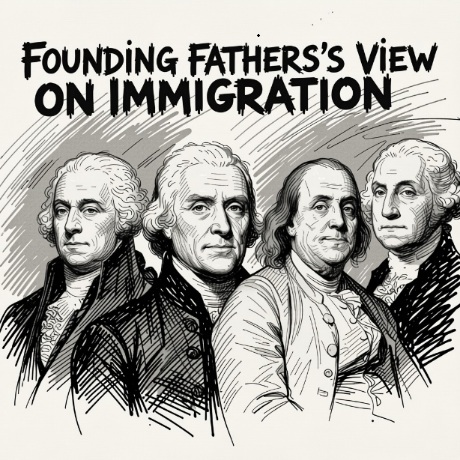
Unfortunately, some politicians now seek to undermine America’s founding principles. Congressman Jamie Raskin (D-MD) recently claimed during a subcommittee hearing that the Founding Fathers were “undocumented immigrants,” specifically mentioning Thomas Paine. When questioned, he doubled down, stating Paine was an “undocumented immigrant, just like Thomas Jefferson’s family was.”
This comment came during a Republican hearing examining the effects of the 1982 Supreme Court ruling Plyler v. Doe, which extended public education to illegal immigrant children based on the equal protection clause. The problem is, the decision violates Article IV’s privileges and immunities clause, which restricts constitutional protections to citizens.
Raskin’s argument, including his claim about undocumented founders, rests on the idea that America should fulfill its promise as an “asylum to humanity,” a refuge for those seeking freedom from persecution worldwide.
History reveals a different story. The English Colonies were part of the British Empire at the time. Thomas Paine, born in the U.K., was a British subject and legal resident. The British Empire didn’t use documents for colonial immigration because the system worked differently then. Most of our ancestors arrived without documents because the laws and processes were different.
Once America became independent, immigration laws were actually quite strict. The goal was to grow the country with the best the world had to offer. Think of it like a business seeking top employees, interviewing candidates and ensuring they have no criminal record or characteristics that might harm the enterprise.
Early American immigration policies carefully screened out Tories and those with low skills who might become dependent on the system rather than productive contributors. The Founders expressed the need for newcomers to have good moral character and adopt American principles. They specifically sought white Europeans, not due to some kind of racism, but at the time those were the peoples and places that best fit what the Founding Generation was trying to create. This context is something Raskin conveniently omits, preferring short, decontextualized soundbites to defend destructive leftist positions.
The debate over immigration deserves honest discussion grounded in historical fact, not revisionist history that ignores context. America’s founders understood that sovereign nations have the right, and the responsibility, to control their borders and determine who enters. That’s not xenophobia; it’s common sense nation-building.
— Political Pistachio Conservative News and Commentary