
By Douglas V. Gibbs
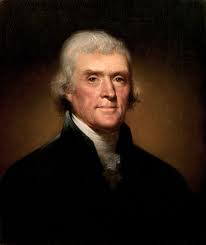
Jefferson was not fond of large cities, and believed that tyranny rose from large centralized population centers. James Madison shared that sentiment in Federalist Paper #10, referring to large impetuous mobs as factions, “united and actuated by some common impulse of passion, or of interest, adversed to the rights of other citizens, or to the permanent and aggregate interests of the community.” This is where, he believed, democracy became dangerous.
Jefferson was clearer in his writings regarding the dangers of people piled upon each other in large cities; “When we get piled upon one another in large cities, as in Europe, we shall become as corrupt as Europe.” – Thomas Jefferson
In the cities the large populations require more regulations, and more government influence on the lives of the people. “My reading of history convinces me that most bad government results from too much government,” Jefferson explained.
The United States of America was founded on principles designed to protect liberty, the rights of the citizens, and State Sovereignty against a potentially tyrannical federal government that was being created by the Constitution for the purpose of protecting, preserving and promoting the union of States. The Old World mocked the attempt, determining that self-governance without a ruling elite to ensure the common good was folly. The new country put its trust in a system rejected by Europe called “republicanism,” determining that as a republic, freedom would be best protected. However, some feared that if the population became too great, and too many cities were built, the republic would descend into a democracy, which always becomes an oligarchy; the many ruled over by a powerful few.
How could a system where local issues were supposed to be navigated by local government without the watchful eye of a centralized system filled with bureaucrats be anything other than an utter failure when the bureaucracy is filled with persons who only care most about the interests of the cities, survive?
Jefferson hoped America would remain an agrarian society, a country of small family farms. His distaste for cities was well known. He called them “pestilential to the morals, the health, and the liberties of man.” From his studies of Latin and Greek Jefferson derived his belief that the ideal citizen was one who was a modest family farmer who produced everything he needed, making him truly free. His relations to the surrounding populations would then be voluntary, rather than necessary. City dwellers could not grow their own food, cut down trees and build their own homes, nor create their own clothing or products for market. They were less free. They, according to Jefferson, were shackled with economic and political dependency. “Those who labor in the earth,” he wrote, “are the chosen people of God.
“The mobs of great cities,” he wrote, “add just so much to the support of pure government, as sores do to the strength of the human body. It is the manners and spirit of the people which preserve a republic in vigor. A degeneracy in these is a canker which soon eats to the heart of its laws and constitution.”
Philadelphia was already considered a metropolitan center, a hub of societal organization with its more than 50,000 residents. That said, during his time ninety five percent of Americans were farmers. While there were cities, the vast majority of the American people lived either on farms, or were scattered along the coast in fishing villages. To Jefferson, cities were unhealthy places, both for the body, and the mind. Without open spaces, he argued, people were confined and destined to be dependent upon the government. Unfortunately, as the country grew, urban life was inevitable. The American population grew rapidly, and cities began to dot the landscape across the map. Despite his anti-urban bias, in his writings Jefferson was a man of paradox, calling his five year residency in Paris (1784-1789) a time of thriving, and he regarded his years in Philadelphia as the most satisfying of his life.
— Political Pistachio Conservative News and Commentary