

By Douglas V. Gibbs
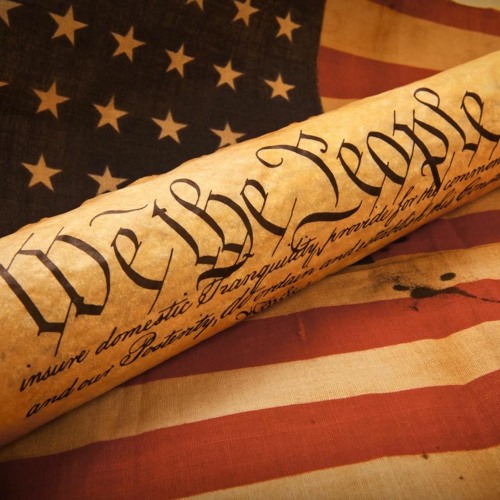
The words “We the People” are iconic. When anyone in the world hears them, they know they come from America. As the opening of the Preamble to the United States Constitution, they declare that the new system of government does not serve a powerful elite or a distant nobility, but the people as a whole.
E Pluribus Unum – “Out of many, one” – captures the same spirit. Proposed by artist Pierre Eugene du Simitiere in 1776 for the first design of the Great Seal of the United States, the phrase was officially approved in 1782 by the Congress of the Confederation, five years before We the People was chosen to introduce the Constitution.
The idea was revolutionary: a single country, a union of states, emerging from many parts – colonies, communities, and a remarkably diverse collection of peoples. It was a paradox the world had never seen before: unity without uniformity.
For most of the America’s first two centuries, E Pluribus Unum functioned as the de facto motto of the United States. In 1956, Congress officially adopted “In God We Trust” as the national motto, yet E Pluribus Unum remained a defining emblem of American identity. Together, the two phrases reveal a profound truth about the American experiment: we are one people under God, a recognition rooted in the Founding Fathers’ political philosophy.
The Founders were overtly Christian and believed the American Revolution would not have been possible without the Hand of God upon it. They held that the success of the new country would be measured not merely by results, but by obedience to God. Through that obedience, they believed, greatness would naturally follow. But they also understood that such obedience required a united people – a Union under one banner, mutually reliant upon the protection of divine Providence. As Scripture warns in Matthew 12:25, “And if a house is divided against itself, that house cannot stand.”
We the People was chosen as the Constitution’s opening line to signify that unity.
— Political Pistachio Conservative News and Commentary