

By Douglas V. Gibbs
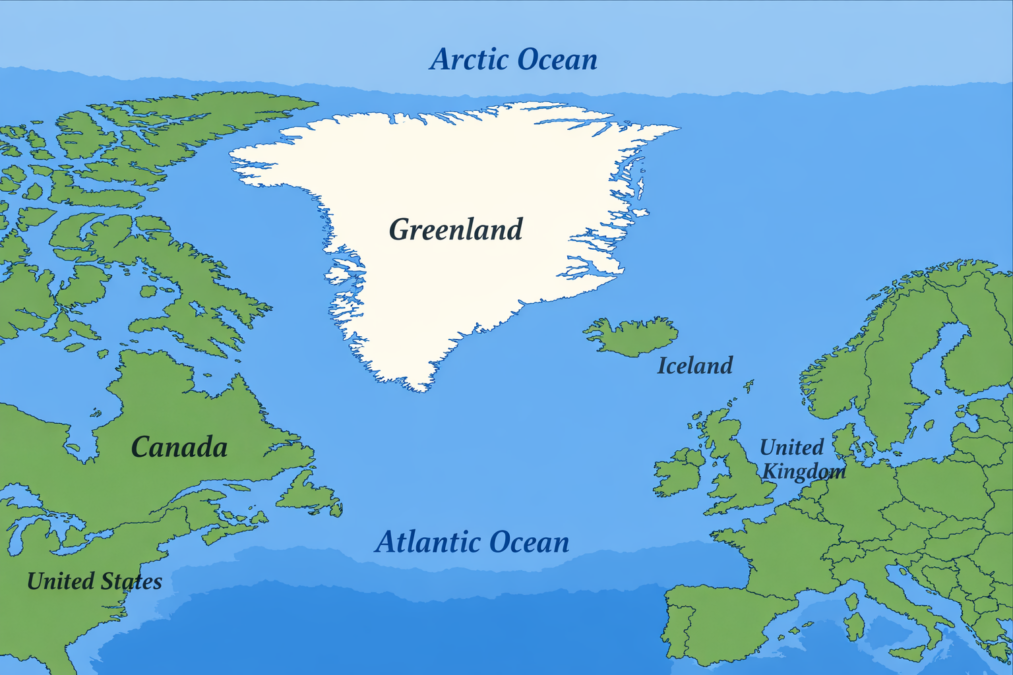
Since the beginning of his current presidential term, President Donald Trump has made no secret of his interest in acquiring Greenland. He views the island as vital to national security and essential to preventing China from gaining a foothold in the Arctic. The region is no longer a remote wilderness visited only by explorers. It has become a central arena of global competition. With Russia and China expanding their Arctic presence, thanks in part to advanced icebreakers and new navigable sea routes, Greenland’s strategic and economic value has surged. President Trump recognizes that reality and believes the United States must secure meaningful control over the island to protect American interests and maintain energy dominance.
Trump’s rhetoric on Greenland has sometimes sounded blunt, but that is a familiar feature of his negotiating style. His public comments are often the opening bid, not the final objective. Like any seasoned dealmaker, he starts high to draw the other party to the table and force them to reveal their bottom line. It’s the same logic as pricing a car well above what you expect to receive: the goal is not the sticker price, but the negotiation it triggers. Trump’s approach to Greenland follows that pattern.
I do not believe President Trump intends to purchase or seize Greenland by force, though he would certainly welcome a purchase if Denmark were willing. More realistically, he appears to be aiming for an agreement that grants the United States broad, long-term access to Greenland’s land and resources. In classic Trump fashion, the pitch is simple: work with us, and everyone profits.
The growing interest of America’s adversaries in the Arctic only heightens the urgency. Securing the northern approaches to the United States requires strategic assets in places like Greenland. Trump has spoken of a “Golden Dome,” an American counterpart to Israel’s Iron Dome, and Greenland is a key component of that vision. From a financial standpoint, cooperation makes sense for both Greenland and Denmark. Denmark currently sends roughly $3.4 billion annually to support Greenland’s population of 56,000. Neither Denmark nor Greenland has the technology or capital to exploit the island’s vast mineral wealth or to develop the defensive infrastructure the region demands.
A straightforward agreement could benefit all parties: the United States gains access to unused land for missile defense and strategic installations, along with rights to mine and process Greenland’s abundant resources. Greenland receives substantial compensation. Denmark offsets or eliminates its multibillion-dollar subsidy. America strengthens its national security and reduces dependence on foreign minerals. Everyone wins…except China.
Greenland’s mineral riches, combined with its unmatched geographic position, make it indispensable for Arctic defense, power projection, monitoring rival activity, and securing emerging shipping routes. Control of Greenland’s strategic landscape allows the United States to counter Russia’s militarization of the Arctic and China’s growing influence in the region.
But Greenland’s importance does not justify reckless action. The island is part of Denmark, a sovereign European nation and NATO ally. President Trump understands this, which is why, despite his forceful rhetoric, he is not going to use military force to secure Greenlandic access. Constitutionally, Denmark must consent to any agreement, and that consent must take the form of a treaty ratified by two-thirds of the U.S. Senate. With the Senate’s current composition, that threshold is unlikely.
Which is why the 2026 midterms matter. President Trump can negotiate the framework, but ultimately the Senate must approve the deal. To secure that supermajority, he will need not only a strong Republican showing but also a handful of Democrats willing to acknowledge that this is a once‑in‑a‑generation opportunity.
— Political Pistachio Conservative News and Commentary