
By Douglas V. Gibbs
What we often speak of as American Principles largely did not originate in this country. Through the forging of America they were for the first time in history incorporated together into a political structure for a great country. The Founding Fathers, after all, were students of political theory, and reached all the way back to the Holy Bible in search for the most beneficial components for the formation of a government for their new Union of States.
They knew that they did not wish to create a centralized national government, but they required something stronger than the government that existed under the Articles of Confederation. The confederation was too loose of a union, allowing the States to retain all powers and complete sovereignty. It was too weak of a government – but they feared creating too powerful of a government. They were seeking a careful balance. They needed a government strong enough to survive in a world of empires, but limited enough not to become tyrannical over the states and the people. They needed the new system to handle the functions of a national government externally, while leaving all of the domestic issues to the States.
The Framers of the Constitution through their research sought to pull together the benefits of monarchy, democracy, theocracy, aristocracy, and features from various republics throughout history. In the process, they discarded what they considered to be dangerous to the aim of securing the natural rights of the people. After extensive deliberation during the Constitutional Convention of 1787 in Philadelphia, they put it all together in a new patchwork of what we know today as our constitutional republic.
The contrast to other modern systems is glaring. One only needs to begin by examining the differences between the principles of the French Revolution as expressed in the Declaration of the rights of Man and of the Citizen, and the principles of the American Revolution, as expressed in the Declaration of Independence, U.S Constitution, and the Bill of Rights. One, then, can compare the sovereignty of the States in the Union we call America to the position of subjectivity possessed by regions and provinces of other historical and modern countries. Some present-day nations even claim to have “states” like America, but fall short of the idea that the states are members of the Union with jurisdictional rights rather than territories of a nation whose rights are determined and defined by an overpowering national government.
The importance of the rights of the states, in fact, was so important to them that they dedicated an amendment in the Bill of Rights to them – the Tenth Amendment.
The key features of American Liberty rests then on two important features – individual natural rights, and the rights of the sovereign states.
After a long history of despotisms in which liberty was the exception, rather than the rule, the Framers determined they were finished with the concept of life, liberty, and property being determined and defined by merciless rulers. In the Declaration of Independence they called for a government that derived its just powers from the consent of the governed, but history had shown that to pursue such a path through democracy was destructive. The people must be involved with the making of laws, but the Rule of Law must be at the center of the process and there must be mechanisms in place to provide a check against the excesses of democracy. A type of aristocracy must be in place, but there must be checks against those who are skilled in the science of politics from obtaining too much power and devolving the system into a tyranny. A virtuous culture must be in place with a people who is firmly religious, but there must not be a theocracy in place in order to make sure the church did not control governmental actions and so that the government did not interfere with the freedom of religion. A leader must stand at the top of the system as the figure head, but must be so limited in power that he could never proclaim himself king, or legislate with the power of an oligarchy or nobility at his behest.
The whole thing proved to be the ultimate balancing act. Have a leader without power, a legislature limited in its law-making, and judiciary that may only apply the laws to the cases they hear, and a system that ensures the large population centers don’t dominate the system through democracy.
The Greeks suffered numerous calamities at the hands of democracy. The Romans created a republic that ultimately descended into a tyranny under a succession of Caesars that stripped the people of religious freedom. The feudal systems of the Middle Ages obliterated the distinction of private individual rights, establishing that possessions of property were an exercise of noble sovereignty.
The balancing act required that the people must no longer be subjects, but citizens with a wide degree of individual liberty and that those liberties were secured against infringement not only from other individuals, but also from the government. Historically, when the degree of individual liberties was at its greatest, progress and safety were also at their greatest point. The more power was distributed the greater the liberty. The more power was centralized, the less liberty was possessed by the people. Paternalism and governmental infringement on natural rights led to tyranny. Initiative and self-reliance of the individual always strengthened the system, and led to prosperity and progress.
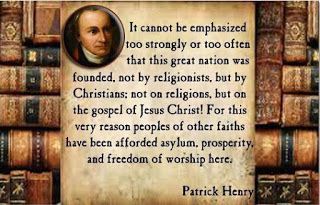
Christianity, in particular, seemed to historically go hand-in-hand with liberty and prosperity. Christianity appealed to individuals because at its very foundation was the personal decision of the individual. Christianity possesses no necessary relation to the state. The God of Christianity has no connection to nations or regions. Christianity’s spread throughout the world reached into all regions of the planet, finding appeal and adherence among all peoples. Christianity provides that God is sovereign, and existed long before governments by men, therefore natural rights must come from The Creator – same as was believed by the Saxons (though they were Pagans until their culture met Christianity in Britain). Christianity supported the individual conscience of men, implying that the individual was more important than the collective, and it was then the duty of the individual to be a positive influence upon their community as an individual – not a mindless pawn of the collective. Individuality, therefore, naturally demanded the security of each individual’s rights – life, liberty, and property.
Tyranny cannot survive when the individual believes in natural, God-given, rights and is willing to rebel against any government that does not honor and secure those rights. This was the realization by the Founding Fathers, and once they pulled it all together in the Declaration of Independence and the United States Constitution, the concept exploded. Its influence had been felt in Roman Law, and the foundational beliefs of the Saxons. Natural Law’s growth was inevitable during the Age of Enlightenment because it was the logical conclusion of reason and conscience. The concept of Natural Rights transformed the structure of society by emphasizing the importance of individual liberty. While the Magna Carta, British Declaration of Rights, and the writings of figures like John Locke and Montesquieu became gospel of the American masses, it was the Declaration of Independence and the U.S. Constitution that finally pulled it all together. The only concern, once it was established was this: Would future generations adhere to the original intent of the social contract created by the Framers of the Constitution and the ratification by the States? Or, would they allow the concepts of natural law to fall into disregard in the name of the good of the state and under the pressures of those seeking to place the collective above the individual?
How is one to safeguard those revolutionary ideas if we don’t even understand them? Words on the pages of our Founding Documents only tell us a part of the story. Each line of text. Each word. Every part of those documents tell a story, but to understand the story one must dig into the context and histories behind them. That is where this exercise before you begins. It is an examination of those words and phrases and ideas so that we can understand them, be informed by them, and in turn recognize how to defend them and ensure that the freedoms we inherited remain in place. To understand the Constitution we must understand the American Story, and like those who forged this Union of States into existence, we must be willing to defend its principles and ideas. In the end, after all, without the foundational principles and original intent of the United States Constitution, America is nothing more than another nation wallowing in the fears and tears of despotism on the world stage.
— Political Pistachio Conservative News and Commentary