
By Douglas V. Gibbs
A listener to the Saturday Constitution Radio program wrote to me about a video that “talks about the approach Hamilton used to get the United States out of debt and how Trump is using this method. We were never taught this in school and most people do not know about this approach and cannot see what Trump is doing to get us out of debt and grow the economy. All they see is rising cost.”
President Trump is indeed working to reduce federal spending, and grow the economy, but his method has nothing to do with Alexander Hamilton, and to be honest, Hamilton did not use any method to get us out of debt. In fact, his aim was the opposite. He believed in perpetual national debt. He believed that it was good for building credit, and would hold the union together.
It is true that a country with sound credit can do things a country without it cannot. Hamilton was right about that. The ability to borrow was largely the reason we survived the American Revolution decade approaching the Constitutional Convention. It is also true that often people only see the cost of things, and the media’s claims regarding those things, but they never consider the deeper truths involved in the matter like the balance sheet. And, yes, it is true that most Americans don’t understand much about what the founding generation actually did – largely because, as she wrote, it is no longer taught.
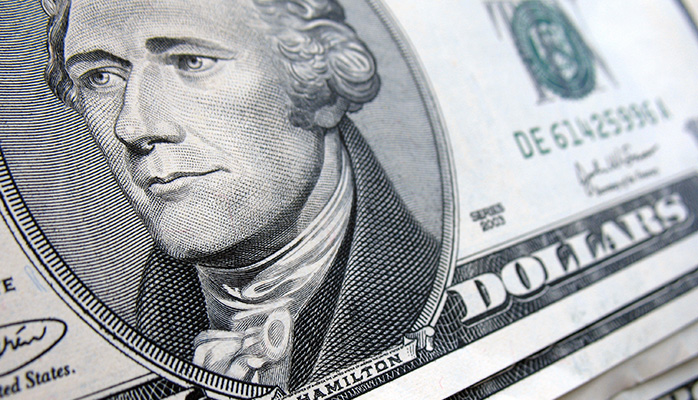
It is important not to put Alexander Hamilton on any kind of pedestal, and understand that Hamilton did not get us out of debt. He orchestrated a system of deliberately getting us into debt, claimed it was a serviceable one, and then defended it as a necessary feature of the young country. The line that reveals his intentions comes from a letter to Robert Morris of April 30, 1781: “A national debt if it is not excessive will be to us a national blessing.” Did he truly believe “if it is not excessive”? At $40 trillion the condition has plainly failed.
The Report on Public Credit, January 1790, funded the federal debt at par – face value to whoever held the paper, including speculators who had bought depreciated certificates for pennies. It assumed some $21 million in state war debts, which bought Hamilton a national class of creditors and bound the states to the union’s credit. And it created a sinking fund, appropriated revenues to buy debt back in the market.
Hamilton cared about having a permanent, liquid, interest-bearing institution, serviced forever, retired only at the margin. A perpetual debt was the point. It gave the holders of public paper a permanent stake in the government’s survival.
And the debt rose under his system: from about $71 million in 1790 to $83.8 million in 1795, driven by assumption, the Whiskey Rebellion, and the Northwest Indian War. It did not meaningfully fall until after 1796, and the fall was more because of Madisonian and Jeffersonian retrenchment, than to Hamiltonian design.
Hamilton built the credit. Other men spent twenty years using it to retire what he had consolidated. Then a war blew the whole thing up.
And, it was all done illegally, if you look at the United States Constitution. The Hamiltonian system ran on implied powers.
Hamilton’s bank opinion of February 1791 is the founding document of the “living-and-breathing” Constitution. Jefferson’s counter-opinion argued that “necessary” meant “indispensably necessary,” that incorporation was nowhere enumerated, and that on Hamilton’s reading the enumerated powers became “a knot of vague and useless powers.”
Madison opposed the bank on the floor in 1791 as unconstitutional, then signed the Second Bank’s charter as President in 1816 believing he had no choice due to the War of 1812 debt. Andrew Jackson’s veto message of July 1832 is the best originalist document in the whole quarrel: it denies that the Court settles the question for the political branches, denies that the bank is necessary, and observes that it concentrates the wealth of the country in one institution.
The Hamiltonian finance ideas then infiltrated the National Republicans, the Whigs, the Lincoln Republicans, and today’s progressive Democrats. Central bank. Protective tariffs designed to help industry buddies, not the country. Internal improvements. Federal subsidies. Hamilton is not an ally, and never has been.
That all said, we must be aware that it is worse now thanks to the Federal Reserve. Sure, back then Hamilton put into play the Bank of the United States, but it was tame when compared to the Federal Reserve.
The First Bank of the United States was a private corporation with a twenty-year charter, capitalized at $10 million. The government subscribed one-fifth, paying with a $2 million loan from the Bank itself, repaid in installments, and appointed five of twenty-five directors. Four-fifths private, and the private shareholders elected the majority. It took deposits, discounted bills, made commercial loans, issued notes, and served as the Treasury’s fiscal agent. It had no note monopoly. State banknotes circulated beside its own, and beside specie. No open-market operations, no administered rate, no reserve requirements on other banks, no dual mandate. It behaved like a lender of last resort in the panics of 1792 and 1797 by expanding, but that was improvisation, not charter.
The Fed is a statutory hybrid: regional reserve banks owned by member banks, a Board appointed by the President, a legal monopoly on note issue, an administered rate, discretionary securities operations, and remittances of the proceeds back to Treasury. It is a policy body with delegated quasi-legislative power. The First Bank of the United States was a bank.
The Second Bank of the United States was genuinely closer to a central bank, with twenty branches, a national note network, enough restraint to discipline the state banks. Which is exactly why Jackson killed it. In September 1833 he removed the deposits and placed them with state institutions.
Then look at what followed. On January 1, 1835, the debt stood at $33,733. The final payment on January 8 wiped it out. That is the only time in American history the national debt reached zero, under the president who destroyed the central bank. Almost nobody is teaching the Jackson line, because it embarrasses the Hamiltonian one.
As for the question about how we reduce the debt, Jackson did it by selling off federally owned property. Jefferson reduced the debt seven of eight years, and the exception was the Barbary War. He did it by cutting federal spending, and reducing the size of government.
Jefferson in his first inaugural address promised “the discharge of the public debt” and “the suppression of unnecessary offices, of useless establishments and of expenses.” The army was cut to what was believed only necessary. The navy to a gunboat flotilla. The diplomatic establishment was gutted. The whiskey excise and the direct tax were repealed. Every surplus dollar went to the principal. The debt went from about $83 million in 1801 to about $53 million by 1809. Roughly a third.
The one year the debt rose during Jefferson’s presidency was in 1804, from $77 million to $86.4 million, and the causes were two-fold. One was the war against Tripoli, which Jefferson refused to fund with tribute. The other was Louisiana: $15 million for the territory, of which $11.25 million was borrowed from Hope and Baring. He borrowed for the things he thought worth borrowing for: a war he would not buy his way out of and a purchase that doubled the size of the country.
Debt in the 1790s was war debt owed to identifiable holders. Soldiers holding depreciated certificates, farmers, French and Dutch creditors. The entire political question was whether it would be redeemed at face or at the market’s discount, which is why funding at par was a decision about who got paid, and why the speculation scandal carried the moral weight it did. Extinguishment was the declared end of the policy, and everyone measured the policy against that end.
Compare the object today: $40 trillion of rolled short-duration paper whose principal is never meant to be retired at all, held in pension allocations and foreign reserves, refinanced every quarter. Getting out of debt meant something in 1790 because the debt was meant to end. Today it means keeping the rollover.
That distinction, not the Fed’s structure, is the real answer to “all they see is rising cost.” They see rising cost because the only thing left of the debt question is its price.
Article I, Section 8 has a clause that reads: “Congress shall have the power…To coin Money, regulate the Value thereof, and of foreign Coin, and fix the Standard of Weights and Measures.”
The Framers used “coin” not as a metaphor. It meant stamping metal. The clause sits in a list of powers over measures – coin, foreign coin, weights and measures – because money was understood as a quantity of metal, not an abstract ticket. The Coinage Act of 1792 executed the clause exactly so: the dollar defined as 371.25 grains of fine silver, the eagle as 247.5 grains of fine gold, both to be struck. The dollar was a weight. “Regulate the Value thereof” meant the ratio between the metals and the price of foreign coin in domestic units. The mint ratio, not a policy target. Section 10 closes it: the states may not make “any Thing but gold and silver Coin a Tender in Payment of Debts.” The Framers could not have written that sentence believing a tender could be a banknote.
To coin the money also means that only Congress could create it. Not banks. The banking shenanigans in Europe was something they were trying to avoid.
So, when looking at paying off the debt back then, compared to now, we have to realize we are not in a different monetary order. Congress defined the unit as a fixed weight and fineness and coined it, and did not delegate the definition to a board. Congress borrowed on the credit of the United States, a general power, disciplined by a real sinking fund and by accountability rather than a ceiling. The Treasury held the government’s own money: the Independent Treasury of 1846 to 1920 is the precedent. There was no bank as a fiscal agent.
There is no enumerated power to charter a corporation at all, let alone a central bank. The word “vested” in Article I, Section 1 also disallowed Congress giving away coining money to anyone other than Congress. It was all contested in 1791, in 1816, and in 1832. The 1913 Federal Reserve Act is the largest surviving artifact of the implied-powers reading, and the perpetual debt damage begun by Alexander Hamilton.
As for the debt, let’s understand that the Treasury does not technically borrow from the Fed. It sells securities to the public, and the Fed buys a large share in the secondary market with money created by the banks under its direction. Interest on that portion returns as a remittance, so it largely nets out. The real cost is not the interest. It is that the supply of loanable funds is elastic and undisciplined, so nothing sets a hard price on government borrowing and nothing tells Congress to stop.
Which gets us back to the email, where my correspondent believes Trump is doing Hamilton. The Hamiltonian toolkit was assumption, funding, an excise, and a bank. The current toolkit is tariffs. Hamilton pushed protective tariffs, designed to protect certain businesses. Trump is using tariffs in a different manner, for the benefit of America in general, to protect American manufacturing, and to dismantle a globalist version of a redistribution of wealth.
Now, today, Congress runs the deficit. The Fed does not spend a dollar. It suppresses the price at which Congress borrows and monetizes the rollover, which removes the market’s ability to say no. Blame the Fed alone and you exonerate the branch the Constitution actually charges with the borrowing power, and exoneration is the last thing Congress deserves. In other words, the blame deserves to be placed in many directions.
The pre-1913 record is not necessarily clean either. A system without a central bank is not perfect. There will still be ups and downs, just not as drastic. And usually, manipulation is still the culprit, just not of the central bank kind of species. Debt rose hard in every war and panic without a central bank. War and speculation can even hurt free market systems that deny the existence of a central bank. And pointing out those situations, like 1873, 1893, and 1907, is how the purveyors of central banking sell their wares, and how the Fed was sold.
The Fed did not invent debt growth, it converted episodic ups and downs and unconstitutional spending into massive boom-bust cycles. The Fed became the enabler of a habit Congress already had.
— Political Pistachio Conservative News and Commentary