
By Douglas V. Gibbs
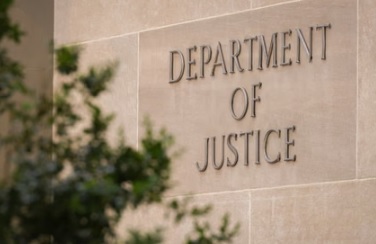
Acting Attorney General Todd Blanche revealed that the Department of Justice discovered a room packed with documents from former special counsel Jack Smith’s investigation into Donald Trump. He spoke about it on Sean Hannity’s podcast in early June 2026. According to Blanche, the documents were found in “burn bags” – containers typically used to destroy sensitive documents for security purposes.
What makes this discovery particularly significant is the unusual placement of these burn bags. Blanche noted that while burn bags themselves aren’t uncommon, “where it was left led him to believe an ‘honorable’ agent may have been trying to preserve it” rather than destroy it. He added, “[We] kind of stumbled on it, but it looked almost intentional.”
This isn’t the first such discovery in recent months. Blanche’s comments follow earlier revelations from FBI Director Kash Patel and former FBI Deputy Director Dan Bongino, who disclosed finding similar document caches related to the FBI’s Crossfire Hurricane investigation.
In April, Bongino described finding “the mother lode” of documents tied to the “Russiagate” investigation that he alleges were meant to be destroyed. When asked whether he thought they were intentionally spared from destruction, Bongino responded simply, “Yes.”
These discoveries resonate deeply with the Founders’ vision of limited government and accountability. The Framers, having experienced the tyranny of unchecked power, designed a system of government with built-in constraints on federal authority. They understood that power corrupts, and that even those entrusted with enforcing the law could themselves become lawbreakers.
The preservation of these documents through what appears to be whistleblower action aligns with the constitutional principle that government serves the people, not vice versa. When federal agents potentially risk their careers to preserve evidence that might expose government misconduct, they are acting in the truest spirit of constitutional governance – placing fidelity to the Constitution and the American people above loyalty to agencies or political agendas.
This discovery also highlights the importance of the separation of powers doctrine. The Founders divided government authority among three branches of government precisely to prevent the concentration of power that could lead to abuses like those potentially revealed in these documents. When executive branch agencies potentially exceed their constitutional bounds, it falls to Congress to use law, the courts to apply the law, and We the People to take action through the ballot box and a call for a redress of grievances targeting accountability and transparency through our First Amendment enumerated natural rights.
The Constitution establishes a government based on republican ideals, not a democracy – so the involvement by the governed is paramount in ways beyond merely through the ballot box. This foundational principle requires that government actions be subject to public scrutiny. The apparent preservation of these documents suggests a recognition within federal agencies that transparency and accountability are constitutional necessities, not optional niceties.
When unelected bureaucrats potentially abuse their power to target political opponents, they violate the Rule of Law. The Founding Fathers understood that we are individuals and that the individual must be treated as a sovereign from the collective community – but at the same time in an orderly society the law must apply equally to all citizens, regardless of political position or influence. In the Declaration of Independence it is presented as “the powers of the earth, the separate and equal station to which the Laws of Nature and of Nature’s God entitle them.” These document discoveries may provide evidence of whether federal agencies adhered to this fundamental principle or engaged in selective enforcement based on political considerations while also attempting to hide the truth from the governed.
The potential preservation of these documents by federal employees highlights the crucial role whistleblowers play in maintaining constitutional governance. The Framers of the Constitution and the Founding Fathers involved in the establishment of the Bill of Rights recognized that citizens have a duty to resist government overreach, and this duty extends to those working within government itself. When employees potentially risk their careers to preserve evidence of misconduct, they are exercising a form of constitutional patriotism that transcends institutional loyalty.
These document discoveries underscore the importance of robust congressional oversight to ensure that federal agencies remain accountable to the people’s representatives. While it is not Congress’s job to micromanage the executive branch, they can look into operations when they believe the law is being violated. When agencies potentially hide evidence in “forgotten rooms,” it is pretty obvious they are attempting to circumvent the law, and any check on their power.
American history is replete with examples of federal power run amok. The preservation of these documents may provide crucial evidence about whether the Trump administration’s investigations represent another chapter in this unfortunate history or whether they were legitimate exercises of prosecutorial discretion.
Conservative commentators have framed these discoveries as validation of long-held concerns about improper conduct in federal investigations. The narrative emerging from conservative media suggests that these documents contain evidence that could vindicate Trump and expose misconduct by investigators.
The discovery also highlights the Trump administration’s efforts to reform the DOJ, with Blanche being described as someone who “hit the ground running” in his role as Acting Attorney General.
The discovery of Jack Smith documents in burn bags at the DOJ represents more than just a bureaucratic oversight. It potentially reveals a concerted effort by individuals within federal agencies to preserve evidence that might otherwise have been destroyed, suggesting internal disagreements about the legitimacy and conduct of high-profile investigations.
These developments highlight the ongoing tension between governmental power and constitutional constraints. The Founders designed a system of government that would be resilient against the concentration and abuse of power, and the preservation of these documents may represent a modern manifestation of the constitutional checks and balances they envisioned.
As these documents continue to be examined, they may provide crucial insights into the workings of federal investigations during a period marked by intense political polarization and questions about the proper role of law enforcement agencies in our American republic. More importantly, they may help determine whether our constitutional system of limited government and accountability has been preserved or undermined by those entrusted with enforcing our laws.
The ultimate test of our constitutional system is not whether abuses occur, but whether they are exposed and corrected through the mechanisms the Founders wisely provided. These document discoveries may represent a crucial step in that ongoing process of constitutional self-correction that has allowed our republic to endure for nearly two and a half centuries.
— Political Pistachio Conservative News and Commentary