
By Douglas V. Gibbs
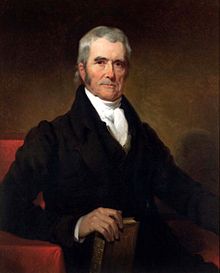
The 1819 Supreme Court decision in McCulloch v. Maryland came up in a conversation, recently, with my friend Brady the War Hamster. The ruling represents one of the most significant constitutional betrayals in American history – a fact that is no surprise considering Chief Justice John Marshall was the force behind it. From an originalist perspective, this case fundamentally violated the Constitution’s enumeration doctrine and transformed our federal system into something the Founders never intended: a centralized national government ruling over states as if they were mere provinces.
The Tenth Amendment to the Constitution unambiguously states that “powers not delegated to the United States by the Constitution, nor prohibited by it to the States, are reserved to the States respectively, or to the people.” This establishes what originalists call the Enumeration Doctrine… a constitutional concept that establishes the federal government possesses only those powers expressly enumerated in the Constitution.
Furthermore, Article VI establishes federal supremacy, but only for laws “made in pursuance of the Constitution.” This critical limitation means that supremacy applies to constitutional laws, not to those merely interpreted to be constitutional by judges or legislators.
The concept of “implied powers” emerged from Alexander Hamilton’s arguments for a national bank. Hamilton knew the Constitution contained no express authorization for such an institution, so he devised a theory of implied powers based on the “necessary and proper” clause. His reasoning was essentially circular: to make something constitutional, one must read between the lines.
Thomas Jefferson vehemently opposed this approach. For Jefferson, the Constitution’s meaning was clear on its face. Nothing in the Constitution resides between the lines of print. Jefferson argued that if the Constitution didn’t expressly grant a power, that power didn’t exist for the federal government.
Chief Justice John Marshall, exercising the unconstitutional power of judicial review (itself not enumerated in the Constitution and shot down during the Constitutional Convention in 1787), codified Hamilton’s arguments in McCulloch v. Maryland. The case centered on Maryland’s attempt to tax the Second Bank of the United States.
Marshall’s opinion established two destructive doctrines: first, that the federal government has implied powers not expressly listed in the Constitution; and second, that states cannot interfere with these supposed federal powers. His famous statement that “the power to tax involves the power to destroy” created a framework for federal immunity from state regulation.
The consequences of McCulloch have been catastrophic for constitutional governance. By endorsing implied powers, Marshall opened the door for virtually unlimited federal expansion. The federal government could now interpret its way into any area of governance, regardless of constitutional enumeration.
This decision laid the groundwork for transforming America into the country Hamilton dreamed of: one with elite leadership, states reduced to mere corporations (as Hamilton argued at the Constitutional Convention), and federal supremacy over every issue. The constitutional republic of limited, enumerated powers became a centralized national government.
From an originalist perspective, McCulloch v. Maryland should be recognized as an unconstitutional usurpation of power. The proper interpretation of the Constitution requires:
- Strict adherence to the enumeration doctrine of the Tenth Amendment
- Recognition that federal supremacy applies only to laws “made in pursuance of the Constitution”
- Rejection of implied powers as unconstitutional innovations
- Restoration of state sovereignty in areas not expressly delegated to the federal government
The originalist position is clear: the Constitution created a federal government of limited, enumerated powers, not a national government of unlimited implied powers. McCulloch v. Maryland represented a betrayal of this fundamental principle, and correcting this constitutional error is essential to restoring our republic.
— Political Pistachio Conservative News and Commentary