
Political Pistachio
By Douglas V. Gibbs
As the Epstein Files continue to be released, a few truths are beginning to become known. Jeffrey Epstein didn’t have much education or a strong business background, yet rose to become a wealthy person through shady “financier” dealings. He operated a sophisticated sex trafficking and abuse ring, yet aside from Ghislaine Maxwell, nobody seems to know anything about how he ran it and who was a part of it. Through his connections among wealthy elites from around the world he was able to prey on underage girls for years, using properties in Palm Beach, New Mexico, the U.S. Virgin Islands and Paris for his criminal locations.
The case regarding Epstein goes way beyond the operations of a lone man and his crimes. The whole thing is about a systemic failure of the justice system and the alleged complicity of a powerful network of individuals. Judges looked the other way and officials took actions that circumstantially looks like they were complicit as Epstein recruited and sexually abused an unknown number of minor girls. He created a web of exploitation that included using girls to help him recruit other victims, and a payment system that compensated girls for things that included massages that turned sexual.
In 2008, despite a mountain of evidence from a federal investigation, Epstein received a non-prosecution agreement with the U.S. Attorney’s Office in South Florida. After pleading guilty to a single count of soliciting prostitution from a minor, he was sentenced to a mere 18 months in a county jail. The deal granted him and any potential co-conspirators immunity from federal prosecution. While the experts call it a monumental failure of justice, the average onlooker comes to one simple conclusion: who was it inside the system that had enough levers to pull to protect him, and ultimately to hide and bury the deep dark secrets surrounding the man?
In 2019, after years of investigative journalism by a number of outlets, the 2008 deal was brought to light, so federal prosecutors reopened the case. Epstein was arrested in July of 2019 on federal sex trafficking charges, and a month later was found dead in his jail cell. While the experts called it a suicide, too many questions remained regarding how he died. Recent revelations are revealing a number of things that makes one consider that he may have been murdered inside his jail cell.
Over the years the massive trove of documents that have accumulated regarding Jeffrey Epstein have come to be known as the “Epstein Files.” The files largely regard a defamation lawsuit brought by one of his prominent victims, Virginia Giuffre, against Epstein’s longtime associate, Ghislaine Maxwell. The files, along with other court documents and flight logs, have been revealing a view into Epstein’s operation that seems to be providing more questions than answers.
In the documents a number of high profile individuals – politicians, business leaders, academics and royalty – are named as associating with Epstein. While being mentioned in the files does not necessarily serve as proof of any wrongdoing, the list of people named definitely illustrates the kind of powerful elite circles Epstein moved in and used for protection and legitimacy.
The Epstein Files reveals Ghislaine Maxwell’s role in Epstein’s operations, and even cement her role as his indispensable partner. She was his girlfriend, and an active participant in the recruitment, grooming, and abuse of victims. In 2021, she was convicted on federal charges of sex trafficking and conspiracy and is currently serving a 20-year prison sentence.
According to victim testimony inside the documents girls were trafficked not only to Epstein, but also to his powerful friends, revealing the abuse was widespread and that it was a service he provided to his network. Those who could be considered enablers include a circle of staff, recruiters, and financial professionals – individuals who helped facilitate the abuse and keep the operation running.
The Epstein case has emerged as a stark example of how wealth and power can be, and has been, used to evade justice. It highlights how the sickness of a dark world goes so deep that our legal and social institutions are somehow filled with people who are either complicit or a part of a failing system that could be interpreted as “looking the other way.” The “predator” we know as Jeffrey Epstein operated for decades without even a worry because he was not only ignored by the people who should have been investigating him, but he was assisted by inside people along the way. Yet, no matter how massive his network was, nobody knows details or have come forward to break the case wide open. It’s a chilling reminder that there are some people who are so rich and connected that they use the system knowing that they will be treated differently because of their position in society.
The most sickening part of the whole thing is not only that the truth seems to be unable to completely reveal itself, but that the very people who may be the most guilty are the same ones trying to pin the Epstein world on President Donald Trump. Many of those people are allegedly progressive leftist Democrats, and they and their left-wing allies, for political reasons that surround their hatred of Trump, are doing all they can to plant seeds to make the public believe that Trump was somehow involved with Epstein, or knew about the man’s sick operation. Before she died, victim Virginia Giuffre testified that Trump was not a part of Epstein’s world. Ghislaine Maxwell has also testified that Trump was not a part of the inner-circle, and only knew Epstein because they moved around in a few of the same circles. At one point, Donald Trump kicked Jeffry Epstein out of his Mar-a-Lago club, a story supported by multiple accounts. Trump’s action followed an incident where Epstein harassed the teenage daughter of a Mar-a-Lago member at the club’s pool in either mid-2006 or late 2007 (the exact date has been unclear), before Epstein’s 2008 “sweetheart deal” that led to federal prosecutors backing off, and Epstein’s arrest in 2019 (which, by the way, happened during Trump’s presidency). Trump’s action to kick Epstein out of Mar-a-Lago includes a comment by Trump that Epstein was “being a creep.” One file documents Trump telling Palm Beach Police Chief Michael Reiter in 2019 that “people in New York knew he [Epstein] was disgusting” and that Ghislaine Maxwell was “evil” and that police should “focus on her.”
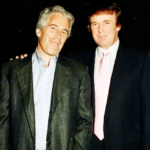
The Democrats, however, are persistent. Their hatred of Trump reaches beyond reason. So, even though every indication reveals that Trump had little to do with Epstein, and that Trump even kicked the man out of Mar-a-Lago and left instructions that if Epstein showed up at the gates of Mar-a-Lago, he was to be turned away immediately, they continue to insist that Trump was somehow on the inside of Epstein’s sick dark world. I’ve heard a number of leftist media people and politicians call Trump a “pedo,” and images from the 1990s and early 2000s of Trump and Epstein at the same parties and events keep circulating the internet. They want desperately for voters to believe there is some kind of connection because they know they can’t win in the arena of ideas, and the election-cheat they tend to rely on is being tainted by election integrity efforts, so they have to continue with their effort to besmirch Trump’s name.
Which brings me to the point of this article. My wife told me she keeps seeing images of Trump and Epstein together on social media. “Is there any truth to them?” she asked me.
When we lived in Southern California, I was very involved politically. I am in a number of pictures taken with people I don’t necessarily agree with politically, some of them who I thought were allies at the time. I knew them, I bumped into them at gatherings and political meetings, but that does not necessarily mean that they were my allies or that I was “buddies” with them. After explaining this to my wife, it helped her understand the images that have emerged of Trump in the same room as Epstein. As a businessman, Trump’s business included seeking investors for his projects. Epstein, operating as an alleged financier, moved in the same circles as the folks with position and money that Trump was around. They were bound to be in the same room as each other on a number of occasions. But, as we should very well know if we are to use our logic and reasoning skills, proximity does not always indicate complicity.
They are just pictures.
— Political Pistachio Conservative News and Commentary


| Tuesday Online Constitution Class |
  3:30 PM Pacific Online Constitution Class |
| Online Mr. Constitution Class www.mr-constitution.com Arrival of the Saxons and Protestantism on British Shores. Untold History Channel – (locate the shows labeled “Learn the Constitution”): https://rumble.com/c/UntoldHistoryChannel |
By Douglas V. Gibbs
Once the United States achieved independence, one of the consequences was that American shipping lost British protection. Presidents George Washington and John Adams paid about $1.25 million in tribute money (protection tax from Muslim harassment) to the Barbary States, nearly a fifth of the U.S. annual budget, by the end of the eighteenth century. Both presidents preferred appeasement and payment of the tribute in the hope of protecting American shipping from piracy rather than military confrontation, but their attempts to avoid war simply led to broken treaties and additional monies paid as ransom for American captives – often sailors of the American ships captured who were then enslaved by the Muslims. While President Washington signed the Naval Act of 1794 authorizing a navy to counter threats directly, and signed treaties, the attacks continued. President Adams’ attempt to appease the Islamic maritime predators concluded with a 1799 treaty with Tripoli where he provided $18,000 in additional payments and denied in writing America’s Christian foundation in the hopes of satisfying the anti-Christian “Musselmen.”
By the time President Thomas Jefferson achieved the presidency, the failures of the previous presidents had led to a very expensive situation that had done nothing but delay conflict. President Thomas Jefferson determined that a weak position against Muslim military forces taking advantage of America, and crippling America’s foreign trade efforts, posed a threat to American interests and the lives of Americans on the high seas. Unwilling to give in to the Islamic states of North Africa and the Middle East, he sent the United States Navy and the United States Marine Corps to the Mediterranean Sea to resolve the issue.
President Thomas Jefferson believed that the best way to handle it was to hit the Barbary States with a hard “shock and awe” style campaign. His decision was a deliberate and radical departure from the policy of appeasement practiced by his predecessors. Jefferson loathed the policies of the previous administrations believing that appeasement and paying a tribute only emboldened the enemy and was fundamentally incompatible with American sovereignty and honor.
Jefferson believed that bowing to extortion made a nation weak. He famously stated, “The taste of being forever humbled before an enemy is not a pleasant one.” He argued that the millions paid in tribute over the years could have funded a permanent navy capable of ending the threat for good. He believed a republic, unlike the monarchies of Europe, could not and should not engage in such debasing practices. It was a matter of national character. Jefferson’s vision was that true, lasting peace was not purchased but secured through credible military strength. He was willing to incur the short-term costs of war to establish a long-term principle: the United States would not be bullied.
When Jefferson took office in 1801, the Pasha of Tripoli, Yussif Karamanli, sensing a change in administration, demanded a larger tribute. When Jefferson refused, the Pasha declared war by chopping down the flagpole at the U.S. consulate. Jefferson was ready.
His response had all the hallmarks of a shock and awe campaign, designed to overwhelm the enemy with a sudden, decisive, and unexpected application of force.
Instead of sending diplomats with money, Jefferson dispatched a naval squadron; the very thing his predecessors had avoided. He sent Commodore Richard Dale with three frigates (the President, Philadelphia, and Essex) and a schooner (Enterprise) across the Atlantic. This was a monumental logistical undertaking for the young U.S. Navy and a stunning message.
The American ships immediately established a blockade of the Barbary coast. In August 1801, the USS Enterprise, a much smaller vessel, engaged and soundly defeated the Tripolitan corsair Tripoli in a one-sided battle. This was a powerful psychological blow, demonstrating that American naval technology and skill were superior.
The war continued for four years, longer than Jefferson had hoped, but he realized it was necessary in order to destroy the offensive abilities of the enemy. The U.S. Navy relentlessly bombarded the fortified cities of Tripoli, Algiers, and Tunis. They captured enemy vessels and supported local allies against the Pasha.
Then came the ultimate “Shock and Awe” moment – the Derna Operation. This is the clearest example of shock and awe among Jefferson’s military operations. In 1805, Jefferson authorized a land operation. A force of about 500 U.S. Marines and mercenaries (led by William Eaton and Marine First Lieutenant Presley O’Bannon) marched 500 miles across the desert from Egypt to surprise the port of Derna.
On April 27, 1805, in conjunction with naval gunfire from the USS Argus, Nautilus, and Hornet, this force launched a coordinated assault and captured the city of Derna. It was the first time the American flag was raised in victory on foreign soil. The sheer audacity of a cross-desert march and a successful amphibious-assault-style attack was a profound shock to the Barbary leaders.
Jefferson’s strategy was a deliberate use of overwhelming and unexpected force to achieve a psychological and strategic break from the past. It was designed to shock the Barbary States out of their assumption that the U.S. was a weak, easy target and to awe them with American resolve and capability.
The First Barbary War did not end the threat entirely, but it fundamentally altered the dynamic. The United States proved it would fight for its principles and its commerce. It established a precedent of using the navy to protect national interests abroad that would define American foreign policy for the next two centuries. Jefferson’s decision was a rejection of the old-world diplomacy of appeasement and the birth of a new American doctrine of projecting power to defend its sovereignty.
While Jefferson’s war had demonstrated American resolve, it did not completely end the Barbary threat. The situation reignited during James Madison’s presidency when the Dey of Algiers, exploiting the United States’ preoccupation with the War of 1812, seized American ships and resumed the practice of holding crews for ransom. Unlike his predecessors, Madison now commanded a more seasoned and powerful U.S. Navy, hardened by its victories against the Royal Navy. Unwilling to return to the discredited policy of tribute, Madison dispatched a formidable two-squadron naval force under the command of Commodores Stephen Decatur and William Bainbridge to decisively end the Algerian aggression.
The resulting Second Barbary War of 1815 was a swift and overwhelming campaign, another textbook example of “shock and awe.” Decatur’s squadron arrived off Algiers and, in a stunning display of naval power, captured the flagship of the Algerian fleet, the Mashouda, and forced another Algerian warship, the Estedio, to surrender. This immediate and crushing military success left the Dey of Algiers with no choice but to capitulate. On June 30, 1815, he signed a treaty that not only released all American prisoners without payment but also permanently renounced the practice of tribute or any future payments from the United States. The campaign was so effective that Decatur’s squadron then sailed to Tunis and Tripoli, where they quickly secured similar treaties, compelling them to abandon their demands for tribute and release any European prisoners they held.
Madison’s decisive action effectively ended the two-century-old practice of state-sponsored piracy by the Barbary States. The war was short, lasting only a few months, and achieved all of its objectives with minimal American casualties. It cemented a new American foreign policy doctrine: that the nation would defend its commerce and its citizens with force rather than appeasement. By demonstrating that the U.S. Navy could project overwhelming power at will, Madison finished the job Jefferson had started, ensuring American ships could sail the Mediterranean in peace and establishing the United States as a rising power that would not be extorted.
Operations Midnight Hammer and Epic Fury are President Trump’s modern Barbary War, with the American President using the same kind of “shock and awe” that Presidents Jefferson and Madison used a little over two hundred years ago. Past presidents have appeased, and given money, to Islamic powers like Iran in the past, and Donald Trump said, “No more.” Now, as the 2026 version of what two of our Founding Father presidents accomplished approaches its most violent stages, and is approaching its completion, certain realities have emerged. The once believed Iranian supreme leader is dead, the Islamic Revolutionary Guard Corps (IRGC) has been weakened almost to the point of impotency, Middle Eastern neighbors are turning against Iran as the country lashes out, and as the American and Israeli bombs drop on Iran the country’s citizens are dancing in the streets with glee. Meanwhile, China is flummoxed, Russia has been exposed as a secret puppeteer behind Iran’s madness, and Trump’s numbers are rising faster than Iranian leaders are falling – and in fact Trump’s favorability numbers according to polls are higher than any previous president ever. The demoralized remnants of the regime which includes Khameinei’s son are trying to keep everything afloat, but their previous government structure and internal communications are all in disarray.
Iran’s decision to launch missiles against its neighbors has been disastrous. Iran hoped it would unify the region against Israel and the United States, but instead a coalition is forming against Iran. The Abraham Accords, under stress since the Hamas attack on Israel on October 7, 2023, have not only held, but have solidified in ways Iran never expected. Meanwhile, Iran’s terrorist proxies have been remarkably inactive, with only Hezbollah firing some rockets of which have been met with a powerful Israeli response.
President Trump is handling the Middle East in a manner considered impossible by the experts, and is accomplishing something not achieved since the Barbary Wars.
The big difference between the Barbary Wars and Trump’s crusade is the “regime change” idea that once Iran’s regime is removed, America must rebuild it. In Iraq and Afghanistan, the “Pottery Barn Rule” (you break it, you buy it) dictate failed miserably. In Venezuela, Trump didn’t change the regime – he just convinced the new leaders to play nice or they will receive the same kind of end as Maduro. Iran, it looks like, may be treated the same – with one change. Trump plans to make sure that no matter who’s in charge in Iran after this is all over, they won’t have a military to do anything with any foul plans they may be mustering in their minds.
Along the way, the Space Force, which the Democrats once ridiculed, has played a crucial role in Operation Epic Fury. They deployed heat-seeking infrared beams that detect missiles upon launch, giving American forces time to neutralize them before they become a danger. Space Force has played a vital role in guiding and protecting air and naval operations, tracking enemy missile locations and determining for the U.S. Military when and where to strike using infrared sensors on satellites.
Other new technologies have also assisted in saving America tons of money. The U.S. Navy has allegedly been using a new High-Energy Laser with Integrated Optical Dazzler and Surveillance (HELIOS) system that can concentrate an intense, tightly focused beam of energy to eliminate flying drones without spending millions on missiles to eliminate them. While the U.S. and Israeli militaries are neither confirming nor denying the use of the lasers, the precision strikes made possible by new technologies reveal that the lasers are likely in use. The use of these technologies have changed warfare for the better, for sure, allowing the U.S. to avoid deploying ground troops and resulting in only seven casualties at this point.
President Trump, so far, has run Operation Epic Fury like he runs construction projects: under budget and ahead of schedule. The President recently told CBS News that this operation is nearly a wrap. If Iran doesn’t unconditionally surrender, and the IRGC continues to threaten shipping in the Hormuz Strait, however, President Trump has warned the assaults will intensify.
President Trump said, “If Iran does anything to [block the strait], they’ll get hit at a much, much harder level…” adding the United States is not targeting Iran’s energy-production infrastructure to avoid economically crippling the nation when the conflict is over. “We’re not looking to do that if we don’t have to. We are waiting to see what happens before we hit them.”
Trump posted on Truth Social: “If Iran does anything that stops the flow of Oil within the Strait of Hormuz, they will be hit by the United States of America TWENTY TIMES HARDER than they have been hit thus far.”
Among the world’s most critical maritime shipping chokepoints, the 100-mile-long Hormuz Strait is where 20 percent of the world’s oil is exported from the Persian Gulf.
Since the United States and Israel launched their Feb. 28 attack on Iran, traffic through the strait (which at its narrowest points traces Iran’s coast) has come to a near standstill with up to 250 ships, including around 150 oil tankers, stacked in the Arabian Sea.
While gasoline prices in the United States, after dropping steadily over the last year, has jumped significantly during the war, President Trump says the war will end “very soon,” and with that end of the conflict the oil prices will drop, as well.
Either they are ignorant of history, hate Trump beyond their ability to reason, or both – naturally, the Democrats are against President Trump’s actions against Iran. The Iranian regime, after all, has backed an estimated 1,000 major terror attacks, and their fingerprints are on the deaths of over 600 American service members in Iraq between 2003 and 2011. Iran supplied weapons, including explosively formed penetrators, to Iraq. Since that war, from 2019 to present, Iranian-backed militias have launched more than 180 rocket, missile and drone attacks on U.S. troops in Iraq, Syria, and Jordan. In Afghanistan, Iranian armed Taliban attackers also killed and wounded American troops. In short, Iran has been bankrolling worldwide Islamic terror on an industrial scale, killing thousands of American lives along the way.
Of course there was risk involved in attacking Iran, but with the specter of a nuclear-armed Iran on the horizon, and the breakdown of diplomacy with the regime as they basically declared they would cause chaos no matter the cost, the move was necessary. During the conflict, while Europe stays out of it, with their lefties crying almost as loudly as the Democrats, the only true ally in the effort has been Israel – which of course has been drawing distorted criticism from a left-leaning population smoldering with the early embers of anti-Semitism, and a crowd of not-so-left-leaning folks that have also fallen for anti-Israel propaganda largely spread by Islamic and progressive sources. To be honest, regardless of how important this effort means to the protection of Israel, since coming to power in 1979 the number of Americans killed by the Islamic Revolutionary government of Iran is a far greater number than that of Israelis. And because of Israel’s assistance, the boots on the ground that are involved in Operation Epic Fury are those of Israel, not the United States. And, of course Israel is on board, and maybe even running much of the logistics and heavy labor of the operation. They’ve been surrounded by Islamic neighbors who have constantly called for the genocide of the Jews since their rebirth in 1948 as the Nation of Israel. And don’t forget that Iran’s leadership has vowed, if they were to develop nuclear weapons, to destroy Israel with just a single bomb. Israel is involved with us, and they are our ally in bringing down Iran, and it makes sense because taking down the Iranian regime is not only good for the more than 90 million people in Iran, but also for the over 10 million who live in Israel.
— Political Pistachio Conservative News and Commentary
By Douglas V. Gibbs
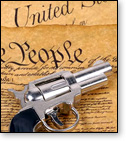
Senator Mike Lee (R-UT) has decided to push a countrywide constitutional carry firearms bill which would by federal law eliminate concealed carry permits, fees and criminal penalties for legal gun owners if they wish to conceal carry a gun in public. The National Constitutional Carry Act follows a trend of constitutional carry laws that have emerged around the country, currently approved by twenty-nine states. The new federal law would require that all fifty states “protect the right to carry without a permit.”
The bill was originally proposed by Thomas Massie (R-KY) last year, and would prohibit state and local governments from requiring licenses that impose fees and other conditions on public carry and would bar states from criminalizing public carry for eligible citizens. The law would also respect private property rights and government properties who decide that they wish to not allow an individual from carrying a firearm onto the premises. Individuals who are not legally allowed to own a firearm would remain prohibited from carrying one.
The bill is supported by the National Association for Gun Rights and Gun Owners of America.
I support the idea behind it, but if one carefully examines the original intent of the Constitution of the United States, the bill may face one major obstacle – it is unconstitutional.
Don’t get me wrong. There are few people more supportive of gun rights and the right to keep and bear arms than me. The word “bear” in the Second Amendment means, if one was to reference the 1828 Webster’s Dictionary as a resource, “to bear arms in a coat.” The right to keep and bear arms is a God-given Natural Right and every single federal gun law is unconstitutional due to the language of the Second Amendment and the Preamble of the Bill of Rights.
In a discussion regarding this bill on my radio program, Constitution Radio on KMET 1490-AM (Saturdays 1-3 PT), I offered to the panel on air with me an alternative way of looking at this to see what the response would be. The final words of the Second Amendment are “shall not be infringed.” Does Senator Lee’s bill “infringe” on the right to keep and bear arms? Or is it designed to actually do the opposite?
One of the members of the panel considered the viewpoint as reasonable, but doubted it was constitutional. The other two individuals pushed back recognizing that the Enumeration Doctrine is pretty clear. The right to keep and bear arms, or any other issue directly associated with the ownership or bearing of arms, must be expressly enumerated in the Constitution as an authority if the federal government was to have the authority to pass any legislation regarding guns. The Tenth Amendment is clear: if a power is “not delegated to the United States by the Constitution, nor prohibited to the States,” the powers are “reserved to the States respectively, or to the people.” In Federalist Paper #45, James Madison also explains that our Natural Rights are a state issue, not a federal one.
Which brings us to a concept known as the “Incorporation of the Bill of Rights to the States.”
The Fourteenth Amendment, ratified a few years after the conclusion of the War Between the States, was designed to disallow the States from passing laws or take actions that would unfairly treat the newly emancipated former slaves.
The primary author of the Due Process and Equal Protection clauses of the Fourteenth Amendment, John Bingham of Ohio, intended for his clauses to authorize the federal government to enforce the Bill of Rights against the states, and to effectively ensure that the southern states never act in a rebellious manner ever again. The intent Bingham searched for, an Incorporation of the Bill of Rights to the States, has since taken hold and in the legal, academic and political communities the Incorporation Doctrine is considered to be the law of the land. Based on that belief, Senator Mike Lee sees no problem with the federal government policing the states regarding the Bill of Rights, and passing legislation to instruct the states regarding how they pass laws that involve any of our Natural Rights.
The problem is, when Bingham testified to Congress his intent, the legislators of the time rejected the Incorporation Doctrine. The Fourteenth Amendment was proposed with both Houses of Congress providing that the language of the Fourteenth Amendment did not support any idea of an incorporation of the Bill of Rights to the states, and the states ratified the amendment with that in mind. In short, the Incorporation Doctrine is unconstitutional.
The Enumeration Doctrine demands that the only powers authorized to the federal government are expressly enumerated in the Constitution. Without a power being listed in the Constitution, the federal government does not possess that power. Guns are not listed anywhere in the Constitution as an authority of the federal government – and the only place arms are discussed, it is followed by the words “shall not be infringed.”
All federal gun laws are unconstitutional – period. Mike Lee’s bill, no matter how well intentioned, does not have any constitutional support. Only the states may make laws regarding guns. But, even then, the states have limits. They may only make necessary laws that are fully within the Rule of Law.
Let the states make their decisions. After all, 29 of them have constitutional carry laws. They are popular and the states are falling in line with the concept. Any states that don’t will probably pay the price, largely by suffering from the reality that residents of their states will be more than happy to vote with their feet. It is up to the states to make it happen, not the federal government.
— Political Pistachio Conservative News and Commentary

 |
For the Republic
Sunday 5:00 – 7:00 PM Pacific
Hosts: Douglas V. Gibbs
is solo, this week
War still rages, prices are going back up, and Trump demands an unconditional surrender…

By Douglas V. Gibbs
I used to be a big fan of Tucker Carlson. Watched him just about every night when he was on Fox News. I remember when he was the odd-ball on CNN. And I remember when he was let go from Fox for daring to suggest that the voting machines may have been a factor in the alleged fraud that Trump was claiming may have killed his chances in the 2020 Presidential Election.
Then, he went places I couldn’t go. Said things I couldn’t support. And somewhere along the way, Tucker Carlson went from a favorite of mine, to a confusing oddity that no longer seemed to make the kind of sense he used to.
Tucker Carlson’s fall from grace as a mainstream conservative favorite to whatever he is now was not just a sudden shift. It seems that it was a culmination of a long journey that took him from a standard cable news pundit to a figure who now finds himself on the outs with the very movement he helped energize.
Carlson began leading his audience from a form of American conservatism to a reactionary political position that seemed to buy into things that most Americans won’t touch with a ten-foot poll. His broadcasts became more tribal than intellectual. He began to ask good questions, but then came to faulty conclusions.
I lost interest, and stop looking for videos of his podcast.
I pretty much forgot about him, until suddenly he’s gone even crazier than before. And, unfortunately, he’s on my radar again. He disagrees with MAGA over foreign policy – specifically Iran. Carlson’s view is being called staunch isolationism. I don’t know. Maybe. Whatever it is, it has become very extreme and all over the place. Sometimes, he sounds “anti-anti-Putin,” and then he swings to an almost “pro-Putin” stance. When the U.S. and Israel launched “Operation Epic Fury” against Iran, Carlson declared unequivocally, “This is Israel’s war. This is not the United States’ war.” Yes, it is being carried out with Israel, but Trump is not the kind of guy that would let another country or leader to lead him around by the nose. Tucker’s position is a symptom of the anti-Israel rhetoric spread by sources that jump to conclusions and chase theories for the sake of searching for conspiracies. And for President Trump, Tucker has gone a little too far.
In a March 2026 interview, Trump didn’t just disagree; he excommunicated him, declaring that both Carlson and Megyn Kelly, who also criticized the Iran policy, “aren’t MAGA.” Trump even went as far as to call Carlson “not smart enough” for his position.
It’s a sad thing. Tucker, if you remember, is a friend of J.D. Vance’s. Carlson was instrumental in boosting Vance in 2022, but today they stand on opposite sides of this critical MAGA fault line. While Carlson was condemning Operation Epic Fury, Vance was caught in the middle. He went radio silent during the strikes and then appeared on Jessie Watter’s show to perform a delicate balancing act, trying to explain Trump’s actions without alienating the anti-interventionist wing of the base that Carlson still commands. As Eli Lake claims, in the eyes of some people the second Iran war is tearing the MAGA coalition apart, and it put Vance in a bind, caught between Trump and Carlson.
Carlson’s trajectory has taken him far from the mainstream. He’s gone from being a powerful voice on Fox News to someone whose own book about his exit from the network sold a dismal 3,000 copies in its first week. He’s now described not just as a conservative, but as a “paleoconservative,” a “right-wing extremist,” and “far-right”. I suppose those labels aren’t too alarming. The Democrats have been calling him these types of names for a while. But now, even his former colleagues have labeled him as such. His visits to the White House sparked fury from within the MAGA movement itself, with influencers like Laura Loomer warning that “every time Tucker Carlson visits the White House, JD Vance gets less support for 2028.”
So, how far has Tucker gone? He’s gone from being a kingmaker within the MAGA movement to an outlier who, while still commanding a loyal following, is actively at odds with its leader, its standard-bearers, and its key policy positions. He’s no longer shaping the MAGA world from the inside; he’s leading a faction that’s in open rebellion against it. By the time it is all over, I’m afraid he’ll wind up largely alone, and selling 3,000 books will become an accomplishment, rather than a disappointment.
— Political Pistachio Conservative News and Commentary