
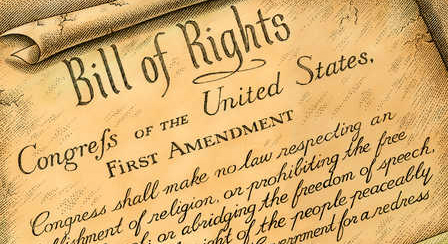
The Petition Clause, found in the First Amendment, reads, “Congress shall make no law… abridging… the right of the people… to petition the Government for a redress of grievances.” The concept was deeply rooted in English and American colonial practice. It was not an abstract right to be heard, but a concrete, procedural mechanism for popular influence on the legislature.
The right to petition possessed a direct inheritance from English practice. The right to petition the monarch and Parliament was a long-established, if often perilous, tradition in England. It was considered a fundamental liberty, distinct from the right to vote. The English Bill of Rights of 1689 explicitly affirmed the “right of the subjects to petition the king.”
A Procedural Cornerstone of Colonial Legislatures, this practice was institutionalized in the American colonies. Colonial assemblies and, later, state legislatures operated under a set procedural order. Petitions from citizens were the primary way individuals and communities could bring issues to the attention of their government formally. These petitions, often signed by dozens, hundreds, or even thousands of citizens, were presented at the start of the legislative session. They were formally read, often referred to a specific committee for consideration, and a report was expected. This process was a fundamental part of the legislative agenda. It was the people’s direct line to their representatives who were tasked with the legislative power of creating law.
The Original Meaning of “Abridging” in the context of the First Amendment meant exactly what we understand it to mean today: Congress could not interfere with this established procedural mechanism. They could not refuse to receive petitions, refuse to read them, or refuse to consider them. The right was not just to send a piece of paper, but to have it received and processed by the legislative body according to the established rules. It was a right to a formal hearing, not a right to be agreed with.
The practice was effectively destroyed by the explosion of anti-slavery petitions in the 1830s.
Abolitionist groups, particularly those led by figures like William Lloyd Garrison, organized massive petition drives. From the mid-1830s onward, Congress was inundated with tens of thousands of petitions calling for the abolition of slavery in the District of Columbia and for prohibiting its admission into new territories.
Pro-slavery members of Congress, especially from the South, found these petitions offensive and disruptive. They argued that even receiving and tabling the petitions was an implicit recognition of the abolitionists’ right to question the “peculiar institution” of slavery, which they believed was beyond Congress’s constitutional authority to regulate in the states. To deal with this “nuisance,” beginning in 1836, the House of Representatives adopted a series of “gag rules.” These were standing orders that automatically tabled (i.e., set aside without consideration) all petitions relating to slavery. The petitions were received but immediately dismissed.
The gag rules sparked a fierce constitutional debate. Former President John Quincy Adams, then a member of the House, became the most vocal opponent. He argued passionately that the gag rule was a direct and unconstitutional violation of the Petition Clause. He contended that the right to petition was meaningless if the petitions could not be heard, and that the people had a right to use their government to voice their grievances on any issue, including slavery. The fight over the gag rule was a crucial precursor to the broader sectional conflict over slavery.
Although the gag rules were eventually repealed in 1844, the damage was done. The procedural tradition of considering petitions as a first order of business was broken. The sheer volume of modern political communication, combined with the bitter memory of the slavery controversy, meant that the old system never returned. The right to petition survived, but its meaning changed. It devolved into a general right to express grievances to the government, which it could choose to accept or ignore, rather than a right to have those grievances formally processed through a set legislative procedure.
In summary, the original meaning of the Petition Clause was a procedural guarantee that the people’s formally presented grievances must be received and considered by the legislature. The crisis over slavery petitions led Congress to violate this principle for its own political convenience, and the original, robust procedural practice never recovered, fading into the more general and less powerful right we understand today.
— Political Pistachio Conservative News and Commentary