

By Douglas V. Gibbs
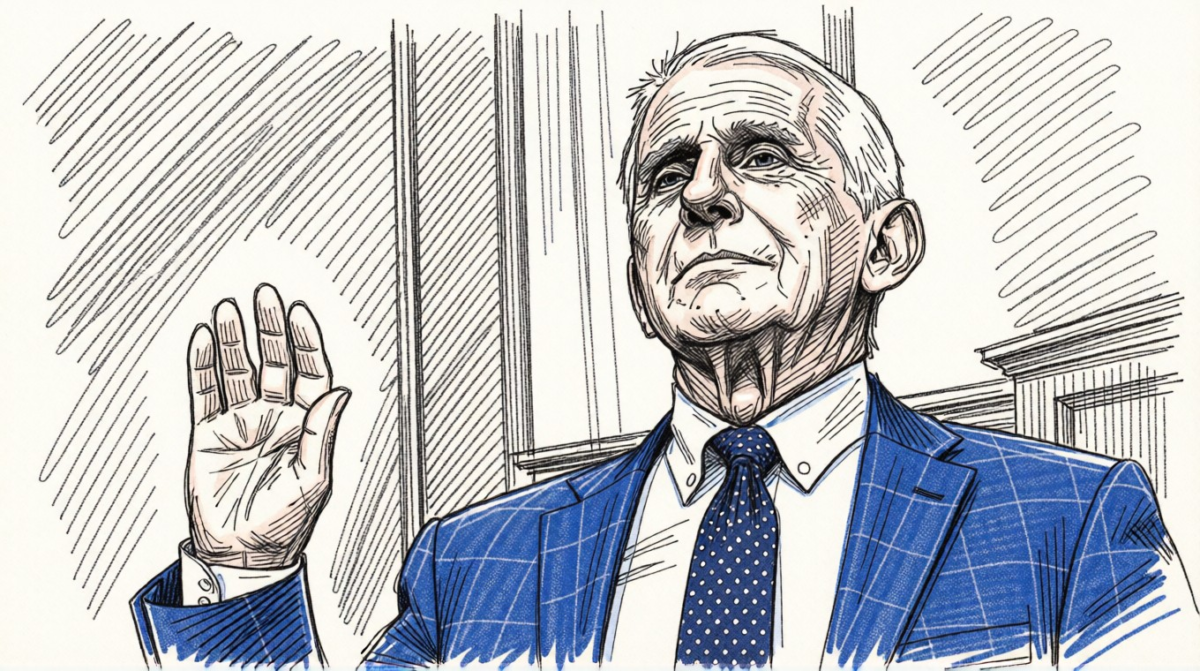
In what can only be described as constitutional theater of the highest order, Dr. Anthony Fauci invoked his Fifth Amendment right against self-incrimination 111 times during his recent congressional testimony. The former COVID czar, who once enjoyed near-universal media adoration, now finds himself in the crosshairs of constitutional scrutiny. And as Senator Josh Hawley brilliantly exposed, Fauci’s legal strategy may contain a fatal flaw that could blow up in his face.
The central issue here is straightforward: President Biden issued a broad, retroactive pardon to Fauci in the final hours of his presidency, ostensibly shielding him from any “offenses against the United States he may have taken part in” related to COVID-19. This pardon, however, created a constitutional contradiction that Hawley, a Yale Law School graduate and former Missouri Attorney General, skillfully exploited.
“You don’t have any rights under the Fifth Amendment because you’ve been pardoned,” Hawley declared, citing the Supreme Court’s 1896 decision in Brown v. Walker. The legal principle is clear: when a witness has been pardoned for potential offenses, “he may not stand upon his privilege” against self-incrimination.
The logic is irrefutable. The Fifth Amendment protects individuals from being compelled to provide testimony that could incriminate themselves. If Fauci has already been pardoned for any potential offenses related to his pandemic response, there is literally no risk of self-incrimination. The constitutional purpose of the Fifth Amendment protection has been nullified by the pardon itself.
By repeatedly invoking the Fifth Amendment to avoid answering even the most mundane questions, such as what day it was or what color tie he was wearing, Fauci wasn’t exercising a constitutional right; he was potentially committing contempt of Congress. As Hawley pointed out, when there is no risk of self-incrimination, refusing to answer congressional questions transforms from a protected constitutional act into a criminal offense.
The absurdity reached its peak when Hawley asked simple questions that carried zero legal risk: “What color tie are you wearing?” “What color is the carpet in front of you?” Each time, Fauci responded with his canned Fifth Amendment invocation, despite having no legitimate constitutional basis for doing so.
This legal charade could explode in Fauci’s face in several ways.
First, Congress could hold him in contempt for refusing to answer questions after his pardon eliminated any Fifth Amendment protection. Unlike typical contempt cases that face legal challenges over constitutional rights, Fauci’s pardon would make such a charge nearly impossible to defend against.
Second, as The New York Times notes, Fauci’s pardon “only covers what transpired before it was issued on Jan. 20, 2025.” This means any false statements he made during the hearing itself could potentially expose him to perjury charges, as his pardon wouldn’t cover new offenses committed during testimony.
Third, several states are already launching investigations into Fauci’s conduct, with Alabama’s Tommy Tuberville and Florida’s attorney general announcing separate probes. These state-level investigations wouldn’t be affected by the federal pardon.
The ultimate irony here is that Biden’s attempt to protect Fauci may have inadvertently boxed him into a legal corner. By accepting the pardon, Fauci eliminated his Fifth Amendment protections while simultaneously creating a political firestorm that has only intensified congressional scrutiny.
As Hawley aptly summarized: “The only problem is that Fauci doesn’t have Fifth Amendment protection anymore. President Biden pardoned him in the final hours of his term, which means that Fauci cannot legally ‘stand upon his privilege.'”
This constitutional standoff reveals the dangers of using presidential power as a political shield. What was intended as a get-out-of-jail-free card has instead become a legal straitjacket, potentially transforming Fauci from a protected witness into a congressional contempt defendant.
The Fauci Fifth Amendment spectacle represents more than just another partisan hearing. It demonstrates how constitutional principles can be twisted when political motivations override legal reasoning. Hawley’s constitutional takedown exposes the fundamental flaw in Fauci’s strategy: you cannot simultaneously accept a pardon for potential offenses while claiming protection against self-incrimination for those same offenses.
As this constitutional drama unfolds, one thing is certain: the legal and political fallout from Fauci’s testimony will continue to reverberate long after the hearing ends. And if Hawley’s constitutional analysis proves correct, Fauci’s attempt to shield himself behind the Fifth Amendment may have inadvertently opened the door to the very legal jeopardy he was trying to avoid.
The rule of law demands accountability, even for those who have operated above it for years. In this case, constitutional principle and political accountability may finally be aligning – much to Fauci’s detriment.
— Political Pistachio Conservative News and Commentary