

By Douglas V. Gibbs
Columbus Day used to be an American holiday everyone could agree on. It was a day to honor discovery and the courage to sail into the unknown. In 2026, it is a battlefield. Cities have renamed it. Statues have come down. Schoolchildren are taught that the man at the center of the day was a monster. The indictment is long, and much of it rests on thin evidence and revisionist history dressed up as settled fact.
But the record tells a different story. It advises us that Christopher Columbus was an ordinary man whom God used to do extraordinary things.
Christopher Columbus began his life in poverty, with little to his name but a restless mind and a love of geography and the sea. As he matured, he read the Scriptures, which described a spherical earth long before the scholars of his day would concede it. From that conviction grew an idea: sail west, and you might reach the East. He believed it. And, more remarkably, the Spanish Crown believed him.
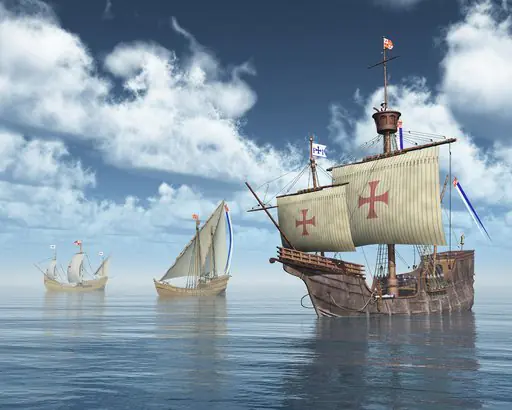
So he sailed out into a sea the civilized world knew only through rumor. He sailed past the stories of demons in the deep and a world’s edge that would swallow a ship whole. He faced the dragons, out-navigated the obstacles, and proved with his own keel that the earth is round. He discovered a place unknown to the civilized world, and he did it on nerve and navigation alone.
He never found the fortune he sought. He died in poverty just fifteen years after his discovery. And he never reached India, though he died believing the New World was India.
Then comes the modern charge: that Columbus was a murderous, slave-trading sadist who shattered a peaceful Caribbean paradise. The truth is more interesting. Brutality already thrived in those lands before he arrived; what Columbus and those who followed him ultimately brought was a new order: law, faith, letters, and the seeds of the civilization the Americas would become.
Columbus is celebrated not merely for a landfall, but for a spirit. He took the risk. He followed his dreams and his beliefs. He did what most men only talk about doing. He was, in his bones, everything America would become.
Was he flawed? Of course. Every human is, and some of the darker stories carry a kernel of truth. But a flawed man is not the same thing as a notorious tyrant. Columbus was neither saint nor devil. He was an achiever. A brave explorer willing to do more than the average bloke.
For that, he deserves our thanks. And he deserves a day.
— Political Pistachio Conservative News and Commentary