

By Douglas V. Gibbs
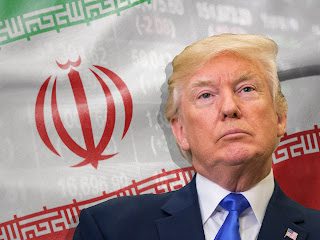
The Iranian economy teeters on the brink of total collapse, with inflation skyrocketing to a staggering 100%. Meanwhile, America’s naval blockade at the Strait of Hormuz has effectively choked Iran’s oil exports, delivering a devastating economic blow. Tehran’s leadership lies in tatters after precision U.S. and Israeli strikes, leaving the nation virtually rudderless. The blockade’s enforcement has already turned back 44 commercial vessels, effectively sealing off shipping routes to the Indian Ocean.
President Trump has declared victory in the military operation against Iran, stating emphatically that the United States has “already won.” In his characteristically blunt assessment, Trump announced that U.S. forces have “destroyed their navy, destroyed their air force…their anti-aircraft equipment, their radar equipment, their leadership. Their leadership is destroyed. We’ve destroyed everything.”
Among the operation’s primary objectives, Trump has repeatedly emphasized that Iran must never obtain nuclear weapons.
Iran’s unseen leader Mojtaba Khamenei – named to succeed his father after U.S. airstrikes eliminated him early in the conflict – remains defiant. Despite his government’s shattered state, Khamenei insists on reclaiming control of the strategic Strait of Hormuz. President Trump has countered with an ultimatum: unless Iran completely relinquishes its grip on the strait, he will target Iranian power plants and bridges with devastating strikes.
Congress, invoking the War Powers Act of 1973, demands that the Trump administration either seek congressional authorization or cease military action. From a constitutional standpoint, however, Congress cannot unilaterally restrict presidential war powers through legislation. The law Democrats repeatedly cite is, in fact, unconstitutional.
On May 1, 2026, President Trump formally notified Congress that hostilities between the United States and Iran had concluded. No shots have been fired between the two countries since April 7. Despite the questionable constitutionality of the War Powers Act, Trump’s notification arrived precisely on the resolution’s deadline. Nevertheless, President Trump cautioned that the Iranian threat persists. In his letter to Congress, he explicitly stated that “the threat posed by Iran to the United States and U.S. Armed Forces remains significant.” In essence, President Trump has ended the shooting war while maintaining strategic vigilance.
Democrats remain critical, claiming the president never received congressional authorization to engage Iran militarily in the first place. As WLT Reports astutely observed, “…objection tells you more about the Democratic playbook than about the situation itself. If Trump had sought congressional authorization, those same senators would have spent weeks slow-walking hearings and turning the process into a political circus. The War Powers Resolution exists to prevent open-ended, unauthorized wars. Trump met the standard. No shots fired in nearly a month. Hostilities terminated. Notification delivered on time.”
According to Fox News and other news outlets, based on a presidential quip during a recent speech, Trump is now setting his sights on Cuba. The island nation, however, appears financially prepared to abandon communism. This time, no shots will likely need to be fired.
— Political Pistachio Conservative News and Commentary