
by Douglas V. Gibbs
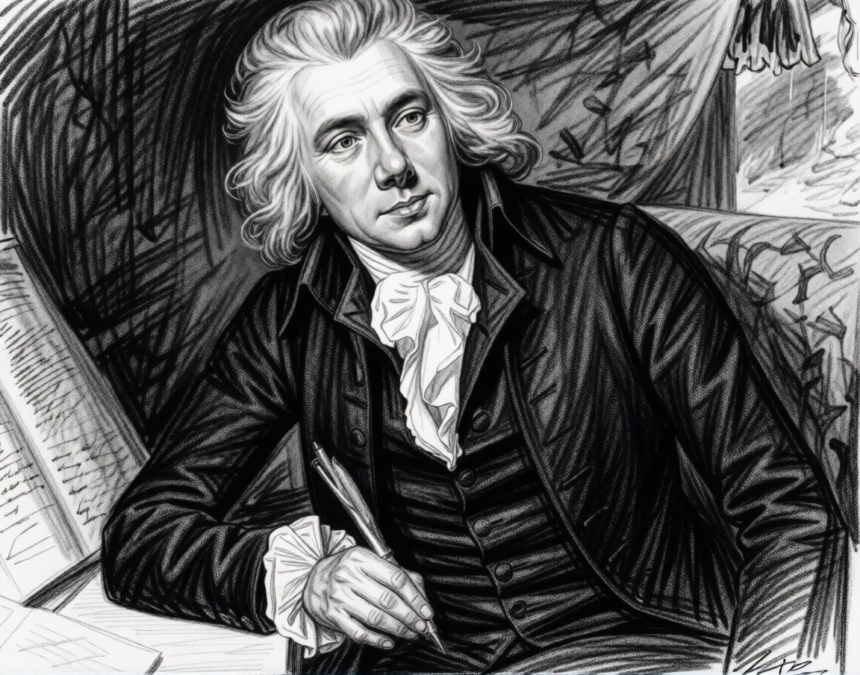
The film Amazing Grace in 2006, directed by Michael Apted, and starring Ioan Gruffudd, Benedict Cumberbatch, and Albert Finney, was a biographical drama that told the inspiring true story of William Wilberforce’s lifelong campaign in the British Parliament to abolish the transatlantic slave trade. Wilberforce faced fierce political resistance, public apathy, and financial opposition from members of Parliament who claimed ending the slave trade would ruin the British Empire.
In a pivotal scene, the film offers a powerful visual metaphor for the sheer weight of the consent of the governed and the significance of the natural right of petitioning the government for a redress of grievances.
As a heavy petition is carried into the hallowed chamber of the British Parliament, it appears at first as a respectable, though sizable, document. But when the clerk begins to unfurl it, the true measure of its gravity is revealed. The parchment, thick with ink and purpose, does more than simply open. It cascades. It flows from the clerk’s hands like a dark river, rolling relentlessly down the long, polished aisle of the House of Commons. It snakes past the indifferent faces of powdered wigs and sober expressions, a physical manifestation of a conscience they can no longer ignore. The roll of signatures, a seemingly endless testament to thousands of individuals united in a single cause, comes to rest far down the center of the chamber, a silent, undeniable statement of public will. In that moment, the petition became much more than mere words on a page. It was a physical presence. A tangible force that occupied the very space of power, demanding to be acknowledged. It was the raw, unadorned power of the people’s right to petition, made manifest in a single, breathtaking gesture that filled the room with the inescapable weight of public demand for a redress of grievances.
— Political Pistachio Conservative News and Commentary