
By Douglas V. Gibbs
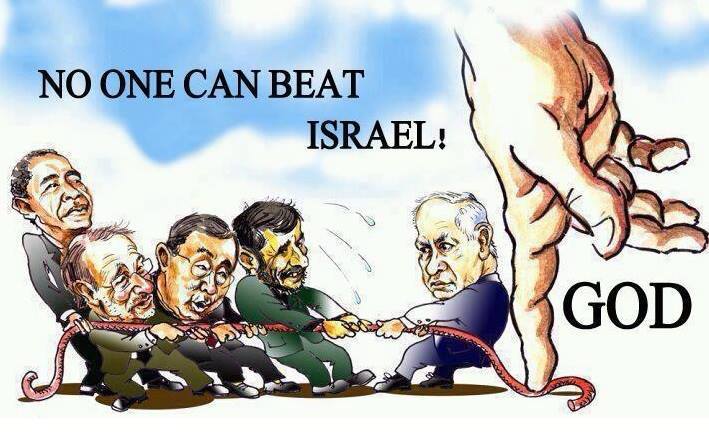
In modern political conversation I’ve encountered criticism for my steadfast support of Israel, with one commenter suggesting that modern Israel isn’t the “biblical Israel” and that my support is misguided. This perspective, while increasingly common, misses the profound theological and prophetic significance of Israel’s restoration consistently emphasized from Scripture.
At the heart of this debate lies a fundamental question: Does God’s covenant with Israel endure despite their disobedience or questions regarding the genetic purity of the Israelites in modern Israel? As I’ve often expressed, the relationship between God and Israel mirrors that of a father and child. When a son is disobedient, the father doesn’t disown him. A father’s reaction may include discipline, or one that allows the son who refuses to listen to find his way, but the father’s love and protection remain. So it is with God and Israel.
J. Vernon McGee powerfully affirmed this truth, noting: “Israel is God’s chosen people. He is going to bring them back to their land someday in faith and belief. They are returning to the land today in unbelief, and they do not have peace. This is the evidence of the hand of God in the affairs of the world.” This observation perfectly captures the current reality, Israel’s restoration in our time is itself evidence of God’s faithfulness, even if they haven’t yet returned “in faith and belief” as McGee notes.
The establishment of modern Israel on May 14, 1948, stands as one of the most significant prophetic fulfillments in history. As Greg Laurie emphatically states: “When the Jews formed their nation on May 14, 1948, a modern-day miracle occurred. More specifically, a prophecy was fulfilled, and the prophetic time clock began to tick.” This isn’t mere political history. It’s divine providence unfolding.
Jack Hibbs reinforces this perspective, noting that “never before in history have events come together in such a way, and that these developments remarkably align with what Scripture has already foretold.” Hibbs specifically points to Israel’s restoration as a primary example of this prophetic alignment, highlighting how the biblical question “Shall a nation be born at once?” (Isaiah 66:8) received its dramatic answer in 1948.
The commenter’s suggestion that modern Israel should be called “Judah” rather than “Israel” reflects a common misunderstanding. While the biblical kingdom was indeed divided after Solomon’s reign, with the northern kingdom retaining the name Israel and the southern kingdom known as Judah, the prophetic restoration promises always envisioned a reunited people.
The prophets consistently spoke of a future regathering of all twelve tribes, not just Judah. This regathering began in 1948 and continues to unfold. As Jack Hibbs boldly declares, “If you look at Israel being restored as a nation and say that’s not the real Israel…” – the implication being clear that such skepticism contradicts the prophetic reality.
Critics often point to Jesus’ words in John 8:44, where He addresses certain religious leaders, saying, “You are of your father the devil.” As J. Vernon McGee explains in his commentary, this was directed to specific individuals who were opposing Christ, not to the entire Jewish people or to Israel as a nation. McGee consistently maintained that Israel remains God’s chosen people despite individual disobedience – a pattern evident throughout biblical history.
Beyond the theological arguments, there exists a clear biblical imperative to support Israel. In a commentary titled “The Prophetic Books,” J. Vernon McGee explains that Bible contains hundreds of prophecies that have been “fulfilled literally,” demonstrating that “these men were speaking the words of God.” This literal fulfillment includes the restoration of Israel, which stands as one of the most prominent prophetic signposts of our time.
Jack Hibbs has dedicated significant attention to “Israel in Bible Prophecy,” recognizing it as a central theme in understanding God’s prophetic timeline. His teaching emphasizes that supporting Israel isn’t merely a political position but a biblical one, aligned with God’s redemptive purposes for humanity.
As I reflect on these truths, my support for Israel deepens. We are witnessing the unfolding of prophecy before our eyes – a modern miracle that confirms God’s faithfulness to His covenant promises. The existence of Israel today, despite ongoing conflict and opposition, testifies to God’s sovereign plan.
Like Greg Laurie, I recognize that “the prophetic time clock began to tick” in 1948, and like Jack Hibbs, I see the remarkable alignment between current events and biblical prophecy. And like J. Vernon McGee, I understand that Israel’s current state of unbelief doesn’t negate God’s purposes – indeed, their restoration in unbelief is itself evidence of God’s hand at work.
To those who criticize this support, I would gently but firmly suggest they reconsider the biblical evidence. The restoration of Israel isn’t a political accident but a prophetic necessity – a fulfillment of God’s promises that demands our recognition, our prayer, and our support.
As we watch events unfold in the Middle East, may we remember that we are living in prophetic times. Israel’s existence, survival, and challenges all fit within the biblical narrative that points toward God’s ultimate redemptive purposes. To stand with Israel is not to agree with every decision the Nation of Israel makes, or to agree with all of their political officials, but to stand with God’s prophetic plan – and that’s a position I’ll maintain without apology or hesitation.
— Political Pistachio Conservative News and Commentary