
by Douglas V. Gibbs
Presidents of the United States in Congress Assembled
The Presidents of Congress preceded the Presidents of the United States under the United States Constitution. Styled after Britain’s parliamentary system, the office of the President of the Congress Assembled was the delegate presiding over the sessions of the legislative body, making him the chief legislator, in addition to being ceremoniously called the President. The position held no executive authority as you might see in today’s President of the United States.
In America’s history there have been three legislative bodies that have served for the government of the United States (four if you count the Colonial Continental Congress): The Continental Congress, the Confederation Congress, and the United States Congress which has been assembling since the ratification of the United States Constitution. In the case of the first two congresses the presiding officer was also known as the President of the United States in Congress Assembled. The Continental Congress, though it began to meet prior to the launch of the Revolutionary War, was not an official United States Government body until after the acceptance of the Declaration of Independence, July 4, 1776.
As a body the Continental Congress existed until two events occurred; the ratification of the Articles of Confederation, and end of The Revolution. The Revolutionary War ended in October of 1781 when General Cornwallis surrendered. Two years later the end of the war was made official by the Treaty of Paris. Therefore, the three congresses may be viewed as follows:
1776-1781: Continental Congress (wartime legislature)*
1781-1789: Confederation Congress (peacetime legislature)
1789-Present: United States Congress (U.S. Constitution)
* Note: The Continental Congress began meeting September 5, 1774 while America remained colonies, with four Presidents of the Congress also serving prior to the advent of the Declaration of Independence.
While the United States was born when the Declaration of Independence was accepted by the Continental Congress, the country was not truly sovereign until the bonds that tied it to the British Empire were completely severed, which at the time was viewed as occurring at the time of the surrender of General Cornwallis. Therefore, while there were Presidents who presided over Congress prior to the end of the war, none of them were truly seen as Presidents of the United States. Therefore, the first President of the sovereign and independent country known as the United States took office once the Articles of Confederation were operational, and the war had ended.
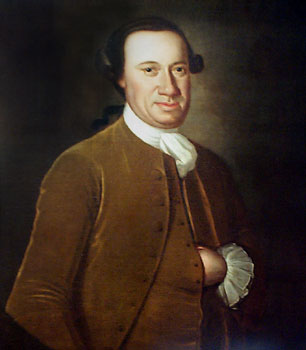
While George Washington is universally known as the first President of the United States, an argument has been made that the true “first President of the United States” was John Hanson. While Washington was elected President in 1789 under the U.S. Constitution, twelve years before the Constitution went into effect, and after the Revolutionary War generation had drawn up the Articles of Confederation, the Continental Congress unanimously elected John Hanson to a one year term as the first President of the United States in Congress assembled.
In his home state of Maryland, despite the opinion of the rest of the country, Hanson as the first President of the United States is recognized as being fact, and is even celebrated. The John Hanson Society of Maryland managed to have April 14, each year, declared John Hanson Day in the Old Line State. Proposals for a national celebration have been appearing quite regularly since 1943.
While there were Presidents of the Congress prior to Hanson, he was the first to preside over “Congress assembled” after independence had been declared, a uniting document (Articles of Confederation) had been established, and the British had surrendered which, in a sense, set the whole thing in stone.
Hanson’s presidency established a number of precedents. During his presidency ambassadors were exchanged with other countries for the first time. He introduced the Treasury Department. A national bank, albeit temporary, was established. He established a Cabinet, which included the first Secretary of War, and the first Foreign Affairs Department. He led the fight to guarantee statehood to each of the territories west of the Appalachian Mountains (Northwest Territory). Under his watch all foreign troops were removed from American lands, including their flags. And, long before Washington’s Thanksgiving Proclamation, Hanson proclaimed a day of Thanksgiving to be observed on the fourth Thursday in November. He found the work to be tedious, however, and he retired after the end of his term. A year later he was dead.
At the U.S. Capitol, once through the East Front door into the Rotunda, and into the corridor to the Senate Wing a statue of John Hanson resides on the right side just before you reach the Chamber. It is life-size, with walking stick in hand, and a three-cornered hat on his head. The statue was provided by Maryland in 1864 when the State was asked to provide two statues of its favorite sons. The other statue provided was that of Charles Carroll of Carrollton, a signer of the Declaration of Independence.
If you want to return to Maryland from Washington D.C., one way to get there is along the John Hanson Highway.
The Presidents of the Congress prior to the presidency of George Washington are as follows:
| Peyton Randolph | Virginia | Sept. 5, 1774 – Oct. 22, 1774 | Colonial | First Continental Congress | |
| Henry Middleton | South Carolina | Oct. 22, 1774 – Oct. 26, 1774 | Colonial | First Continental Congress | |
| Peyton Randolph | Virginia | May 10, 1775 – May 24, 1775 | Colonial | First Continental Congress | |
| John Hancock | Massachusetts | May 24, 1775 – Oct. 29, 1777 | Colonial & U.S. | Second Continental Congress | |
| Declaration of Independence: July 4, 1776 changes Congress from colonial to national. | |||||
| Henry Laurens | South Carolina | Nov. 1, 1777 – Dec. 9, 1778 | United States | Second Continental Congress | |
| John Jay | New York | Dec. 10, 1778 – Sept. 28, 1779 | United States | Second Continental Congress | |
| Samuel Huntington | Connecticut | Sept. 28, 1779 – July 10, 1781 | United States | Second Continental Congress | |
| Articles of Confederation: Effective March 1, 1781, changing Congress from being a Continental Congress to the Congress of the Confederation. | |||||
| Thomas McKean | Delaware | July 10, 1781 – Nov. 5, 1781 | United States | Confederation Congress | |
| End of Revolutionary War: At the end of the Siege of Yorktown, British General Charles Cornwallis signed George Washington’s Articles of Capitulation on October 19, 1781, launching international recognition of the United States as an independent, sovereign country. Beginning of the recognition of the Congress as “The United States Congress of the Confederation Assembled.” | |||||
| John Hanson | Maryland | Nov. 5, 1781 – Nov. 4, 1782 | United States | Confederation Congress | |
| Elias Boudinot | New Jersey | Nov. 4, 1782 – Nov. 3, 1783 | United States | Confederation Congress | |
| 1783 Treaty of Paris officially ended hostilities with Great Britain, September 3, 1783; provided official international recognition of the English Colonies as a separate, autonomous, sovereign country, the United States of America. | |||||
| Thomas Mifflin | Pennsylvania | Nov. 3, 1783 – June 3, 1784 | United States | Confederation Congress | |
| Richard Henry Lee | Virginia | Nov. 30, 1784 – Nov. 4, 1785 | United States | Confederation Congress | |
| John Hancock | Massachusetts | Nov. 23, 1785 – June 5, 1786 | United States | Confederation Congress | |
| Nathaniel Gorham | Massachusetts | June 6, 1786 – Feb. 2, 1787 | United States | Confederation Congress | |
| Arthur St. Clair | Pennsylvania | Feb. 2, 1787 – Nov. 4, 1787 | United States | Confederation Congress | |
| Philadelphia Federal Convention (Constitutional Convention), May 25 to September 17, 1787. | |||||
| Cyrus Griffin | Virginia | Jan. 22, 1788 – Nov. 2, 1788 | United States | Confederation Congress | |
| June 22, 1788: New Hampshire became the ninth State to ratify the United States Constitution. September 13, 1788, the Congress of the Confederation formally certified the ratification of the Constitution and chose to retain New York City as the seat of government until the proposed new location could be constructed. March 9, 1789 was established as the date the Congress of the Confederation would officially end, and the new United States Congress would officially begin operating. | |||||
| George Washington | Virginia | Apr. 30, 1789 – March 4, 1797 | United States | United States Congress | |
| The commencement of the presidency of George Washington marked the first time in U.S. History that the President was not the head of Congress, but instead the head of a separate and distinct branch of government, the Executive Branch. Under the United States Constitution the concept of a separation of powers began. | |||||