
By Douglas V. Gibbs
The battle between presidents and the “Fake News” outlets is nothing new. President Trump criticized the mainstream media during the first term of his split presidency as well, George W. Bush was hammered relentlessly by the media, Ronald Reagan was attacked daily, and conservative newscasters and pundits have been making the same complaint about how left-leaning and dishonest the mainstream media is as long as I can remember. Rush Limbaugh, all the way back in 1988 when he launched his national platform, was critical of the media from the beginning; naming them the “lamestream media” later in the 2000s. As early as 1988, Rush targeted traditional establishment news organizations, accusing major newspapers and television networks of a persistent liberal bias. He framed mainstream outlets as false gatekeepers, routinely popularizing alternative labels like “drive-by media.”
The battle between ideologies in the media, and between news sources and Presidents of the United States goes all the way back to the beginning. Thomas Jefferson was openly critical of the newspapers. Among the early presidents, Thomas Jefferson had perhaps the most contentious relationship with the press. He expressed extreme frustration with newspapers, calling them “a receptacle of every species of political slander.” Jefferson particularly despised the Federalist Party aligned press, which he believed was unfairly aligned against him.
John Adams signed the Sedition Act of 1798, which made it a crime to publish “false, scandalous, and malicious writing” against the government. Several newspaper editors and publishers were actually jailed under this very unconstitutional law. It was the first of two sedition acts during American History, the second passed during Woodrow Wilson’s presidency, that served as a severe form of press suppression that was worse than anything any modern president has attempted.
James Madison, who opposed the Sedition Act, still faced his own press challenges as president. He dealt with partisan newspapers that often published scathing attacks against him and his policies.
A structured White House press corps and formal press access protocols we see today didn’t really exist in the early republic. Presidents in that era generally interacted with the press less formally, and the concept of a “press room” with designated access didn’t develop until much later.
RELATED: TRUMP’S FREEDOM OF THE PRESS
The institutionalized relationship we see today between the White House and press began gradually, with key developments. The first formal White House press coverage began during the early 1800s. During Lincoln’s presidency, a new era began as the press changed focus from serving presidential or party interests to getting stories quickly and attracting readers. The modern press pool system began as a practical arrangement in the late 1930s, solving the problem of how many reporters could access the president when only a few could fit in a room. The White House Correspondents’ Association, an independent nonprofit organization that would largely manage the White House press corps, was established during Woodrow Wilson’s presidency. The physical infrastructure we recognize today, the James S. Brady Press Briefing Room, was constructed in 1969-70 during Nixon’s administration, built over the swimming pool that had been installed for FDR in 1933. For most of the press pool’s history, the White House Correspondents’ Association controlled which outlets covered the president on any given day, though presidents have historically had substantial discretion to determine physical access and logistics for presidential events. The institutionalization was gradual, beginning with basic press coverage in the early 1800s and evolving into the structured system we recognize today by the mid-20th century.
Several presidents have historically limited press access for reasons beyond credentials, legitimacy, or space. Here are the key historical examples:
Richard Nixon took perhaps the most extreme measures against the press. After The Washington Post broke the Watergate scandal, Nixon banned Post reporters from anywhere in the White House outside the press briefing room. He also directed his staff not to talk with reporters from The New York Times, St. Louis Post-Dispatch or Washington Post after a critical article in May 1969. Nixon even kept a now infamous “enemies list” and barred Washington Post reporter Judith Martin from his daughter’s 1971 White House wedding over her coverage of the family.
The Obama administration excluded Fox News from a TV reporting pool for one interview in 2009. In the final days of Obama’s 2008 campaign, officials removed journalists from the Washington Times, New York Post and Dallas Morning News from the pool of reporters traveling on Obama’s plane after those papers endorsed his opponent.
Woodrow Wilson threatened to cancel press conferences entirely after a reporter published comments he had made off the record.
The Biden administration tightened requirements for White House press credentials in 2023, resulting in a decrease in hard passes issued from 1,417 to 975. While the administration cited space limitations, the New York Post suspected one of its reporters was denied access because he had previously questioned Biden about the Biden family’s alleged dealings with foreign countries.
These examples show that while formal, across-the-board bans on entire news organizations are rare, presidents have historically used access restrictions as a means of expressing displeasure with coverage.
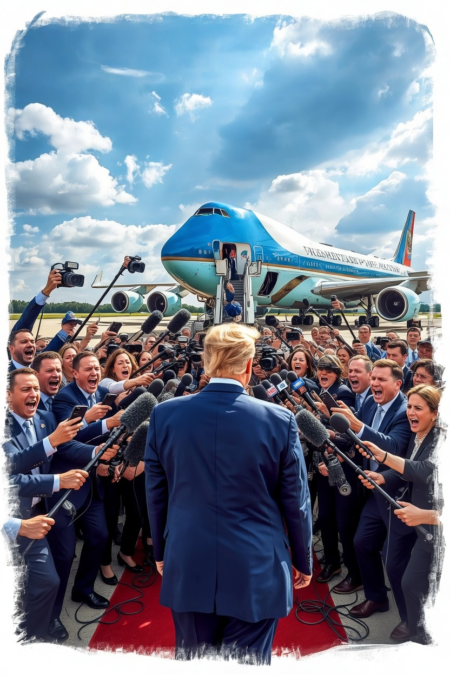
Now the Trump administration is under fire for taking actions that the leftist “drive-by media” isn’t liking. Trump’s administration has taken control of which White House reporters travel with the president in the “press pool.” Trump also banned CNN, MS NOW and Politico from the White House, accusing them of reporting “fake news.” The Trump administration argues that access is a privilege, not a right. The leftist media has gone so far as to file a lawsuit over Trump’s denial of access. So far, it seems not to be going well for the Trump administration with the lawsuit. U.S. District Judge Timothy Kelly issued a 14-day temporary restraining order forcing the White House to restore press credentials. The news organizations are asking the court to keep the restraining order in place as the full lawsuit moves through the legal system.
From a strict constructionist and originalist perspective Trump’s press access decisions don’t violate the First Amendment. The First Amendment’s text states: “Congress shall make no law… abridging the freedom of speech, or of the press.” The key phrase here is “Congress shall make no law” – this is a limitation on legislative power, not executive discretion regarding access.
The key is to look at how the Founders understood press freedom. During their era, newspapers were explicitly partisan and often vicious in their attacks. Jefferson himself wrote about the “infidel newspaper” and “mercenary hirelings” who opposed him. The Founders’ concept of press freedom was preventing government from censoring content or imposing prior restraint, not guaranteeing access to government officials or facilities.
From a constitutional constructionist viewpoint, the First Amendment creates a negative right against government interference with publishing, not a positive right to access presidential briefings or White House press rooms. The press remains free to publish whatever they wish without government censorship – they can write critical articles, report on information they obtain through other means, and criticize the administration’s access policies.
ENJOYING THE CONTENT? DROP A FEW COINS IN THE TIP JAR.
The institutionalized White House press corps with designated access is a modern development, not something contemplated by the First Amendment’s framers. When they wrote the amendment, the concept of a formal White House briefing room with assigned seats didn’t exist – newspapers operated independently, gathering news through their own methods.
This distinction between freedom from censorship versus guaranteed access aligns with how the Supreme Court has traditionally approached First Amendment cases – focusing on whether the government is preventing speech or publication, not whether it’s providing special access to journalists.
— Political Pistachio Conservative News and Commentary