
By Douglas V. Gibbs
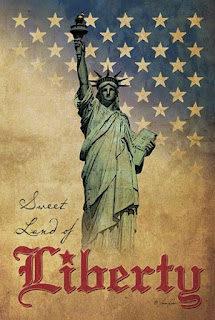
Today marks 140 years since the dedication of the Statue of Liberty on Bedloe’s Island in New York Harbor. She was a gift from the people of France formally, and it became an American landmark, and the beginning of her long life as one of the most recognized monuments on earth.
The statue was not conceived as an immigration symbol. Its origins lie in the aftermath of the American War Between the States, in the drawing rooms of anti-monarchist French intellectuals. In 1865, at a dinner near Versailles, the scholar and abolitionist Édouard René de Laboulaye reportedly proposed that France present the United States with a monument honoring liberty and the two republics’ shared ideals. The idea was partly a subtle jab at France’s own Second Empire.
Sculptor Frédéric Auguste Bartholdi took up the project. He traveled to the United States in 1871 to drum up support and chose Bedloe’s Island at the mouth of the harbor as the site. The statue’s face is widely said to have been modeled on his mother, Charlotte.
The figure is a hollow shell of copper roughly 3/32 of an inch thick, hammered over wooden forms (a technique called repoussé). The iron skeleton that holds it up was designed by Gustave Eiffel, who would later build his tower in Paris. The statue stands 151 feet from base to torch and 305 feet including the pedestal. Its crown bears seven rays, commonly read as standing for the seven seas and seven continents; 25 windows ring the crown, and the tablet in the left hand is inscribed “July IV MDCCLXXVI.”
Money was a persistent problem. Congress declined to fund the pedestal, and fundraising languished until publisher Joseph Pulitzer used his New York World to shame donors into giving, promising to print the name of every contributor regardless of amount. More than 120,000 people, many of them schoolchildren, sent small sums.
The statue arrived from France in 1885 in 350 crates and was assembled on the pedestal over the following months. President Grover Cleveland led the dedication ceremony on October 28, 1886, before a crowd estimated in the thousands. Suffragists from the New York State Woman Suffrage Association chartered a boat and protested that a female figure could symbolize liberty while actual women could not vote; the group’s leaders were denied a place in the official program. A planned fireworks display was largely spoiled by rain and fog, and only Bartholdi, watching from the torch, saw the unveiling signal clearly. Cleveland accepted the statue “in the name of the American people.”
The association with immigration came later, and largely through a poem. Emma Lazarus wrote “The New Colossus” in 1883 for an art auction to fund the pedestal; it was forgotten until 1903, when a plaque bearing its lines, including “Give me your tired, your poor, Your huddled masses yearning to breathe free” was mounted inside the pedestal’s base. The nearby Ellis Island immigration station opened six years after the dedication, in 1892, cementing a link in the public mind that neither the sculptor nor the original donors had intended.
The statue became a national monument in 1924. For its centennial, it underwent a sweeping restoration between 1984 and 1986, during which the corroded original torch was replaced with a gilded replica; the original now sits in the on-site museum. Liberty Island has been closed at various points since, including after the September 11 attacks and during Hurricane Sandy, and access to the crown requires a separate reservation.
Debate over what the monument means has never fully settled. Some emphasize the gift’s republican origins and its dedication to Enlightenment ideals; others treat the Lazarus poem as the definitive reading. Both are historically documented, and the argument is itself part of the record. What is not in dispute is the thing itself: a copper figure, held together by an iron frame, standing where it has stood for 140 years.
— Political Pistachio Conservative News and Commentary