
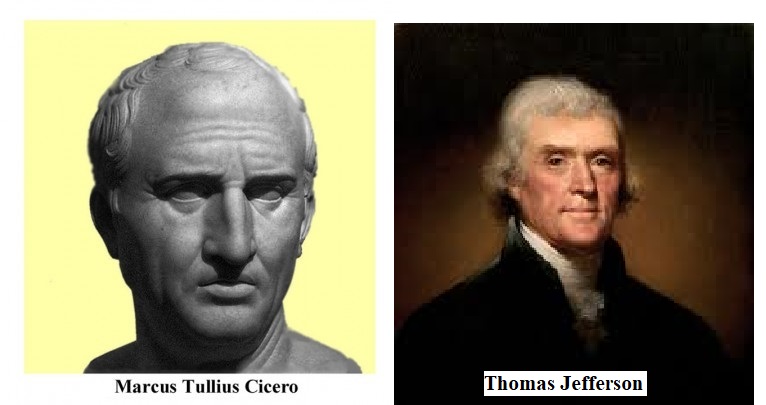
In “Jefferson’s Liberty, Cicero’s Fulfillment,” Douglas V. Gibbs presents a compelling narrative that connects the ancient Roman struggle for freedom with America’s founding principles. The article reveals how the Founding Fathers, particularly Thomas Jefferson, drew inspiration from historical figures like Cicero when crafting a government designed to be limited rather than all-powerful.
Jefferson emerges as liberty’s dedicated scribe, articulating natural rights in the Declaration of Independence and arguing that laws not preserving liberty are illegitimate. His prolific correspondence – over 18,000 letters – shaped early American government philosophy. Despite facing criticism from statists like Hamilton and enduring attacks on his character, Jefferson’s commitment to limited government remained steadfast.
The article draws a striking parallel to ancient Rome, where Cicero fought against tyranny as the Republic decayed. His warnings about internal betrayal and citizens trading liberty for government benefits resonate powerfully today. Though Cicero failed to save Roman liberty, his writings influenced Jefferson nearly 1,800 years later.
Gibbs challenges readers to consider their role in preserving liberty today: Are we Jefferson, successfully establishing freedom, or Cicero, whose efforts might inspire future generations? This historical perspective illuminates contemporary debates about government power, individual rights, and the eternal tension between security and liberty.
Read the Full Article: https://douglasvgibbs.com/jeffersons-liberty-ciceros-fulfillment-full-article/