

By Douglas V. Gibbs
In a recent exchange between Jesse Watters of FOX News, and Abdul El-Sayed (Candidate for the U.S. Senate in Michigan), Jesse asked Abdul about his support for socialized healthcare. “How much is it going to cost?” asked Jesse.
Abdul responded, “It is going to cost the average Michigander a whole lot less than it does right now. The price of the program is going to be substantially less for the everyday person who can’t afford their healthcare and are worried about losing their healthcare with their job. While you are talking about the broader budget, I am interested in the everyday budget Michiganders are thinking about. A budget that Donald Trump and Mike Rogers are blowing up right now. I don’t see why you are on the side of the billionaires, Jesse, rather than on the side of everyday Michiganders.”
Jesse inserted, when he was able to get a word in edgewise,”I don’t want you guys to blow the country up. Do you know how much the federal budget is right now?”
Abdul admitted he didn’t know, and then shifted to claiming that Secretary of War Pete Hegseth wants to increase the military budget by $1.5 trillion. Abdul then added, “and you don’t seem to be upset about that. What. So that we can fight a war we can’t get out of and raise our gas prices? That doesn’t make sense to me, Jesse.”
Jesse went back to the annual federal budget. “The government spends $7 trillion per year, and your plan to socialize healthcare is $4 trillion.”
Abdul kept hitting the military spending question, returning to his attack against President Trump’s administration and the plan is to use $1.5 trillion for the military. He then went into the argument by the Democrats and the leftist media about how the USS Lincoln crew “couldn’t even get a sausage for breakfast.”
Abdul did everything he could to pivot away from the socialized healthcare discussion.
Jesse said, “If you spend $4 trillion [on socialized healthcare] everything is going to get very expensive.”
As for the USS Lincoln and the claim the long deployment made for bad conditions, I was in the Navy, and it is a false argument. While a normal deployment is about six months, there are provisions and the availability from other supply ships, to make sure everything remains fine on these vessels. And understand, none of the sailors made any of the claims in the news about their deployment. Some family members did, as if they know more about what was going on out to sea better than the sailors did.
Abdul did on the socialized medicine issue what he did during his entire interview with Jesse Watters. He used rhetorical tactics to try to advance economically illiterate policies. Abdul El-Sayed’s performance was more about avoiding a serious discussion about costs and consequences. He was using misdirection, emotional appeals, and outright deflection.
Abdul’s primary claim is that socialized healthcare will “cost the average Michigander a whole lot less” is a political deception that hinges on confusing the price an individual pays at the point of service with the overall cost to the system and society.
Twenty years ago on my online radio program (before I moved to AM/FM radio) the topic of socialized medicine came up, and a listener from Toronto, Canada called in to discuss the cost of socialized medicine. At the time, I was construction, had a very good PPO that my employer paid 50% of my portion, and 25% of the cost of my family. My cost out of my paycheck each month was nearly $1,000 per month.
The caller from Toronto provided how much her taxes increased to cover socialized medicine when it went into effect in Canada, and they explained how as time passed the government began covering less things – so she needed to get supplemental insurance to cover the things the government failed to. Her cost, once we broke it down between taxes and the supplemental insurance, was higher than mine. And, her services were of less quality, and included incredibly long waiting times for appointments and referrals.
When Abdul claimed the cost for the average person would be less, we need to ask, “And then what?” Abdul’s argument stopped at the point where the individual’s insurance premium or doctor’s bill disappears. But what happens next?
The cost doesn’t vanish. It’s shifted from the individual’s direct payment to the collective taxpayer. It’s funded through massive tax increases on income, payroll, capital gains, and even the value of your home. The saying, “if you think healthcare is expensive now, wait until it’s free” comes into play at this point. The “free” healthcare is paid through higher taxes on everyone’s wages, higher prices on goods and services (as corporations pass on their tax hikes), and lower economic growth.
Abdul and his fellow Democrats calling for “Medicare for all” don’t talk about the hidden costs because either they don’t understand them, or they don’t want you to hear the truth. And understand, when it comes to socialized healthcare, the costs go way beyond taxes. Hidden in the nooks and crannies are the non-monetary costs of socialized systems: long wait times for essential procedures, rationed care, government bureaucrats deciding which treatments are “cost-effective,” and a stifling of medical innovation. The “cost” of waiting six months for a heart surgery isn’t captured in Abdul’s budget but is a very real, and often tragic, expense.
Jesse was right to focus on the $4 trillion price tag. That number represents the true outlay that must be funded by the economy’s producers. Abdul wants to ignore that staggering figure and focus only on the illusory “price” of zero.
When cornered on the astronomical cost of his healthcare plan, Abdul immediately pivoted to military spending. This is a deliberate tactic known as a “tu quoque” fallacy or “whataboutism.” The goal is not to debate military spending, but to change the subject and paint his opponent as a hypocrite.
This is a complete intellectual dodge. The question was, “What is the cost of your healthcare plan?” The answer is, “It’s $4 trillion, and here’s how we’ll pay for it.” Instead, Abdul’s answer was, “But look over there at that other big expense!”
It’s a false Equivalency. He framed military spending and socialized healthcare as interchangeable budget items that can be swapped. This is absurd. The federal government has a constitutional, primary responsibility to “provide for the common defense.” Socialized medicine is not a constitutional mandate; it is a policy choice, and one that constitutionally is none of the federal government’s business.
This all brings us to the reality of economics, which is often about trade-offs. You can’t have everything. If you want to fund a $4 trillion healthcare program, you must either cut other spending (including defense) by that amount, or you must raise taxes by that amount (which is also a false argument, because raising taxes reduces revenue because it stifles production). Abdul refuses to engage with this reality, and simply uses military spending as a rhetorical shield to avoid admitting that his program requires either crippling tax hikes that are damaging to the economy, or devastating cuts to other government functions.
The USS Lincoln “sausage” story is a perfect example of using a single, emotionally charged, and a misleading anecdote to discredit an entire institution and its budget. The pivot to the USS Lincoln was designed to make the military seem wasteful and uncaring, thereby justifying cuts to its budget and supporting his complaint there are calls to increase military spending.
Even more concerning is that the USS Lincoln quip was a false argument. Anecdotes are not data. The operational readiness, morale, and logistical support of a carrier strike group are not determined by the availability of breakfast sausage. It was a trivial complaint being elevated to the level of a policy crisis.
As I stated earlier, I spent four years in the United States Navy, and as a sailor I understood that the purpose of military spending was not about providing luxury amenities on a big haze-gray-and-under-way vessel. It’s about maintaining a force capable of deterring aggression and, if necessary, winning wars. The cost of a new fighter jet or an aircraft carrier isn’t just “spending”; it’s an investment in security that allows the rest of the economy to function without the threat of foreign aggression. Abdul’s argument treats this critical function as if it’s just another line item on a budget that can be swapped for a domestic program he prefers.
Abdul El-Sayed’s entire performance was an unserious, typical series of leftist rhetoric. He refused to engage with the most basic economic questions:
How will you pay for it?
What are the trade-offs?
What are the unintended consequences?
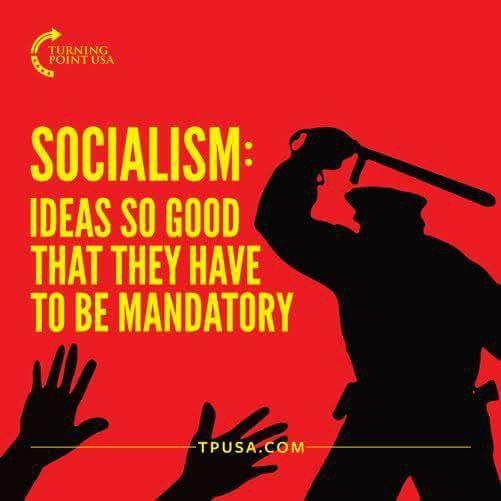
Jesse Watters, by focusing on the $4 trillion number, was attempting to force a conversation about reality. Abdul, in response, did everything he could to avoid that reality, substituting emotional appeals and fallacies for a substantive economic argument. This is the core of my basic critique of socialism: it is a philosophy built on intentions (“I want people to have affordable care”) rather than on an analysis of the real-world consequences and trade-offs required to achieve it. The road to economic ruin is paved with such good intentions, and as C.S. Lewis pointed out, “Of all tyrannies, a tyranny sincerely exercised for the good of its victims may be the most oppressive.”
— Political Pistachio Conservative News and Commentary